

Let me be direct with you: I wasted three months in 2025/2026 optimizing for Google while Microsoft Copilot quietly answered my target audience’s buying questions and cited my competitors instead of me—without any Copilot rank tracking or AI search visibility tracking in place.
That was a wake-up call I wouldn’t wish on anyone.
Since then, I’ve made Copilot rank tracking tools, AI SERP tracking, and specifically Microsoft Copilot visibility tracking a core part of how I approach SEO for myself and clients.
I’ve tested over a dozen tools, burned through trial plans, and tracked results across multiple industries to understand how AI search rankings, Copilot citations, and LLM visibility actually work. This guide is what I wish I had when I started.
TL;DR — Best Copilot Rank Tracking Tools 2026
Microsoft Copilot now reaches 15 million+ enterprise users daily and your traditional SEO tools cannot see whether it’s citing you or your competitors. These tools fix that.
| Need | Best Pick |
|---|---|
| Most complete AI tracking | Peec AI |
| Best for agencies | Rankability |
| Best budget option | Otterly AI ($29/mo) |
| Best hybrid SEO + AI | Nightwatch |
| Already using Semrush | Semrush AI Toolkit |
| Quick pulse check | LLMrefs |
The one thing to do today: Check your robots.txt isn’t blocking BingBot. If it is, Copilot can’t cite you — no matter how good your content is.
Bottom line: Brands tracking and optimizing for Copilot visibility right now will own the citations their competitors wake up to later. The tools above make that possible.
Why Copilot Rank Tracking Is No Longer Optional in 2026
Here’s the thing most SEOs still don’t grasp:
Copilot isn’t just another chatbot. It’s embedded directly inside Windows, Microsoft Edge, Outlook, Word, Excel, and Teams. Every enterprise user on a Microsoft 365 plan is potentially hitting Copilot without even opening a browser.
The numbers back this up hard. Microsoft reported 15 million paid M365 Copilot seats as of early 2026, a 160% year-over-year increase. Daily active users grew 10x year-over-year. And GitHub Copilot crossed 4.7 million paid subscribers, up 75% in a single year.
That’s not a niche audience. That’s the American enterprise.
What’s more, Copilot is powered by Bing’s search index, which means your Bing SEO directly determines whether you show up in Copilot answers. Yet most brands are still laser-focused on Google, completely ignoring the platform quietly informing purchasing decisions inside Word documents and Teams meetings.
Traditional rank trackers can’t see any of this. They track positions in blue-link SERPs. They have no visibility into whether Copilot cited you, ignored you, or worst of all, cited your competitor when your prospect asked a buying question.
That’s exactly the gap these tools fill.
What to Look for in a Copilot Rank Tracking Tool
Before I break down each tool, here’s my personal checklist, built from real experience, not vendor marketing pages.
Copilot-specific monitoring: Not all “AI visibility” tools actually query Copilot. Some simulate responses or focus exclusively on ChatGPT. Always verify the tool runs live Copilot queries.
Citation tracking: Knowing you were “mentioned” isn’t enough. You need to know when, how, and in what context Copilot cites you, and whether that citation is positive or neutral.
Competitor share of voice: I care less about my absolute visibility and more about whether I’m winning or losing ground against specific competitors.
Prompt customization: You need to track the actual questions your buyers ask, not generic phrases. The best tools let you define custom prompts and monitor them over time.
Trend data: A one-time snapshot is nearly useless. Look for tools that store historical data so you can see if things are improving or declining.
Actionable recommendations: Dashboards are nice. Specific, prioritized fixes are better.
The Best Copilot Rank Tracking Tools in 2026
1. Peec AI — Best for Multi-LLM Visibility Analytics
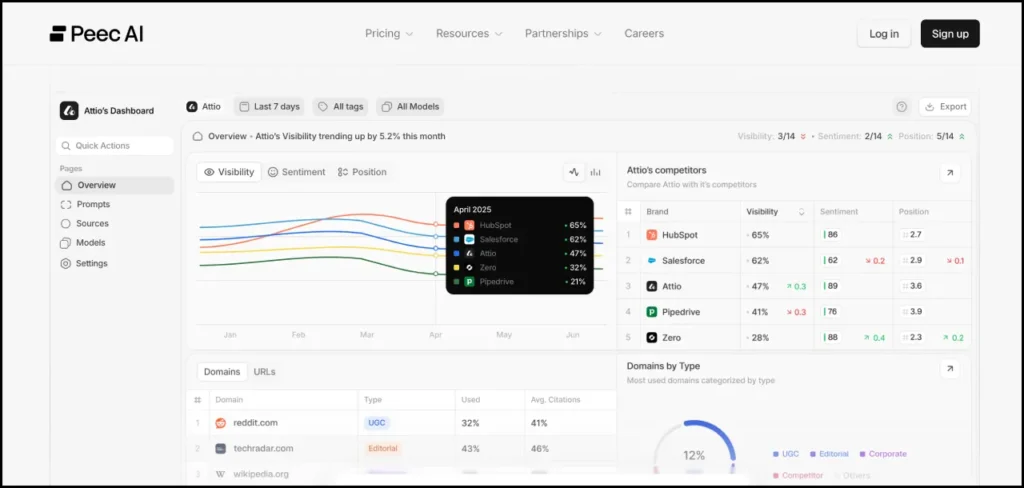
If you need the most comprehensive view of how your brand shows up across every major AI search engine, including Copilot, Peec AI is the most capable platform I’ve tested.
What sets it apart is the depth of prompt-level analytics. You’re not just getting a yes or no on whether your brand appears. You get sentiment scoring, answer position data, and insight into which third-party domains are influencing AI-generated responses and potentially pushing your competitors ahead of you.
The “Actions” system is genuinely useful. It gives you prioritized recommendations based on what the AI engines are actually responding to, not just generic SEO advice. For agencies managing multiple clients across different verticals, this level of insight is hard to find elsewhere.
Covers: ChatGPT, Gemini, Perplexity AI, Claude, Microsoft Copilot, Grok, DeepSeek, Llama
Best for: Mid-market brands, digital agencies, enterprise marketing teams
My take: The most complete platform I’ve used for AI era visibility. The learning curve exists, but it’s worth it.
2. AIclicks — Built Specifically for AI Search Tracking
AIclicks was purpose-built for a world where AI search engines, not blue links, drive discovery. It doesn’t try to bolt AI tracking onto a legacy SEO platform. Everything about it, from the prompt audit feature to the multi-engine citation tracking, was designed with Copilot and its peers in mind.
The prompt audit feature stands out in practice. It lets you quickly assess your standing across Copilot for dozens of prompts at once, which is invaluable when you’re doing an initial audit for a new client and need to identify gaps fast.
Pricing: Starts at $39/month (Starter) up to $499/month (Business)
Covers: Copilot, ChatGPT, Perplexity, and more depending on tier
Best for: Startups, growth-stage brands, and agencies that need AI-first tracking without legacy baggage
My take: One of the most accessible starting points for brands new to AI rank tracking. The Starter plan is surprisingly capable for the price.
3. Semrush AI Visibility Toolkit — Best for Teams Already in the Semrush Ecosystem
Semrush has earned its place in this list not by being the most specialized Copilot tracker, but by being the most practical one for teams that already live inside Semrush’s platform. If you’re using Semrush for keyword research, competitor analysis, and traditional rank tracking, adding AI visibility monitoring to the same workflow is genuinely seamless.
The integration with Google AI Overviews, alongside Copilot and ChatGPT tracking, gives you a unified view of where AI search is eating into your traditional traffic and where the opportunities are. If you’re still doing old-school keyword research without an AI lens on top, this is the tool that bridges both worlds.
Best for: SEO teams at agencies and in-house brands already using Semrush
My take: Not the deepest Copilot tracker, but the best at fitting into existing workflows without adding tool sprawl.
4. Rankability — Best for Agencies Managing Enterprise Clients
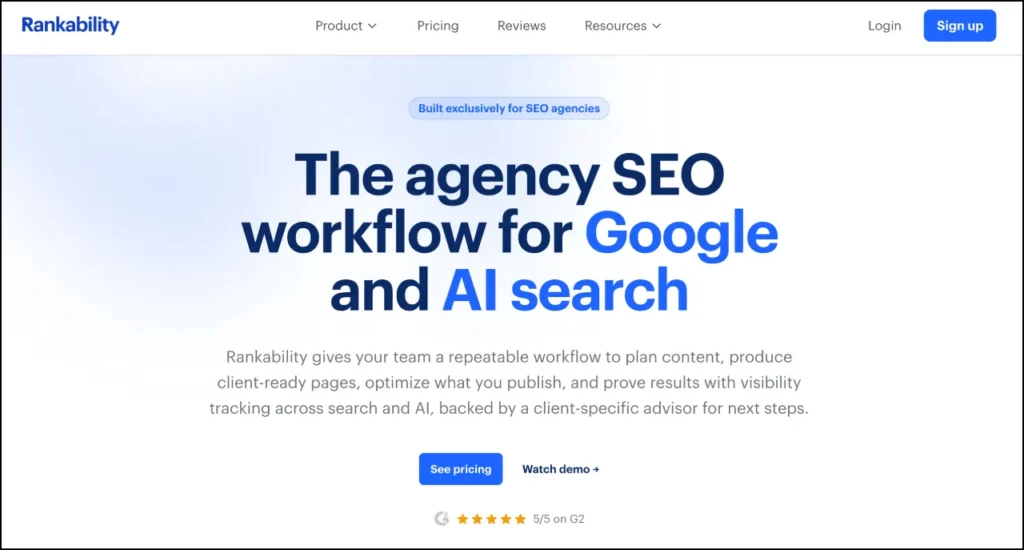
Rankability’s approach to Copilot tracking is differentiated by how it connects citation gaps to specific on-page, entity, and schema markup fixes. Most tools tell you that you’re not being cited. Rankability tells you why and gives you a prioritized action list to change that.
Check out our full breakdown of the best on-page SEO tools if you want to pair Rankability with a solid on-page optimization workflow. The combination is powerful.
The fact that it queries publicly accessible Copilot answers, leaving your Microsoft 365 tenant completely untouched, matters for enterprise clients who have legitimate concerns about data isolation.
It also supports role-based permissions, SSO, and white-label exports, which makes it one of the few tools designed with agency operations in mind rather than just individual users.
Covers: Copilot, ChatGPT, Gemini, Claude, Perplexity, DeepSeek, Google AI Overviews
Best for: Agencies with enterprise clients, teams that need actionable diagnostics alongside citation tracking
My take: If optimization, not just monitoring, is the goal, Rankability is the most action-oriented tool in this list.
5. Orchly.ai — Best for GEO + SEO Combined Workflows
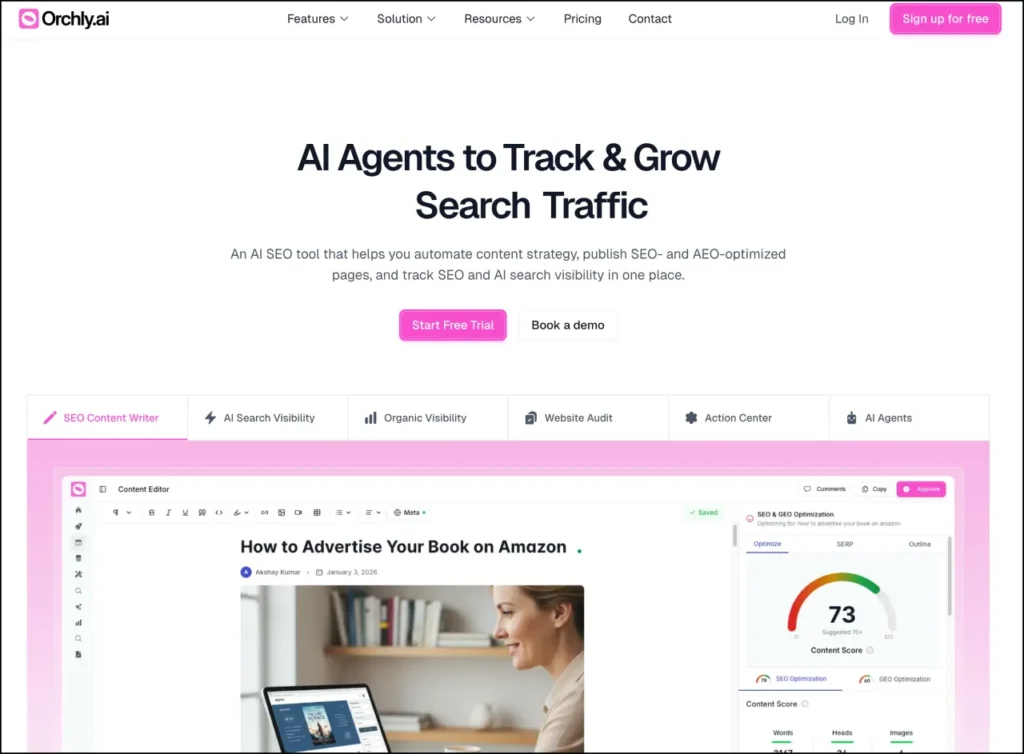
Orchly is what I’d recommend for teams that want to understand the full picture, where their brand shows up in AI assistants, who’s winning alongside them, and how sentiment is trending, and then actually do something with that data without switching to a separate platform.
The daily prompt monitoring is solid, and the competitive comparison view showing which brands appear alongside yours in AI-generated responses has changed how I think about competitive positioning in the AI search era. You’re not just competing for rankings anymore. You’re competing for co-citation patterns.
Best for: Content marketing teams, GEO (Generative Engine Optimization) focused agencies, brands tracking competitive positioning in AI search answers
My take: Underrated relative to how much it does. The GEO automation features in particular are ahead of most competitors.
6. Nightwatch — Best for Hybrid Traditional + AI Tracking
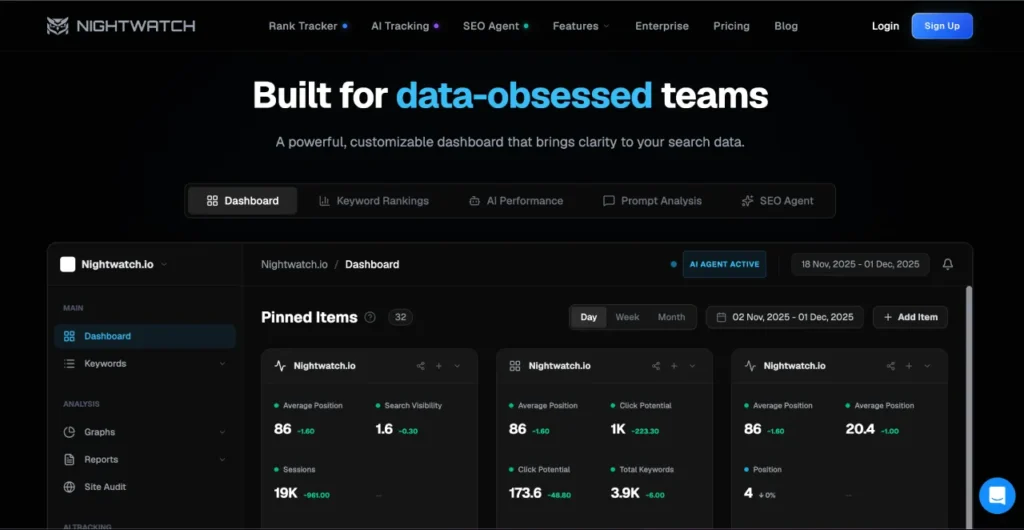
Nightwatch has evolved from a solid traditional rank tracker into a genuine hybrid tool that can monitor both Google/Bing positions and AI search visibility in a single platform. For SMBs and agencies that need to justify one subscription budget rather than two, this matters a lot. If you’re on a tight budget, also take a look at our affordable SEO services guide for small businesses to see how to stretch every dollar.
The client-facing reports are the best-designed in this entire category. When I’m presenting AI visibility data to a client who doesn’t live and breathe SEO, Nightwatch’s dashboards land better than any other tool I’ve tested.
Pricing: Starts at $39/month; AI Tracking add-on at $99/month
Covers: Copilot, ChatGPT, Gemini
Best for: Agencies presenting to non-technical clients, SMBs running both traditional and AI SEO
My take: The best balance of price and capability for teams that don’t want to maintain separate toolstacks.
7. Otterly AI — Best Budget Entry Point
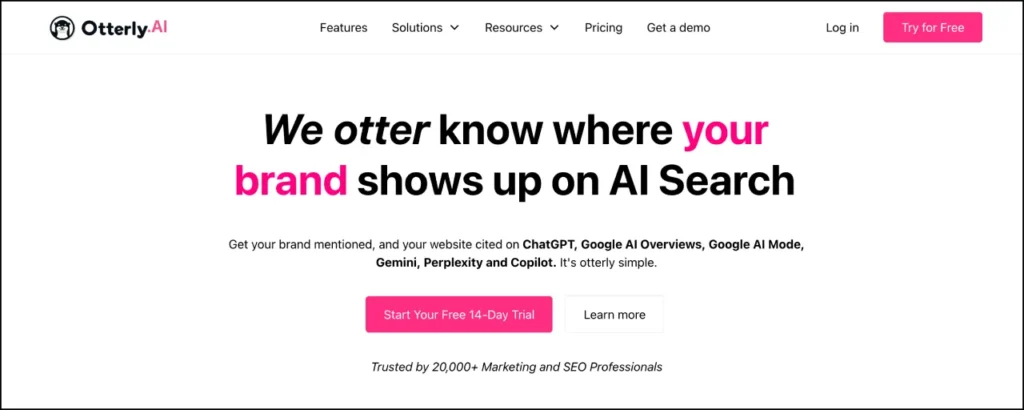
Otterly AI is where I’d start if budget is tight but you still need legitimate Copilot monitoring. It covers the essentials, brand visibility, competitor mentions, citation context, without overwhelming you with features you won’t use in the first 90 days.
The GEO audit tool, which analyzes 25+ on-page factors affecting AI citations, is genuinely useful for identifying quick wins. It’s not as deep as Rankability’s diagnostics, but it gets the job done at a fraction of the price. We also covered Otterly in our best AI monitoring tools roundup if you want a deeper comparison.
Pricing: Lite at $29/month; Standard at $189/month
Best for: Solo marketers, small brands, early-stage startups validating AI visibility before scaling
My take: The best starting point for anyone who wants to understand Copilot tracking without committing to enterprise pricing.
8. Keyword.com AI — Best for Traditional SEO Teams Making the Transition
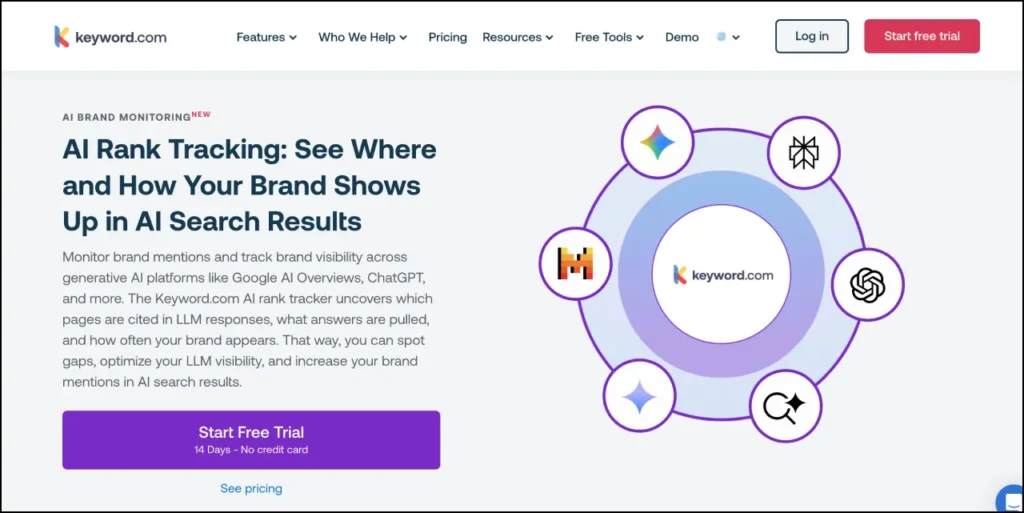
If your team is built around keyword rank tracking and you need to add AI visibility monitoring without completely overhauling your workflow, Keyword.com AI is the bridge. It layers Copilot and AI engine monitoring directly onto the keyword tracking interface most SEOs already know.
This matters more than it sounds. Adoption of new tools is always the hidden cost of switching platforms. Keyword.com AI dramatically reduces that friction.
Pricing: Starting around $24/month, with AI visibility credits as an add-on
Best for: Traditional SEOs expanding into AI visibility tracking, keyword-first teams
My take: Not the most powerful Copilot tracker, but the lowest-friction entry point for teams coming from classic rank tracking backgrounds.
9. Scrunch AI — Best for Enterprise Brand Intelligence
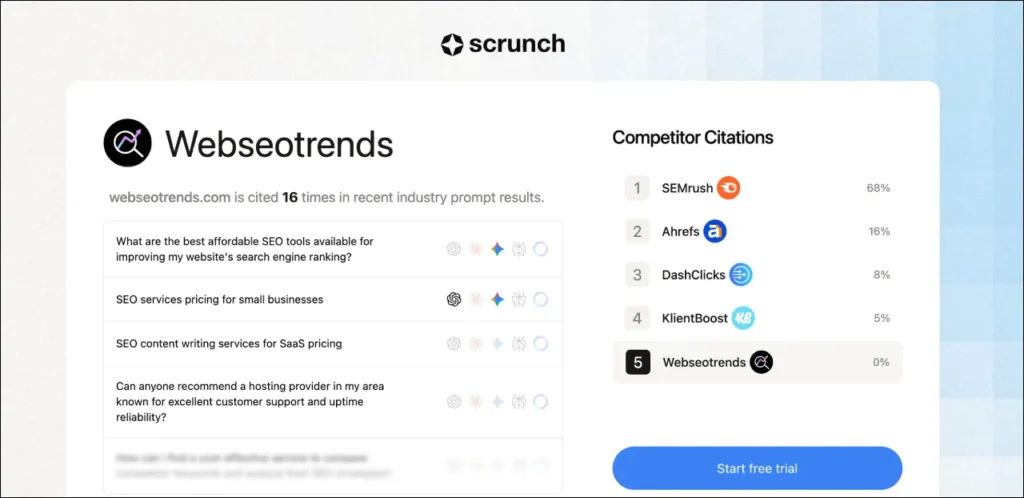
Scrunch AI operates at the intersection of brand safety monitoring and AI visibility tracking. Beyond basic citation tracking, it surfaces content gaps, inconsistent brand mentions, and potential misinformation inside AI-generated answers, the kind of issues that enterprise brand teams lose sleep over.
The GA4 integration is one of the few attempts in this category to connect AI visibility data back to actual site behavior, showing you crawler activity and referral signals from AI platforms alongside your visibility metrics.
Best for: Enterprise brands, brand safety teams, large agencies with diagnostic-heavy workflows
My take: Overkill for most SMBs, but for enterprise teams managing multiple brands, the diagnostic depth is genuinely valuable.
10. LLMrefs — Best Lightweight Pulse Check
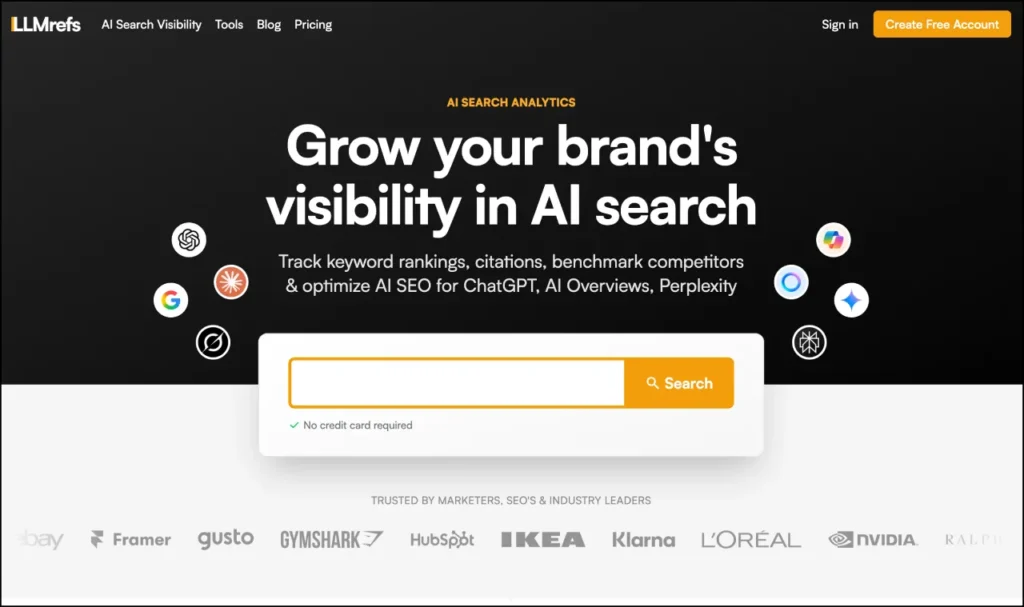
LLMrefs takes a keyword-first approach that feels familiar if you come from traditional SEO. Instead of complex prompt libraries, you add brand names and keywords, and the tool shows how often your brand surfaces across major AI models, including Copilot.
It’s simple by design, and that simplicity is the point. For founders or small teams who need a quick pulse check on AI visibility without the complexity of a full platform, LLMrefs delivers.
Best for: Founders, early-stage teams, quick audit use cases
My take: Don’t use this if you need deep diagnostics. Use it if you need to answer “Are we showing up at all?” quickly and affordably.
Quick Comparison: Copilot Rank Tracking Tools at a Glance
| Tool | Best For | Copilot Tracking | Starting Price | Optimization Features |
|---|---|---|---|---|
| Peec AI | Enterprise / Agencies | Yes | Custom | Strong |
| AIclicks | Startups / Growth | Yes | $39/mo | Moderate |
| Semrush AI | Existing Semrush Users | Yes | Bundled | Moderate |
| Rankability | Agencies / Enterprise | Yes | Beta / Custom | Strong |
| Orchly.ai | GEO Teams | Yes | Custom | Strong |
| Nightwatch | Hybrid SEO/AI Teams | Yes | $39/mo + $99 add-on | Limited |
| Otterly AI | Budget / Solo | Yes | $29/mo | Basic |
| Keyword.com AI | Traditional SEOs | Yes | ~$24/mo | Basic |
| Scrunch AI | Enterprise Brands | Yes | Custom | Diagnostic |
| LLMrefs | Pulse Checks | Yes | Low / Free tier | Minimal |
How to Actually Improve Your Copilot Visibility (Beyond the Tools)
Tracking is only half the battle. Here’s what I’ve learned actually moves the needle.
Don’t block AI crawlers.
This sounds obvious, but I’ve audited sites that were blocking BingBot, the same crawler that powers Copilot. If BingBot can’t index your content, Copilot can’t cite it. Check your robots.txt today. And if you’ve never done a proper backlink audit alongside your crawl audit, now is the time.
Prioritize server-side rendering.
Copilot’s crawlers often can’t process JavaScript-rendered content. If your key pages require JS to load, Copilot may never see what’s on them. Your headings, lists, FAQs, and key claims need to be in static HTML.
Submit to IndexNow. IndexNow notifies Bing directly and immediately when your content updates. Since Copilot is powered by Bing, faster Bing indexing means faster Copilot awareness of your content.
Build third-party citation presence.
Based on what I’ve seen across multiple tracking campaigns, Copilot tends to cite brands that are referenced on authoritative third-party domains, industry publications, review sites, and reputable news outlets. Your backlink building strategy matters as much as your on-site content, maybe more. If you need to accelerate this, we offer premium backlink services designed specifically for U.S. brands looking to build domain authority fast.
Structure content for AI comprehension.
Numbered lists, FAQ sections, clear headings, and concise definitions all make it easier for AI engines to extract and cite your content accurately. Think of it as SEO content writing optimized for both human readers and AI parsers. The formatting rules are the same; the stakes are higher.
The Bottom Line: Which Tool Should You Pick?
There’s no single right answer, but here’s how I’d frame the decision.
If you’re just getting started and want to understand where you stand, Otterly AI or LLMrefs gets you in the game without breaking the bank.
If you need a serious, ongoing AI tracking program and want the most actionable insights, Peec AI or Rankability will give you the depth to actually improve, not just monitor.
If you’re an agency juggling client reporting and tight timelines, Nightwatch for mid-market clients and Orchly.ai for brands serious about GEO optimization are the most workflow-friendly options.
If you’re already deep in Semrush, stay there. The AI Visibility Toolkit is good enough that there’s no reason to add another platform.
The common thread: don’t wait. Copilot’s weekly active users grew more than 90% during 2025, and the brands building AI visibility today are the ones that will be cited by default when competitors finally wake up to this channel.
The window to get ahead is still open. It won’t be for long.
Not sure where your site stands right now? We offer a free SEO audit for new clients that covers both traditional rankings and AI search visibility gaps. It’s a good place to start.
Frequently Asked Questions
What is a Copilot rank tracking tool?
A Copilot rank tracking tool monitors whether and how your brand appears inside Microsoft Copilot’s AI-generated responses. Unlike traditional rank trackers that measure positions in search engine results pages, these tools track citation rates, brand mentions, sentiment scoring, and share of voice inside AI-generated answers.
Is Microsoft Copilot different from other AI tools I should track?
Yes. Copilot is unique because it’s powered by Bing’s search index and deeply embedded inside Microsoft 365 apps, including Word, Outlook, Teams, and Excel, meaning it reaches enterprise users inside their daily workflows, not just when they open a standalone chatbot. Its citation behavior also differs from ChatGPT and Gemini, often surfacing sources those platforms don’t.
Do I need a separate tool just for Copilot, or can my existing SEO tool handle it?
Most traditional SEO tools cannot track AI visibility inside Copilot. You either need a dedicated AI visibility tool, or a modern platform that has specifically added Copilot monitoring. Options like the updated Semrush AI Visibility Toolkit, Nightwatch with the AI add-on, or purpose-built platforms like AIclicks or Peec AI all work. If you’re evaluating your full SEO toolstack, our on-page SEO tools guide is a useful companion read.
How often should I check my Copilot visibility? Weekly monitoring is the minimum I’d recommend for most brands. For competitive categories where AI search is a significant traffic driver, daily monitoring gives you faster feedback loops.
What’s the difference between AI visibility and traditional SEO rankings?
Traditional SEO rankings measure where your page appears in a list of blue links. AI visibility measures whether an AI engine cites or recommends your brand when answering a conversational question. You can rank #1 on Google and still be completely invisible in Copilot, and vice versa.
Found this guide helpful? Share it with your SEO team or bookmark it. I update it as tools evolve and new platforms enter the market.
