
WordPress SEO Services Built for Rankings, Traffic & Revenue
Turn your WordPress website into a stronger organic growth channel with WordPress SEO services built around your business goals. Webseotrends helps businesses improve search visibility through technical SEO, on-page optimization, keyword strategy, content optimization, internal linking, and authority building—while preparing WordPress websites for Google and AI-powered search.
Transparent methodology. Technical SEO · On-Page SEO · SEO Content · Internal Linking · Link Building · AI Search Optimization. White-hat tactics. No guaranteed-ranking claims.

monthly organic visits, from zero in 6 months (case study)
0
+
leads per month from organic search (case study)
0
months to reach those results
0
What Makes Our WordPress SEO Services Different
WordPress is the most widely used content management system on the web, so there is no shortage of agencies claiming to understand it. What matters is whether they understand how the platform changes the way SEO work is carried out. SEO for WordPress follows the same principles as any search engine optimization, but your site may rely on Gutenberg, Elementor, Divi or Bricks, custom fields, WooCommerce, an SEO plugin such as Yoast SEO or Rank Math, caching tools, redirect managers and form plugins. Each layer can help when configured well, and each can cause trouble when two tools try to control the same job.
Typical results include duplicate title rules, thin tag and category archives, heavy scripts, conflicting schema, redirect chains, images that load too slowly and internal links that never reach the pages that need authority. Because one template setting can change how Google crawls and indexes hundreds of URLs, we look for patterns first and individual pages second.
Webseotrends keeps strategy and implementation connected. Keyword research maps to page types your team can actually maintain, technical advice fits your theme and plugin stack, and content is published cleanly without breaking headings, links or page speed. The result is a prioritized roadmap, not a generic checklist. For the broader program behind it, see our SEO services.
Typical results include duplicate title rules, thin tag and category archives, heavy scripts, conflicting schema, redirect chains, images that load too slowly and internal links that never reach the pages that need authority. Because one template setting can change how Google crawls and indexes hundreds of URLs, we look for patterns first and individual pages second.
Webseotrends keeps strategy and implementation connected. Keyword research maps to page types your team can actually maintain, technical advice fits your theme and plugin stack, and content is published cleanly without breaking headings, links or page speed. The result is a prioritized roadmap, not a generic checklist. For the broader program behind it, see our SEO services.
Platform-Specific Diagnosis
We study how your theme, page builder, custom post types and plugins affect crawling, rendering and indexing, then fix the cause at template or settings level instead of patching one URL at a time. That is faster, cheaper and far less likely to break again after the next update.
Strategy Before Settings
An SEO plugin gives you fields to fill in. It cannot do keyword research, judge search intent, find content gaps or build a keyword-to-page map. Our plans begin with those decisions, then configure your tools to match, so the settings serve a strategy instead of replacing one.
Reporting Tied to Business Goals
We track organic leads, calls, form submissions and sales where measurable, alongside rankings and traffic. You can see whether SEO is paying for itself, which pages deserve more investment and what we plan to do next, in plain language rather than jargon.
of all websites run on WordPress (W3Techs, August 2026)
0
%
share of the known CMS market (W3Techs, August 2026)
0
%
of WordPress sites use Elementor (W3Techs, August 2026)
0
%
At this scale, the sites you compete with are probably built on WordPress too. The difference is rarely the platform itself. It is how well the site is configured, structured and maintained.
What's Included in Our WordPress SEO Services
These ten workstreams make up our WordPress SEO optimization services. The exact mix depends on your audit findings, your competition and the plan you choose, but each one is documented so you can see what is being done on your site and why. Webseotrends does not pad scopes with tasks that will not help.
WordPress SEO Audit & Opportunity Analysis
Your engagement opens with a structured review of crawl coverage, indexation in Google Search Console, site architecture, schema, metadata, mobile usability, Core Web Vitals and backlinks. We also look at queries where you already rank on page two, because those are often the quickest gains. Every finding is ranked by impact and effort so the first fixes are the ones that pay back fastest. If you want a standalone review, see our SEO audit services.
WordPress SEO Strategy, Keyword Research & Competitor Analysis
We research the terms your buyers actually use, group them by intent and assign each to the page that should rank for it. Competitor analysis shows who holds the top positions, what they cover, which links they earn and where they are weak. This work prevents two common mistakes: targeting keywords nobody buys with, and creating several pages that compete for the same query.
WordPress Technical SEO & Indexation
We review XML sitemaps, robots rules, canonicals, noindex settings, pagination, redirects, hreflang where relevant and schema output. We also clean up tag, author, attachment and date archives that dilute rankings. The goal is simple: every page that should rank is discoverable, renderable and indexed, and every page that should not is kept out of the way.
WordPress On-Page SEO & Template Optimization
We optimize titles, meta descriptions, headings, image alt text, URLs and dynamic title templates across pages, posts and custom post types. Fixing the template means every page built from it improves at once. Read more about how we handle this in our on-page SEO services, or compare tools in our guide to the best on-page SEO tools.
WordPress Content SEO That Builds Rankings & Conversions
We refresh pages that have outgrown their rankings, consolidate overlapping posts and plan new service pages, guides and comparison content around real search intent. Every piece is written to answer the visitor's question first, then guide them toward the next step. Explore our SEO content writing services for the full process.
WordPress Internal Linking & Site Architecture
We find orphan pages, shallow topic coverage and weak link paths, then build topic clusters where supporting articles link to revenue pages with descriptive anchors. A clear structure helps visitors find what they need, helps crawlers discover important pages and helps AI systems understand what your site is about.
WordPress Link Building & Digital PR
Authority comes from relevant, earned references: outreach, genuinely useful resources, digital PR and partnerships. We do not use private blog networks, paid link schemes or automated tools. Learn more about our approach to off-page SEO and link building.
WooCommerce SEO for Products, Categories & Ecommerce
Online stores need a sensible category hierarchy, strong product templates, variation handling, faceted URL control, product schema, review markup and cleanup of thin or duplicate pages. We prioritize the categories and products that drive revenue, and we make sure filters and variants do not flood Google with near-identical URLs.
WordPress Core Web Vitals & Performance Optimization
We test Largest Contentful Paint, Interaction to Next Paint and Cumulative Layout Shift using field and lab data, then trace problems to heavy plugins, oversized images, render-blocking assets, bloated themes or weak hosting. If hosting is the bottleneck, our guide to the best WordPress hosting can help, and our website maintenance services keep performance from slipping after launch.
WordPress SEO Reporting & Performance Tracking
Using Search Console, GA4 and rank tracking, monthly reports show what changed, why it changed and what we plan next. We connect organic visits to leads and conversions so decisions rest on outcomes. You will always know which actions moved results and which did not.
How we decide what to fix first
Not every issue deserves attention at the same time. We score each finding by three questions: how many important pages it affects, how much traffic or revenue is at stake, and how hard it is to fix. A template-level canonical error that touches hundreds of URLs outranks a single missing alt attribute, and a title rewrite on a page that already sits at position eight may beat a new article that will take months to mature.
This approach keeps early work practical. In the first weeks we usually handle indexation blockers, broken redirects, template titles and the most obvious speed problems. Next come content refreshes and internal links on the pages closest to ranking, followed by new content and authority building. You receive the order of work in writing, so you can see why each task sits where it does, and change priorities if your business does.
This approach keeps early work practical. In the first weeks we usually handle indexation blockers, broken redirects, template titles and the most obvious speed problems. Next come content refreshes and internal links on the pages closest to ranking, followed by new content and authority building. You receive the order of work in writing, so you can see why each task sits where it does, and change priorities if your business does.
Because WordPress sites change constantly, we also build in maintenance of the gains. Plugin updates, new posts and editor mistakes can quietly undo technical work, so monthly checks look for new crawl errors, noindex tags added by accident, slow templates and broken links before they spread. Teams that publish often benefit from simple editing guidelines for headings, links and images, which we provide as part of ongoing support.
WordPress SEO for Google & AI Search
Search results now combine classic listings with AI-generated summaries and conversational answers. That does not replace SEO. Pages that rank well, load quickly and answer questions clearly are the same pages AI tools tend to find and cite. Webseotrends adds an AI visibility layer on top of those fundamentals, without relying on unproven tricks or hidden text, and we measure what can be measured honestly.
Google Search & AI Overview Optimization
Google's AI features draw on pages that are crawlable, helpful and trustworthy. We strengthen direct answers, page structure, author and business information, and supporting evidence on the pages that matter. This improves the odds of being referenced, but no agency can guarantee inclusion in any AI feature, and we will not pretend otherwise.
WordPress GEO for AI Search Visibility
Generative engine optimization means making content easy for AI systems to understand, quote and attribute. We write clear definitions, comparisons, step lists and sourced facts, keep key pages accessible to the crawlers you want to allow, and make sure important claims are consistent across your site.
Optimizing WordPress Content for ChatGPT, Gemini & Perplexity
These assistants answer conversational questions and often cite web sources. We map the questions your customers ask, build pages that answer them completely and check that your brand and services are described consistently on your site and on trusted third-party sources. Strong rankings and clear writing remain the best foundation.
Entity, Structured Content & AI Citation Optimization
Entities are the people, brands, services and places a search system recognizes. We align your business name, services, authors and locations across pages, add appropriate schema markup and structure content in scannable sections, so machines can connect your site to the topics you want to be known for. See how this fits our wider AI and SEO services.
Practical steps matter more than labels. For AI search, we focus on five habits: answer the main question near the top of the page, back claims with specific details, keep headings descriptive, show who wrote or reviewed the content, and keep your business information consistent everywhere it appears. None of these is a trick. They make pages better for readers, which is the best long-term signal available.
We also help you decide what to measure. AI search reporting is still immature, so we combine Search Console data, referral traffic, branded search growth and periodic manual checks of the questions your customers ask, and we describe the limits of that data honestly.
We also help you decide what to measure. AI search reporting is still immature, so we combine Search Console data, referral traffic, branded search growth and periodic manual checks of the questions your customers ask, and we describe the limits of that data honestly.
WordPress SEO Built Around How Search Actually Works
Search works in four stages: crawling, indexing, ranking and presentation. A problem at any stage caps your growth, and WordPress sites tend to fail at predictable points.
Crawling. Bloated archives, blocked resources, endless filter URLs and slow servers waste Googlebot’s attention. Indexing. Accidental noindex tags, duplicate content and thin pages keep good URLs out of the index. Ranking. Mismatched intent, weak internal links, shallow content and few authority signals hold pages back. Presentation. Generic titles, missing schema and unappealing snippets reduce clicks even when you rank well.
We diagnose which stage is failing before recommending work. That keeps your budget on changes that move results, and it prevents the familiar mistake of publishing more content on a site Google cannot properly crawl or index. It also means our recommendations are specific enough for a developer or editor to act on without guessing.
Page experience belongs in this picture too. Google’s published Core Web Vitals thresholds treat a Largest Contentful Paint of 2.5 seconds or less, an Interaction to Next Paint of 200 milliseconds or less and a Cumulative Layout Shift of 0.1 or less as good. We use those targets when we test your templates, because passing them helps visitors stay and convert.
Crawling. Bloated archives, blocked resources, endless filter URLs and slow servers waste Googlebot’s attention. Indexing. Accidental noindex tags, duplicate content and thin pages keep good URLs out of the index. Ranking. Mismatched intent, weak internal links, shallow content and few authority signals hold pages back. Presentation. Generic titles, missing schema and unappealing snippets reduce clicks even when you rank well.
We diagnose which stage is failing before recommending work. That keeps your budget on changes that move results, and it prevents the familiar mistake of publishing more content on a site Google cannot properly crawl or index. It also means our recommendations are specific enough for a developer or editor to act on without guessing.
Page experience belongs in this picture too. Google’s published Core Web Vitals thresholds treat a Largest Contentful Paint of 2.5 seconds or less, an Interaction to Next Paint of 200 milliseconds or less and a Cumulative Layout Shift of 0.1 or less as good. We use those targets when we test your templates, because passing them helps visitors stay and convert.
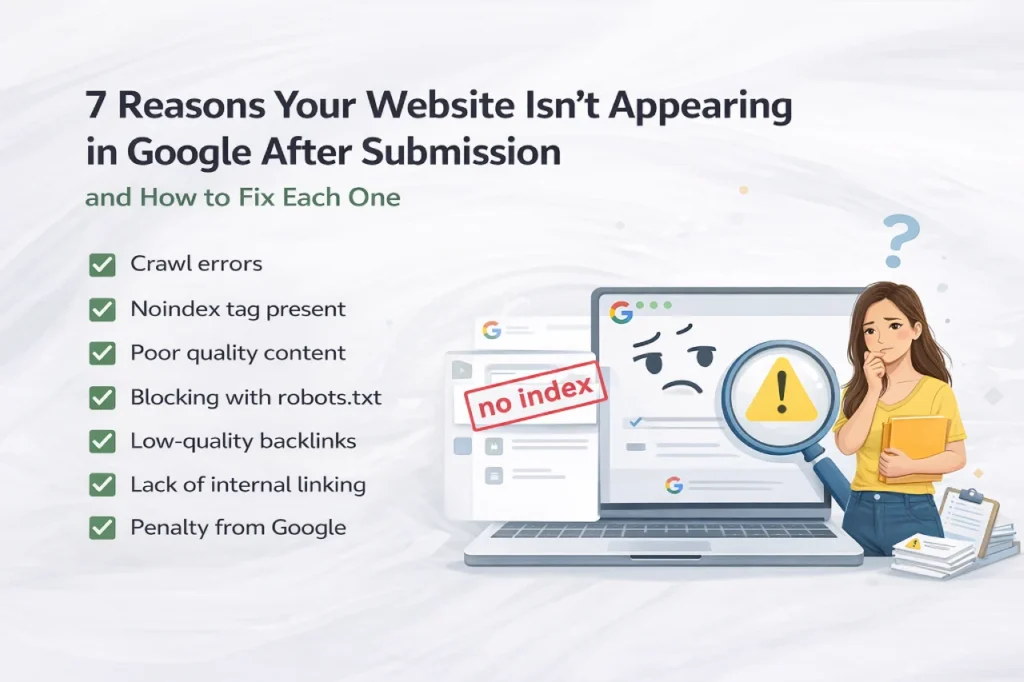
A practical way to apply this: check how many of your important URLs are indexed, which ones receive impressions but few clicks, and which rank between positions 5 and 20. Each group points to a different fix. Unindexed pages need technical or quality attention, low-click pages need better titles and snippets, and pages near the first page usually need stronger content depth, internal links or a few relevant external references. Our audit presents these groups side by side so you can see where effort will pay off soonest.
WordPress SEO for Different Businesses & Websites
A SaaS blog, a local contractor and a WooCommerce store compete in very different ways. We adapt keyword strategy, content formats and technical priorities to your market instead of applying one template to every client.
SaaS & B2B Websites
Long research cycles need content for every stage: problem-aware guides, use-case pages, integration pages and honest comparison content. We build topic clusters that capture demand early and lead evaluators toward demos, trials and sales conversations.
Local & Service Businesses
We create service and location pages with real local relevance, repair technical issues on page-builder sites and strengthen the signals behind local visibility, while keeping every page genuinely useful. See our local SEO tools guide and our example of SEO for plumbers.
Professional Services
Law, accounting, consulting and healthcare buyers look for trust before they call. We pair clean architecture with accurate, authoritative content, clear author information and conversion paths designed for consultations and enquiries.
Ecommerce & WooCommerce
Large catalogs need rules for categories, filters, variants and out-of-stock products. We protect crawl efficiency, strengthen category pages and add product markup so the pages that earn revenue are the ones search engines find first.
Small & Growing Businesses
Budget-conscious sites need focus. We fix what blocks rankings first, then expand into content and links as results justify it. Explore our affordable SEO packages to find the right starting point.
Across all of these, the same discipline applies: understand how people search before deciding what to build. A contractor may win with a handful of well-built service pages and strong local signals, while a software company needs a library of comparison and integration content, and a store needs reliable category pages and product data. Webseotrends starts from your customers’ questions and works backward to the pages, links and technical setup needed to answer them.
If your business serves several audiences, we separate them in the site structure so each page has one clear purpose and one clear next step. That reduces overlap between pages and gives every visitor a shorter path to contacting you.
If your business serves several audiences, we separate them in the site structure so each page has one clear purpose and one clear next step. That reduces overlap between pages and gives every visitor a shorter path to contacting you.
How Our WordPress SEO Services Turn Strategy Into Implementation
Many SEO campaigns stall between recommendation and production. The audit finds the problems, but nobody ships the fixes, or the content plan calls for layouts the theme cannot support. Webseotrends works in five connected stages so diagnosis turns into live changes, and you always know what comes next.
Audit & Strategy
We crawl the site, review Search Console and analytics data, study competitors and agree on a prioritized roadmap with measurable goals and realistic timelines.
Technical Implementation
Indexation, canonicals, redirects, schema, speed and plugin fixes are applied and documented, or handed to your developer with clear, testable instructions.
On-Page & Content Optimization
We update templates and priority pages, then publish new or refreshed content aligned to search intent, your brand voice and your conversion goals.
Internal Linking & Authority Building
We connect related pages with descriptive links and earn relevant external references through outreach, useful resources and digital PR.
Reporting & Continuous Optimization
Each month we review results, double down on what worked, retire what did not and set the next priorities with you.
Every stage ends with something you can review: a documented audit, a change log, updated pages, a linking map and a monthly report. That paper trail keeps the work accountable, helps new team members understand what was done and makes it easy to continue if you ever bring SEO in-house.
WordPress SEO for Redesigns, Migrations & New Websites
Redesigns and platform moves are when many sites lose hard-won visibility. Planning SEO into the project protects what you have already earned and gives the new site a stronger starting position.
WordPress Redesign SEO
We review the current site before design starts, identifying pages that rank, convert or earn links so they are preserved in the new structure, copy and navigation. Designers and developers get SEO requirements early, when changes are cheap.
URL Mapping & 301 Redirects
Every old URL is mapped to its closest new equivalent and tested after launch. This prevents broken pages, redirect chains and lost link value, which are among the most common causes of ranking drops after a redesign.
Protecting Existing Rankings
We benchmark rankings, traffic, indexation and top landing pages before launch, so any change afterward can be spotted and traced to a cause quickly instead of becoming a mystery.
New WordPress Website SEO Setup
Launching from scratch? We configure structure, templates, sitemaps, analytics, schema and keyword mapping from day one. Pair this with our web design packages or see our guide to the best WordPress plugins for design.
Post-Migration Monitoring
For weeks after launch we monitor crawl errors, indexation, traffic and rankings, and correct problems before they become lasting losses.
A WordPress SEO Company Focused on Measurable Growth
Good SEO is accountable. At the start we agree on the numbers that matter: organic sessions, qualified leads, keyword visibility on revenue pages, indexed pages and conversions. Monthly reports explain movement in plain language, including what did not work and what we will change.
We do not promise specific rankings, because no one outside Google controls them. What Webseotrends commits to is careful diagnosis, clearly documented work, search-guideline-compliant tactics and regular communication. Results depend on competition, site history, content quality and how quickly recommendations are implemented, and we set expectations on that basis. For a realistic view of timing, read our guide on how long SEO takes to work.
If you are weighing options, start with a free audit. You will see what is holding the site back, which fixes come first and what each plan would cover, with no obligation.
We do not promise specific rankings, because no one outside Google controls them. What Webseotrends commits to is careful diagnosis, clearly documented work, search-guideline-compliant tactics and regular communication. Results depend on competition, site history, content quality and how quickly recommendations are implemented, and we set expectations on that basis. For a realistic view of timing, read our guide on how long SEO takes to work.
If you are weighing options, start with a free audit. You will see what is holding the site back, which fixes come first and what each plan would cover, with no obligation.
Why Choose Webseotrends for WordPress SEO?
Webseotrends is a digital marketing agency working across SEO, content and web design for startups, small businesses and growing brands. Here is what you can expect when you work with us.
WordPress SEO + Technical Implementation
Webseotrends does not stop at a report. Recommendations come with implementation support or developer-ready instructions, so fixes reach your live site instead of sitting in a document.
SEO, Content & Authority Under One Strategy
Content, internal links and outreach are planned together, so each effort strengthens the others and pages never compete for the same keywords.
Google + AI Search Optimization
We improve classic rankings and AI search readiness in one program, so you are not paying for two disconnected efforts or chasing short-lived tactics.
Transparent SEO Reporting
You see what we did, what changed and what comes next, in language that does not require an SEO background. Questions get direct answers.
Strategies Built Around Business Goals
A page that ranks but never converts is a cost. We prioritize pages that influence leads and sales, and we tell you when a keyword is not worth chasing.
Flexible SEO Services for Different Budgets
Webseotrends offers plans from $199 to $999 per month, so you can start with a focused scope and expand as results justify it.
Choosing an SEO partner is partly about skill and partly about trust. Ask any agency how it handles bad news, what it will not do and how you can check its work. At Webseotrends, the answers are straightforward: we tell you when a tactic is unlikely to pay off, we avoid link schemes and shortcuts that put your site at risk, and you keep access to your Search Console, analytics and reports so the data is always yours.
You also get a team that understands that SEO touches more than rankings. Design affects conversions, hosting affects speed, content affects trust and maintenance affects stability. When a problem sits outside SEO, we say so and point you to the right fix, whether that is a faster host, a cleaner theme or a better enquiry form.
You also get a team that understands that SEO touches more than rankings. Design affects conversions, hosting affects speed, content affects trust and maintenance affects stability. When a problem sits outside SEO, we say so and point you to the right fix, whether that is a faster host, a cleaner theme or a better enquiry form.
Pair WordPress SEO With the Right SEO Services
WordPress SEO works best alongside related services. Each one is handled on its own dedicated page, so you can combine only what you need and avoid paying for overlap.
Technical SEO
Use when crawl, indexation, schema or template problems limit growth. Explore our SEO services.
On-Page SEO
Page-level optimization of titles, headings, content and links. See on-page SEO services.
Off-Page SEO & Link Building
Authority through relevant references and digital PR. See link building services.
AI SEO
Visibility in AI Overviews and AI assistants. See our AI SEO approach.
SEO Content Services
New pages and refreshes tied to search demand. See SEO content writing.
WordPress Web Design
Fast, SEO-ready websites. See web design packages.
Website Maintenance
Updates, security and monitoring. See maintenance services.
How Much Do WordPress SEO Services Cost?
Cost depends mainly on the number of pages we optimize, keyword competition, current site condition and how much content and authority work is needed. Webseotrends keeps pricing simple, with plans from $199 to $999 per month.
The Starter plan at $199 covers up to 5 pages and suits small sites, new launches and businesses with a few key service pages. The Pro plan at $999 covers approximately 15 to 30 pages and suits larger sites in more competitive markets. Growth at $499 sits between them for sites that need more than Starter without the full scope of Pro, with exact coverage confirmed after your audit.
Every plan begins with a review of your site and a written scope, so there are no surprises. Very large WooCommerce catalogs, multi-location sites and migrations are quoted separately. Compare details on our SEO packages page.
The Starter plan at $199 covers up to 5 pages and suits small sites, new launches and businesses with a few key service pages. The Pro plan at $999 covers approximately 15 to 30 pages and suits larger sites in more competitive markets. Growth at $499 sits between them for sites that need more than Starter without the full scope of Pro, with exact coverage confirmed after your audit.
Every plan begins with a review of your site and a written scope, so there are no surprises. Very large WooCommerce catalogs, multi-location sites and migrations are quoted separately. Compare details on our SEO packages page.
Starter
Small sites and new launches
$
199
per month
-
Up to 5 pages optimized
-
WordPress SEO audit
-
Keyword-to-page mapping
-
Titles, meta and heading optimization
-
Core technical fixes
-
Internal linking recommendations
-
Monthly performance report
Start at $199
This is text element
Popular
Growth
Growing sites needing content and links
$
499
per month
-
Everything in Starter
-
Mid-size page coverage, confirmed after audit
-
Content optimization and refreshes
-
Internal linking and topic clusters
-
Ethical link building
-
Monthly strategy review
Choose Growth
This is text element
Most Popular
Pro
Larger sites in competitive markets
$
999
per month
-
Approximately 15 to 30 pages
-
Advanced technical work
-
Content strategy and topic clusters
-
Authority building
-
AI search optimization
-
Priority support
-
Detailed reporting
Choose Pro
This is text element
Popular
Running a large WooCommerce store, a migration or a multi-location site? Request a custom quote.
Which WordPress SEO plan fits your website?
Choose Starter if your website is small, new or built around a handful of service pages, and you want the fundamentals handled properly: audit, keyword mapping, on-page fixes and core technical repairs for up to 5 pages. It is also a sensible way to test our working style before committing to more.
Choose Growth if you have outgrown a handful of pages and need content, internal linking and some authority building to compete. It suits businesses with several services, a growing blog or a small catalog.
Choose Pro if your site has roughly 15 to 30 pages that matter, your competitors are well established and you want ongoing content, deeper technical work and stronger authority building under one plan. If you are unsure, request the free audit and we will recommend the smallest plan that can realistically do the job, even if that is Starter.
Choose Growth if you have outgrown a handful of pages and need content, internal linking and some authority building to compete. It suits businesses with several services, a growing blog or a small catalog.
Choose Pro if your site has roughly 15 to 30 pages that matter, your competitors are well established and you want ongoing content, deeper technical work and stronger authority building under one plan. If you are unsure, request the free audit and we will recommend the smallest plan that can realistically do the job, even if that is Starter.
Common WordPress SEO Problems We Fix
These are the issues we see most often on WordPress sites, and the work involved in fixing each one. Most sites have several at once, which is why an audit comes first.
WordPress Pages Not Ranking
Usually caused by intent mismatch, thin content, weak internal links or stronger competitors. We identify which applies, then fix the page, its links or its targeting, instead of rewriting everything and hoping.
WordPress Pages Not Being Indexed
We check noindex settings, canonicals, robots rules, sitemap inclusion, crawl paths and content quality to learn why Google is skipping a URL, then fix the underlying cause and request recrawling.
Duplicate Content & Canonical Issues
Tags, categories, archives, URL parameters and WooCommerce variants often create near-duplicates. We consolidate them with canonicals, redirects or noindex rules as appropriate, so ranking signals stop splitting.
Slow WordPress Websites
We trace slowness to images, scripts, plugins, database load, theme code or hosting, and fix the biggest causes first. Often a handful of changes delivers most of the improvement.
Poor Core Web Vitals
We target LCP, INP and CLS problems at template level, such as unoptimized hero images, layout shifts from late-loading elements and heavy third-party scripts.
Broken Internal Links & Orphan Pages
Broken links are repaired, redirect chains shortened and orphaned pages reconnected to relevant hubs, so authority and visitors reach the pages that matter.
Plugin & Theme SEO Problems
Overlapping SEO plugins, schema conflicts and bloated themes are untangled so one system controls each job, and your stack stays lean and maintainable.
Keyword Cannibalization
When several pages target the same intent, none ranks as well as it could. We merge, redirect or differentiate them so each page has a clear job.
Rankings Lost After a WordPress Redesign
We compare pre- and post-launch data, find missing redirects, changed content or blocked pages, and work to recover lost signals as quickly as possible.
Most of these problems share a root cause: WordPress makes it easy to add pages, plugins and settings, and difficult to see their combined effect on search. A fresh audit reveals the pattern, whether that is a plugin generating thousands of thin URLs, a theme that delays the main content or a redesign that dropped the redirects. Fixing causes rather than symptoms is what keeps rankings stable after the next update. If your site suffers from more than one of these issues, our SEO audit services are a good first step.
Client Testimonials: Real Results From Real Clients
Proof matters more than promises. Here is a documented result from a Webseotrends SEO program, followed by where you can read independent feedback about us on Google.
monthly organic visits, from zero
0
+
leads every month from search
0
months to get there
0
AAE Evaluations, a New York credential evaluation and expert-opinion-letter firm, started with no organic traffic. Within six months of working with Webseotrends, the site passed 1,000 organic visits and was generating around 100 leads every month from search.
AAE Evaluations
Case study: credential evaluation services, New York
What we did: Webseotrends began with keyword and competitor research around credential evaluation and immigration-related searches, then optimized the main service pages, including degree and credential evaluation and expert opinion letters. We fixed on-page and technical issues, published search-focused content that answers the questions applicants ask, and tracked enquiries with monthly reporting so we could see which pages were generating leads.
Want to hear from other clients? Read our reviews on Google and judge for yourself.
WordPress SEO FAQs
What are WordPress SEO services?
WordPress SEO services improve how search engines find, understand and rank a WordPress website. They combine technical SEO, on-page optimization, content, internal linking, link building and performance tracking, with attention to the theme, page builder and plugins your site depends on. The aim is more qualified organic traffic that turns into enquiries or sales.
What is included in WordPress SEO services?
Typically an audit, keyword research and mapping, technical fixes, on-page and template optimization, content work, internal linking, link building, performance improvements and monthly reporting. At Webseotrends the scope varies by plan and is confirmed in writing after your audit, so you know what you are paying for.
What does a WordPress SEO consultant do?
A consultant diagnoses what limits your visibility, sets priorities, recommends or implements changes and measures the outcome. They review your theme, plugins, content and links, then turn findings into an ordered action plan. Webseotrends can work in an advisory role or handle implementation, depending on your team.
How is SEO performed on a WordPress website?
It begins with a crawl and data review in Search Console and analytics, followed by plugin and template configuration, technical fixes, page and content optimization, internal linking and outreach. Results are then tracked and refined every month, because search demand and competitors keep changing.
Is WordPress good for SEO?
It can be. WordPress offers clean URLs, flexible content structures and strong plugin support, which is part of why it runs roughly 41% of all websites according to W3Techs in August 2026. However, poor themes, heavy plugins and default archive settings can hurt crawling, speed and indexing, so configuration matters.
Do WordPress SEO plugins handle everything?
No. Plugins such as Yoast SEO and Rank Math manage settings like titles, sitemaps and schema. They cannot perform keyword research, fix thin content, build links, judge search intent or diagnose speed and indexing problems. They are useful tools, not a strategy.
How long does WordPress SEO take?
Many sites see early movement within three to six months, but timing depends on competition, site health, content quality and how fast changes are implemented. Competitive keywords take longer than niche ones. Read our guide on how long SEO takes to work for a realistic timeline.
How much do WordPress SEO services cost?
Webseotrends plans run from $199 to $999 per month. The $199 plan covers up to 5 pages and the $999 plan approximately 15 to 30 pages, with a middle plan for sites in between. See the SEO packages for full details.
What is the difference between WordPress SEO and WooCommerce SEO?
WordPress SEO covers the whole site. WooCommerce SEO adds work specific to stores: product and category templates, variations, filters, product schema, reviews and thin or duplicate product pages. If you sell online, you need both, and they are planned together.
Can you fix technical SEO issues on my WordPress website?
Yes. We can resolve problems such as indexation errors, canonical conflicts, redirect chains, schema conflicts and speed issues, or provide developer-ready instructions where your team prefers to implement changes. We document every change so nothing is a black box.
Can WordPress SEO improve Google AI Overview visibility?
Strong SEO can improve your chances, because clear, trustworthy, well-structured and crawlable pages are easier for Google to use. Inclusion in AI Overviews cannot be guaranteed by anyone, so be cautious of agencies that promise it.
Get a Free WordPress SEO Audit
Share your website and goals, and Webseotrends will review it and recommend practical next steps: what is holding rankings back, what to fix first and which plan fits. Prefer to compare options first? View our SEO packages or contact us directly. You can also find us on Google Maps.