

What Is PR Link Building?
PR link building is the practice of earning high-authority, editorially placed backlinks by securing genuine media coverage for your brand, content, or data. It sits at the intersection of traditional public relations and modern SEO strategy, combining the media relationships and storytelling of a PR campaign with the keyword targeting and domain authority goals of a link building program.
Where traditional link building focuses on outreach to individual website owners and negotiating placements, digital PR link building focuses on creating content or stories that journalists, editors, and analysts genuinely want to cover. The resulting links are earned, not purchased or negotiated. They appear because a credible publication decided your content was worth referencing.
This distinction matters enormously for the quality of the link. An editorial backlink from a publication with a Domain Rating of 70 or higher, placed within an article written by a real journalist for a real audience, carries a completely different level of authority signal than a link placed in an article published on a site that exists primarily to host paid guest posts.
Digital PR SEO is now widely recognized as the highest-leverage link acquisition strategy available to most businesses. A 2026 survey of 500 SEO professionals found that 34% ranked digital PR as their best-performing link building method, nearly twice the response rate for guest posting, and 55% said PR-style approaches deliver their best results overall.
Why Digital PR Backlinks Outperform Every Other Link Type
Not all backlinks are equal. The same domain rating can represent two entirely different quality tiers depending on the editorial context of the placement. Digital PR backlinks sit at the top of the quality hierarchy for three compounding reasons.
Authority at Scale
Publications that cover genuine news, industry research, and expert commentary typically carry Domain Ratings between 60 and 95. A single placement on a site like Business Insider, Forbes, or a major industry publication with DA 80+ delivers a level of authority signal that would take 20 to 40 mid-tier guest posts to approach. The effort per placement is higher, but the authority gain per link is dramatically larger.
E-E-A-T Signal Amplification
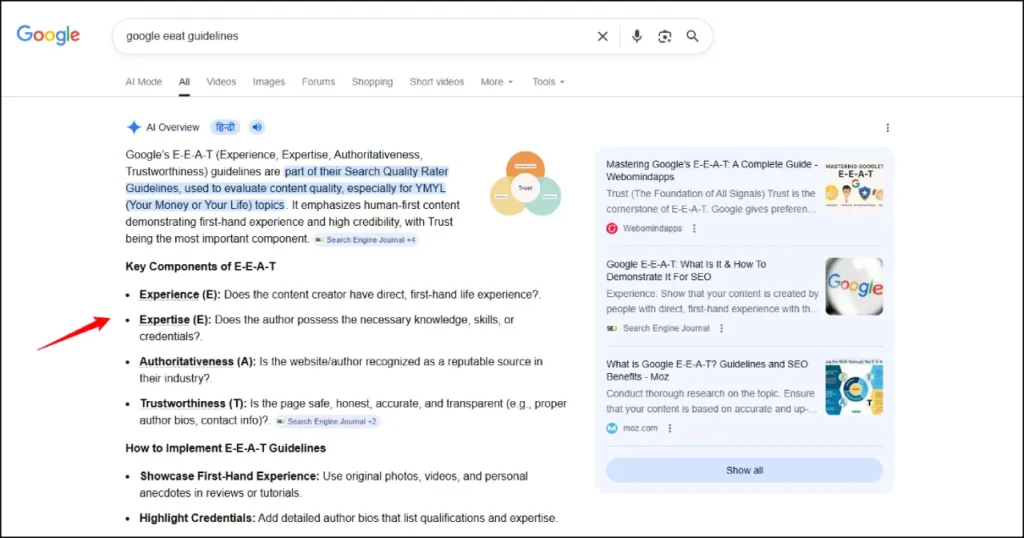
Google’s E-E-A-T framework (Experience, Expertise, Authoritativeness, and Trustworthiness) evaluates not just your content but the signals that confirm your brand is a legitimate authority in its field. When your business is cited as a source in credible publications, your brand entity in Google’s Knowledge Graph accumulates endorsement signals from recognized authorities. Online mentions and editorial citations feed into the Knowledge Graph and help Google build a clearer understanding of who you are, what topics you cover, and how you relate to other established entities in your niche. This is a qualitatively different signal from a transactional link placement.
AI Visibility as a Compounding Benefit
In 2026, PR link building does more than improve Google rankings. AI citation frequency, meaning how often your brand appears in AI-generated answers across ChatGPT, Perplexity, and Google AI Overviews, is now treated as a primary KPI by leading digital PR teams. AI systems surface information from the sources they already trust, and trust is built through consistent editorial coverage in authoritative publications. Every PR backlink you earn increases the probability that your brand is referenced in AI-generated answers, which represents a rapidly growing traffic channel that has no direct paid equivalent.
Referral Traffic That Compounds
Unlike links on low-traffic sites that pass domain authority without sending real visitors, digital PR backlinks from high-traffic publications drive genuine referral traffic to your website. That referral traffic creates engagement signals (time on site, pages per session, low bounce rate from qualified visitors) that reinforce the organic ranking value of the link itself.
PR Link Building vs Traditional Link Building: Key Differences
Understanding where PR link building sits relative to other link acquisition methods helps you allocate your budget and effort correctly.
| Factor | PR Link Building | Guest Post Outreach | Niche Edits |
|---|---|---|---|
| Link Placement | Earned editorial, journalist chooses context | Negotiated, your team places contextually | Negotiated, inserted in existing content |
| Domain Authority Range | DR 60 to DR 95+ typical | DR 20 to DR 60 typical | DR 20 to DR 60 typical |
| E-E-A-T Signal | Very high: journalist endorsement | Moderate: paid editorial placement | Moderate: contextual but transactional |
| Brand Mention Value | Very high: covered as a source | Low to none | None |
| AI Citation Potential | Very high | Low to moderate | Low |
| Cost Per Link | Higher per campaign, lower per link at scale | Medium | Medium to low |
| Scalability | Moderate: story-dependent | High | High |
| Speed of Results | 2 to 6 weeks post-publication | 4 to 8 weeks post-indexation | 1 to 4 weeks |
| Replication Risk by Competitors | Very low: editorial relationships are exclusive | Medium: sites accept multiple pitches | Medium |
The key insight is that digital PR link building and traditional outreach-based link acquisition are not competitors. They serve different roles in a complete link strategy. PR backlinks provide the high-authority editorial anchors. Guest posts and niche edits provide topical depth and volume. The most effective link building PR strategies combine both tiers.
The 5 Core Methods of PR Link Building
1. Original Data Studies and Industry Research
Original research is the single most reliably linkable asset in digital PR. When you produce a genuine data study, survey, or industry report that journalists cannot find anywhere else, you become the primary source. Every article that covers your findings must cite you to maintain credibility.
Effective research assets include annual industry surveys (polling 200 to 500 respondents in your target niche), original data analysis using publicly available datasets, proprietary benchmark reports drawing on your own client or platform data, and trend analysis comparing year-over-year changes in a measurable metric.
The key requirement is that the findings must be genuinely novel. Summarizing what others have already published does not earn editorial links. Producing data that no one else has does.
2. Expert Commentary and Reactive PR
Reactive PR, sometimes called newsjacking, is the practice of positioning your brand’s spokesperson as an expert source when a relevant news story breaks. Journalists covering fast-moving topics in your industry need expert quotes quickly. If your team is available, credible, and pitching a clear point of view within hours of a story breaking, your commentary gets included in news articles that earn PR backlinks on the same day.
This method requires speed and a genuine point of view. Generic commentary that restates what the journalist already knows does not get used. Specific, data-backed, or contrarian expert perspectives that add real value to the story do.
3. Digital PR Campaigns Around Owned Content
A PR link building campaign built around owned content involves developing a content asset, a visual data study, an interactive tool, a comprehensive guide, or a compelling data visualization, and then conducting targeted journalist outreach to promote it as a resource worth referencing.
This approach is slower than reactive PR but more scalable because the asset remains linkable long after the initial campaign period. A well-executed interactive tool or original research report can earn digital PR backlinks passively for 12 to 24 months after publication.
4. Press Release Distribution
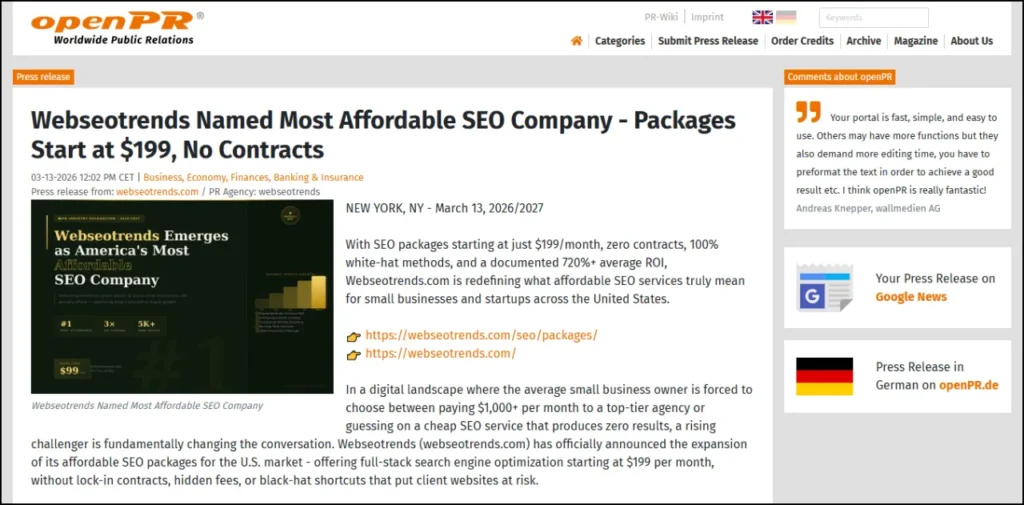
Press release link building through credible distribution networks places your brand and content in front of thousands of journalists, editors, and publications simultaneously. High-quality press release distribution services can guarantee publication across verified outlets including finance news platforms, industry trade publications, and regional news sites, many of which carry DR 60 to DR 90+.
Press release link building is most effective for genuine news events: product launches, funding announcements, partnership news, research publication, award recognition, and significant business milestones. Distribution for non-newsworthy content produces lower-quality placements and diminished editorial credibility over time.
5. HARO and Journalist Sourcing Platforms
Help A Reporter Out (now operating as Connectively), Qwoted, Featured.com, and similar journalist sourcing platforms connect reporters actively seeking expert sources with businesses and professionals who can provide them. Responding to relevant source requests with specific, credible, well-written commentary is one of the most reliable methods for earning high authority backlinks from major publications at no cost beyond the time investment.
How to Build a Linkable Asset That Earns Editorial Links
A linkable asset is any piece of content that is so genuinely useful, data-rich, or visually compelling that journalists and content creators naturally want to reference it. Building linkable assets is the foundational infrastructure work of any long-term digital PR link building strategy.
What makes a strong linkable asset:
Unique data. Assets built on data no one else possesses are inherently more linkable than those synthesizing existing research. Original surveys, proprietary platform analytics, and fresh industry benchmarks consistently earn the most PR backlinks per asset.
Visual clarity. Data that is presented clearly through well-designed charts, infographics, or interactive visualizations is significantly more likely to be embedded, shared, and cited than the same data presented in text alone. Journalists can embed a visualization directly in their article. They cannot easily repurpose a wall of text.
Evergreen relevance. Assets that answer perennial industry questions outperform those tied to a single moment or trend. An annual benchmark report, refreshed every year with new data, earns fresh rounds of editorial links on each update cycle.
Specific scope. Narrow, specific studies earn more links per word than broad, general overviews. A study of “average conversion rates by industry in 2026” earns more citations from industry-specific journalists than a general study of “digital marketing performance.”
Practical application. Tools, calculators, templates, and frameworks that practitioners can use immediately generate sustained referral traffic and ongoing digital PR backlinks long after the initial campaign period ends.
Journalist Outreach: How to Pitch Media and Get PR Backlinks
The quality of your outreach determines whether your PR link building campaign earns placements or silence. Journalists receive hundreds of pitches per week. The ones that earn coverage share three characteristics: they are relevant, they are brief, and they are genuinely useful to the journalist’s audience.
Build a targeted media list first. Broad-spray pitching to generic press release lists produces poor results. Identify the specific journalists who cover your niche at your target publications and review their recent articles to understand the angle and depth they bring to stories. A pitch that acknowledges a journalist’s specific recent work and connects your story to their established beat earns replies. A pitch addressed to a generic contact address does not.
Lead with the story, not the brand. Every journalist pitch should open with the newsworthy hook, not with who you are or how great your company is. The journalist’s reader does not care about your brand. They care about whether your data, insight, or perspective helps them understand something important. Your brand becomes relevant only after the story hook has established its value.
Keep it short. The most effective media pitches are 100 to 150 words in the email body. A clear hook, one or two supporting data points, and a direct offer of the full asset or a spokesperson quote. Anything longer reduces the response rate.
Follow up once. A single polite follow-up sent five to seven days after the initial pitch is standard practice and appropriate. Multiple follow-ups damage your relationship with the journalist and your brand’s reputation in the media.
Make their job easier. Include a high-resolution image, a ready-to-embed chart, or a pre-written pull quote in your pitch. Every element you provide that reduces the journalist’s production workload increases the probability of the pitch being used.
How to Use HARO and Journalist Sourcing Platforms for Digital PR Link Building
Journalist sourcing platforms are one of the most underutilized PR link building tactics available to small and mid-sized businesses because they require no budget, only consistent execution.
How the process works:
Connectively (formerly HARO), Qwoted, and Featured.com send daily or real-time email digests of journalist source requests to registered contributors. Each request specifies the topic, the publication, the type of source needed (executive, researcher, practitioner), and a submission deadline. Matching your expertise to the right requests and responding with genuinely useful, specific commentary is the core of this strategy.
What separates responses that get used from those that do not:
Responses that earn PR backlinks are specific, data-backed where possible, directly answer the journalist’s exact question, and come from a named individual with verifiable credentials. Responses that do not get used are generic, overly promotional, longer than the journalist needs, or submitted after the deadline.
Building a sourcing system:
At volume, this requires a structured process. Set up digest alerts filtered by your target topics, assign a team member to review and respond daily, and maintain a library of pre-researched commentary on your core expertise areas so responses can be submitted within the tight windows most requests require.
The return on this investment is significant. A single placement in a major publication through a journalist sourcing platform can deliver a digital PR backlink with a DR 70 to DR 90+ that would cost hundreds or thousands of dollars through a paid placement approach, at zero direct cost.
Measuring the Results of Your Digital PR Link Building Campaign
Primary metrics to track:
- New referring domains: The number of new unique domains linking to your site in a given period, tracked through Ahrefs or SEMrush. This is the most direct measure of PR backlink acquisition volume.
- Domain rating change: Your overall domain authority trajectory. Digital PR backlinks from high-authority publications produce measurable DR improvements typically visible within 4 to 8 weeks of the link being indexed.
- Keyword ranking movement: Track position changes for your target keywords in the 30, 60, and 90 days following significant PR link building activity. The clearest signal that your links are working is ranking movement on pages that received new referring domains.
- Brand mention volume: Total mentions of your brand name across the web, tracked through Google Alerts, Ahrefs Alerts, or Brand24. Growing mention volume is both a lagging indicator of successful digital PR and a forward-looking signal of increasing entity authority.
- AI citation frequency: How often your brand appears in responses generated by Perplexity, ChatGPT, and Google AI Overviews for queries relevant to your business. This is an emerging metric that is increasingly central to evaluating the full return on digital PR link building investment in 2026.
Referral traffic from covered publications: Track referral sessions, pages per session, and conversion rate from press placement traffic in GA4. High-quality referral traffic from authoritative publications produces disproportionately good engagement metrics.
Common PR Link Building Mistakes and How to Avoid Them
Pitching non-newsworthy content as news.
A blog post summarizing general industry trends is not a press release. Journalists recognize this immediately and it damages your credibility for future pitches. Newsworthy digital PR content involves original data, genuine milestones, or a fresh perspective on a breaking story.
Building a linkable asset without a distribution strategy.
Creating excellent research and then simply publishing it on your blog and waiting for links to appear is not a strategy. Every linkable asset needs an outreach plan: a target media list, personalized pitches, and a follow-up process.
Measuring only link count, not link quality.
Ten PR backlinks from DR 70+ publications produce more ranking authority than fifty links from DR 25 to DR 35 sites. Tracking only volume without weighting for authority produces misleading campaign assessments.
Ignoring nofollow links from high-authority sites.
Nofollow links from publications with millions of monthly readers still drive referral traffic, brand awareness, and entity recognition in Google’s Knowledge Graph. Dismissing a placement in a major publication because the link is nofollow misunderstands how modern digital PR SEO value is distributed.
Inconsistency.
PR link building compounds over time. A single campaign produces a temporary improvement. A consistent program of campaigns, journalist relationships, and HARO responses builds a compounding authority base that widens the gap between your domain and your competitors every month.
How PR Link Building Fits Into Your Broader SEO Strategy
Digital PR link building delivers its strongest results when it is integrated with, rather than isolated from, the rest of your SEO program.
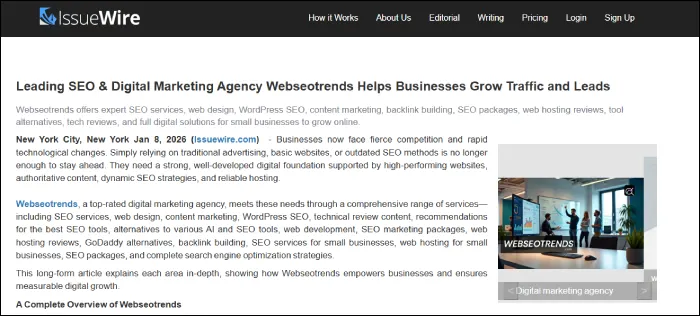
Our manual backlinks service combines digital PR backlinks with guest posting and niche edit placements to produce a complete, multi-tier link profile. The PR backlinks provide the high-authority editorial anchors. The guest posts and niche edits provide topical depth and volume at the mid-authority tier. Together they build the kind of referring domain profile that consistently holds top-3 positions in competitive niches.
Our SEO packages include digital PR link building within the Authority tier because link building in isolation from on-page optimization consistently underperforms. Pages that are technically sound, keyword-optimized, and semantically structured convert link equity into rankings significantly faster than pages that are not. We optimize the destination pages before we build links to them.
Our link building guide covers the full methodology behind how we sequence different link types across a campaign, and our full-service digital marketing packages integrate PR link building with content creation, PPC, and social media for clients who want a single coordinated growth program.
If you want to understand exactly where PR link building fits in your current strategy and how much authority your domain needs to reach your ranking goals, start with our free SEO and backlink audit. We will analyze your current referring domain profile, benchmark it against your top competitors, and tell you specifically which link acquisition methods will move your target keywords fastest.
Frequently Asked Questions About PR Link Building
What is the difference between PR link building and regular link building?
PR link building earns links through genuine editorial coverage by journalists and media outlets. Regular link building typically involves direct outreach to website owners to negotiate or pay for placements. Digital PR backlinks come from higher-authority sources, carry stronger E-E-A-T signals, and are more durable because they exist for editorial rather than commercial reasons.
How long does a PR link building campaign take to show SEO results?
Published articles typically appear within 2 to 6 weeks of a campaign launch. Backlinks are usually indexed by Google within 2 to 4 weeks of the article going live. Measurable ranking improvements for target keywords typically become visible between 2 and 6 months after indexation. Digital PR link building is a compounding strategy: results accelerate significantly from months 6 through 12 of a consistent program.
Is PR link building suitable for small businesses?
Yes, particularly through HARO and journalist sourcing platforms, which require no budget. Smaller businesses can earn PR backlinks from major publications by responding to journalist source requests with specific, credible expertise. Our manual backlinks service includes digital PR outreach within the Authority package specifically to make this accessible for businesses that could not otherwise run an independent PR program.
What types of content earn the most digital PR backlinks?
Original data studies, annual industry surveys, proprietary benchmark reports, interactive tools, and visual data assets consistently earn the most editorial links per asset. The common factor is originality: the content must contain data or insights that journalists cannot find elsewhere.
How does PR link building affect AI visibility?
Digital PR backlinks and brand mentions in authoritative publications are among the strongest signals that AI systems like Perplexity, ChatGPT, and Google AI Overviews use to determine which brands and sources to cite in generated responses. A consistent PR link building program builds the editorial credibility that makes AI citation progressively more likely as the program matures.
Can I do PR link building in-house or should I use an agency?
Reactive PR through journalist sourcing platforms and HARO is achievable in-house with a structured process. Proactive digital PR campaigns requiring original research development, targeted media list building, and personalized journalist outreach at scale typically perform better with specialist support. Our SEO services include digital PR link building within managed link acquisition programs for clients who want consistent, high-authority link acquisition without building an in-house outreach team.
Summary: Why Digital PR Link Building Is the Highest-Value Link Strategy in 2026
PR link building earns the highest-authority links available through any method, builds genuine brand credibility alongside its SEO value, amplifies AI visibility across every major generative search platform, and compounds in value with every campaign rather than resetting. The businesses that commit to a consistent digital PR SEO strategy in 2026 are building a competitive authority gap that paid advertising, technical SEO, and lower-tier link acquisition alone cannot close.
The entry point is simpler than most businesses assume. A structured HARO response program, a single well-executed data study per quarter, and a targeted media outreach process can begin producing digital PR backlinks from DR 60+ publications within the first 60 days.
Explore our complete approach to PR link building and see how it integrates with every other element of your SEO strategy:
- Manual Backlinks Service : Guest posts, niche edits, and digital PR backlinks combined
- SEO Packages : Monthly SEO with link building included at every tier
- Digital Marketing Packages : Full-service growth programs integrating PR, content, and paid channels
- Free Backlink Audit : Understand your current authority gap and the exact link strategy to close it
- Link Building Guide : Full methodology behind our link acquisition approach
