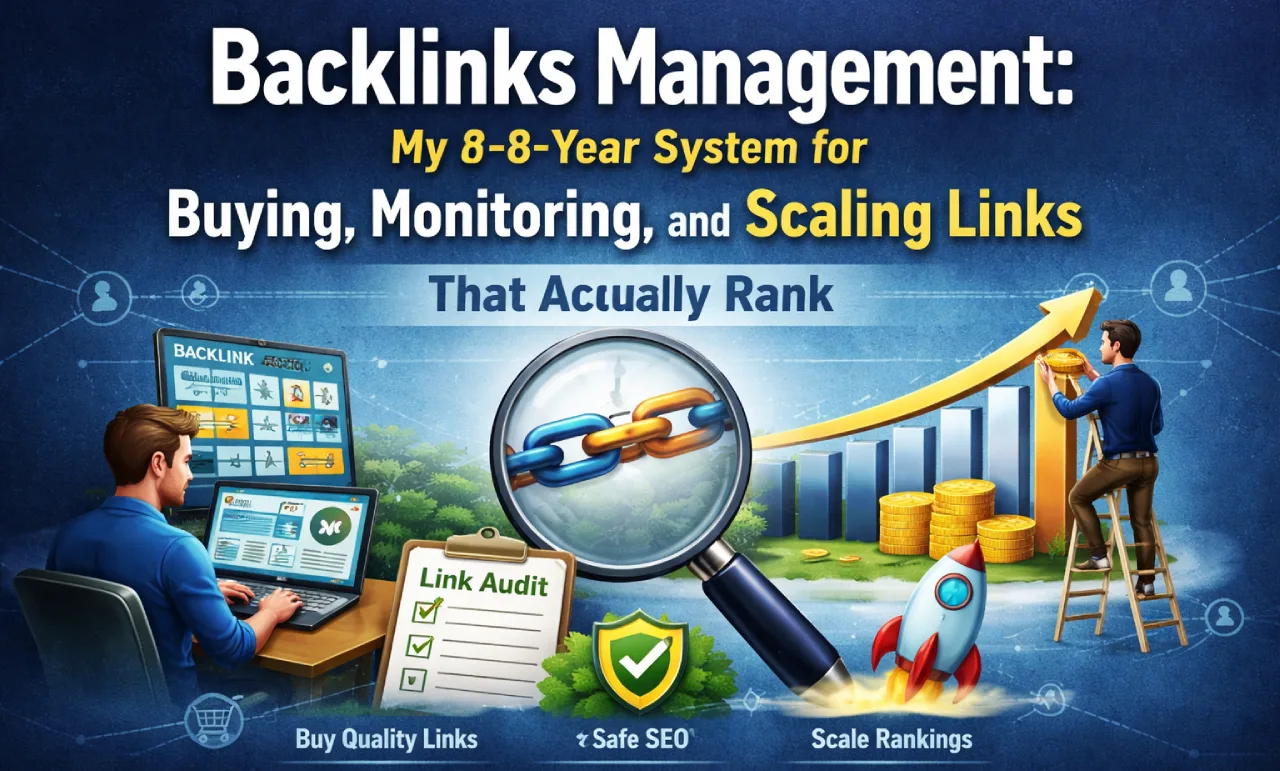
I have spent eight years building, buying, auditing, and managing backlinks for hundreds of websites ranging from scrappy Indian startups to established B2B companies in the United States and United Kingdom. In that time I have seen every version of backlinks management there is. I have seen it done brilliantly. I have seen it done catastrophically. And I have been on both ends of that spectrum myself.
What I have come to understand, more clearly than almost anything else in SEO, is that the difference between a link building campaign that compresses your ranking timeline and one that quietly destroys everything you have built does not come down to whether you buy backlinks online or earn them organically. It comes down to how systematically you manage the entire process.
This is not a guide about tricks. This is the backlinks management system I actually use, built from eight years of live testing, real client campaigns, and more than a few expensive mistakes I had to recover from. If you are trying to understand seo link management, if you want to buy high quality backlinks without getting penalized, or if you are running an agency and need a scalable link building management process, this guide was written for you.
What Is Backlinks Management and Why It Matters More Than Link Building
Most people talk about link building. Far fewer people talk about backlinks management, and that distinction is exactly where most SEO campaigns fall apart.
Link building is the act of acquiring new backlinks. Backlinks management is the ongoing system of acquiring, monitoring, organizing, auditing, and strategically adjusting your entire backlink profile over time. One is an action. The other is a discipline.
I learned this distinction the hard way in 2019 when a client’s e-commerce site dropped 40 positions on a competitive keyword overnight. We had been building links aggressively for six months. The campaign looked good on paper. But we had zero system for monitoring what happened to those links after placement. Three of our highest-value placements had been removed without notice. Two others had been deindexed on the referring domain. We had no alert in place and had not audited the profile in three months.
That incident changed how I approach every campaign from that day forward.
Backlinks management encompasses five interconnected activities: purchasing or earning new links, verifying that acquired links remain live and indexed, auditing your profile for toxic or low-quality links that have appeared organically, monitoring competitor backlink activity for opportunities you are missing, and adjusting your anchor text distribution to maintain a natural, Google-compliant profile. Skip any one of those five and you are not managing your backlinks. You are gambling with your rankings.
The data reinforces why this matters. Google’s top-ranked pages carry an average of 3.8 times more backlinks than pages ranking in positions two through ten. According to Ahrefs research, only one in every approximately 20 pages without backlinks receives any organic traffic at all. Backlinks are not optional for competitive rankings. But backlinks without a management system are genuinely dangerous.
The 5-Layer Backlinks Management System I Use for Every Campaign
Before I get into buying, pricing, and tools, I want to walk you through the framework I use for every single campaign, from a new blog trying to rank its first ten posts to an agency client with 500 target pages across multiple domains.
Layer 1: Baseline Audit
Every campaign starts with a full audit of the existing backlink profile before a single new link is acquired. You need to know where you are starting from. How many referring domains do you have? What is the anchor text distribution? Are there toxic links already in the profile that need to be disavowed? What is the current dofollow to nofollow ratio? I cover this process in exhaustive detail in my backlink audit guide and I strongly recommend reading it before spending a dollar on new links.
Layer 2: Gap Analysis vs Competitors
The second layer is competitive intelligence. Before deciding what types of links to acquire, I map the backlink profiles of the top 3 to 5 ranking competitors for my target keywords. This tells me the types of links they have that I do not, the domains they are getting links from that I should be targeting, and the anchor text distribution they are using that correlates with their rankings. More on this in the competitor monitoring section below.
Layer 3: Acquisition Strategy
This is where the actual link buying and outreach execution happens. Based on the audit and gap analysis, I determine the right combination of niche edits, guest post backlinks, outreach links, and paid placements to close the gap. I set a link velocity target, anchor text targets, and a monthly budget before acquiring anything.
Layer 4: Verification and Indexing
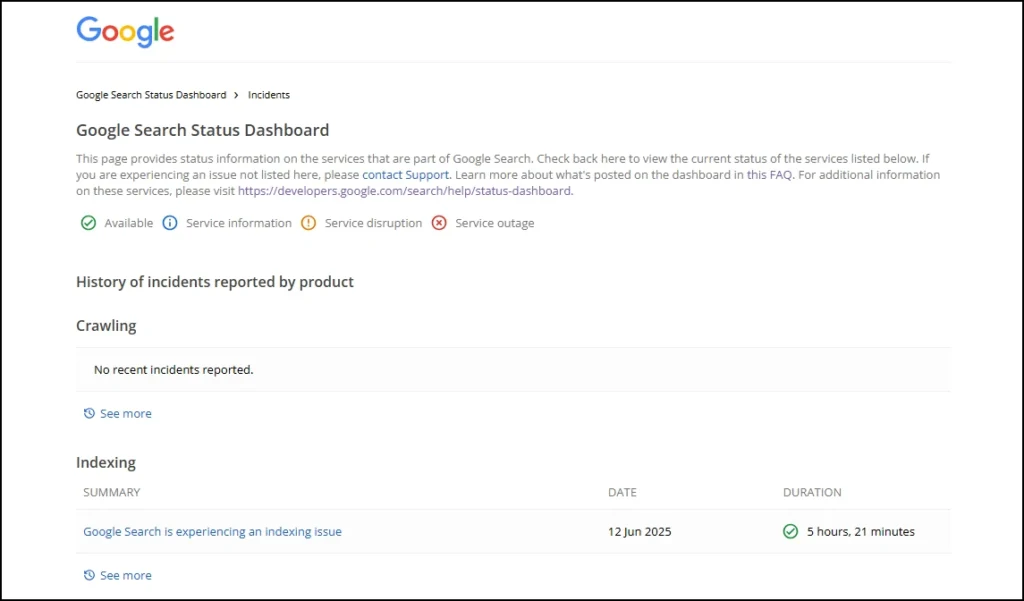
Every acquired link gets verified within 7 days of placement. Is the link live? Is it dofollow? Has the referring page been indexed by Google? Unindexed links pass zero value. This is where most agencies fail to follow through and where clients quietly lose the return on their investment. I use link indexing tools to accelerate the indexing process for newly placed links.
Layer 5: Ongoing Monitoring and Adjustment
Every link in the profile gets monitored monthly. Lost links get replaced. Anchor text ratios get adjusted if exact-match concentrations rise above healthy thresholds. Toxic link patterns get flagged and disavowed quarterly. This is what makes a link management seo system sustainable rather than a one-time campaign.
How to Manage Your Backlinks: The Complete Day-to-Day Guide
Knowing how to acquire backlinks is only half the equation. The half that most people ignore completely is knowing how to manage your backlinks after they are placed. This is the operational core of backlinks management and it is what separates campaigns that compound in value from campaigns that slowly erode without anyone noticing.
I want to walk you through the exact management process I run, broken down by daily habits, weekly tasks, monthly reviews, and quarterly audits. This is not theoretical. This is the actual rhythm of how link management seo works in a live agency environment.
Daily: Watch for Link Drops and Competitor Moves
Every morning I spend five minutes checking Ahrefs alerts. I have Ahrefs set to notify me whenever any active campaign domain loses a backlink or gains a new one. This backlinks watch habit takes almost no time but catches problems before they affect rankings. A lost link from a high-authority placement can cause a measurable ranking drop within days on competitive keywords. Catching it on the day it drops means you can follow up with the publisher immediately, when the chances of restoration are highest.
At the same time I check competitor alert notifications. When a direct competitor acquires a new backlink from a domain I have not yet reached, that domain goes straight into my outreach queue. Speed matters here. Publishers and site owners who have just linked to one site in your niche are in an active link-giving mindset. Reaching them within 48 hours of linking to your competitor is dramatically more effective than cold outreach weeks later.
Weekly: Verify New Acquisitions and Update Your Tracker
Every Friday I run a verification sweep on any links acquired during the current week. The verification checklist covers four points: is the link live at the URL confirmed by the seller or publisher, is it dofollow or has it been silently switched to nofollow after placement, has the referring page been indexed by Google according to a site-specific search, and does the anchor text match what was agreed.
If a link fails any of these four checks it gets flagged in my Notion campaign tracker with a follow-up task assigned. Most link drops and attribute changes happen within the first 30 days of placement, which is why weekly verification in the first month is essential.
I also update my anchor text distribution tally weekly. I keep a running count of every acquired link categorized by anchor type: exact match, partial match, branded, topically related, naked URL, and generic. If the exact-match count is approaching 15 percent of the total acquired link count for any campaign, I adjust the anchor text strategy for upcoming acquisitions before the ratio becomes a risk signal.
Monthly: Full Profile Health Report
At the end of every month I run a full backlink profile health report for each active campaign. The report covers five metrics: total referring domains added in the month versus the target, referring domains lost versus the previous month, anchor text distribution across all categories, number of new referring domains with a Majestic Trust Flow above 15, and the ratio of indexed links to placed links.
This monthly report is what I deliver to clients as part of the transparent reporting commitment at Webseotrends. It shows exactly where the budget went, what links are delivering active value, and what the cumulative profile health trend looks like. There is no black box in proper link management seo. Every placement is accountable.
I also run a lost link analysis monthly. For every link lost during the month I categorize the reason: page removed, link attribute changed, domain penalized or deindexed, or outright removal by the publisher. Patterns in lost link reasons tell you a great deal about where the weaker parts of your acquisition strategy are. If 70 percent of your lost links are coming from a single marketplace or a single link type, that is a signal to diversify or switch providers.
Quarterly: Deep Audit and Disavow Review
Every 90 days I run a full deep audit of the backlink profile. This goes well beyond the monthly health report. The quarterly audit covers toxic link detection, disavow file review and update, domain authority trend analysis, anchor text ratio check across the full historical profile, and a full competitive gap refresh against current top-ranking pages.
Toxic link detection uses Ahrefs’ spam score data combined with Majestic’s Trust Flow to flag any referring domains that have appeared in the profile organically, through scraping or negative SEO, that carry spammy signals. These get added to the disavow file I upload to Google Search Console. Running this quarterly prevents toxic link accumulation from quietly pulling down your domain’s overall trust signals. I cover the full toxic link identification process in my backlink audit guide.
Disavow file management is a skill most SEOs underutimate. An outdated disavow file that includes links you have since replaced with quality placements can actually disavow positive equity by accident. I review every entry in the disavow file quarterly to confirm that each domain still warrants disavowal and has not since been cleaned up or relaunched with new ownership and legitimate content.
Competitive gap refresh is perhaps the most important part of the quarterly audit. Rankings are a moving target. Your competitors are building links every month too. A gap analysis that was accurate six months ago may look completely different today. Refreshing the competitive intelligence quarterly ensures your acquisition strategy is always responding to the actual ranking landscape, not an outdated snapshot.
How to Manage Your Backlinks When You Spot Problems
Even with a tight management system, problems appear. Here is how I handle the three most common ones:
- Lost links from premium placements: Contact the publisher within 48 hours of detection. Reference the original placement, provide the URL, and politely ask for restoration. Most publishers who accidentally remove links during site updates will restore them quickly when contacted professionally. If the removal was intentional, ask why and whether a replacement placement on another relevant page is available. Premium placement providers typically have a replacement policy for lost links within a defined window.
- Sudden spikes in toxic links: Occasionally a competitor will run a negative SEO campaign against your domain or an automated scraper will copy your content and add your links to a spam network. If you see a sudden spike of 20 or more new referring domains from obviously spammy sites within a short period, build and submit a disavow file update immediately. Do not wait for the quarterly review. The faster toxic links are disavowed the less likely they are to affect your profile.
- Anchor text ratio warnings: If your exact-match anchor ratio exceeds 20 percent of your total acquired links, stop all exact-match acquisitions immediately and spend the next two to three months building only branded, generic, and topically related anchor links until the ratio returns to a safe threshold below 15 percent.
The entire point of understanding how to manage your backlinks is that link building is not a campaign you run and forget. It is a living system that requires attention, adjustment, and accountability on a consistent schedule. The sites that dominate their niches long-term are almost never the ones that built the most links. They are the ones that managed their links the most intelligently.
How to Buy Backlinks Safely: My Complete Framework
Let me address the question directly: yes, buying backlinks works in 2026, and yes, it can also get your site penalized if done incorrectly. The difference is not whether you buy seo links or earn them organically. The difference is entirely in the quality, relevance, and acquisition method.
Today we released the March 2026 spam update. We'll update our ranking release history page when the rollout is complete: https://t.co/CwCjstgv0H
— Google Search Central (@googlesearchc) March 24, 2026
Google’s SpamBrain system has become significantly more sophisticated at detecting unnatural link patterns. What it looks for is not the transaction itself but the footprint of the transaction. Links that appear on sites with no organic traffic, links clustered with dozens of other paid placements on the same domain, links using aggressive exact-match anchor text on low-authority pages, links from sites in completely unrelated niches. These are the patterns that trigger algorithmic penalties and manual reviews.
When I buy quality backlinks for my own sites and client campaigns, every placement goes through a six-point qualification checklist before I confirm the purchase.
The referring site must have genuine organic traffic, not just domain authority metrics. A DA 60 site with zero organic visitors is a dead link. The referring page must be topically relevant to the page being linked to, not just the domain. The link must be dofollow. The anchor text must fit naturally into the surrounding content. The surrounding content must be original, not spun or AI-generated without human editing. And the site must not already have an excessive number of external links on the same page, which dilutes the link equity passed.
Apply that checklist to every backlink purchase and you eliminate the vast majority of risk. The links that get sites penalized are almost never the ones people carefully qualified. They are the links people bought in bulk from cheap directories, private blog networks, or automated submission services, often chasing buy cheap high pr backlinks offers that sounded too good to be true.
For a complete breakdown of every platform I have personally tested for buying links, including pricing, quality ratings, and my honest assessment of what each one is best suited for, see my detailed guide on best places to buy backlinks.
Types of Links Worth Buying in 2026
Not every backlinks for sale offer is worth your budget. Here are the link types that consistently deliver ranking value in 2026 and the ones I actively use in campaigns:
- Contextual Links via Niche Edits: A niche edit is a link insertion into an existing, already-indexed, and often already-ranking article on a relevant website. The page already has authority and organic traffic. Your link goes into content that search engines already trust. This makes buy contextual links placements via niche edits one of the most efficient ways to acquire link equity quickly. The existing content’s history means Google has already evaluated and indexed the page, and your link benefits from that established context immediately.
- Guest Post Backlinks: A sponsored guest post or genuine guest post contribution involves publishing a new article on another site with your link embedded within the content. When done on sites with real editorial standards and genuine audiences, guest post backlinks remain one of the most sustainable forms of paid backlinks. I use platforms like fatjoe, OutreachZ, and direct outreach for higher-authority placements. I have put together a full list of free and paid guest post backlink opportunities if you want to explore both sides of this approach.
- Homepage Backlinks: Buy homepage backlinks from high-authority sites selectively and sparingly. Homepage links from relevant, high-DA domains are powerful signals but they look unnatural if you acquire too many of them quickly. I typically use homepage link placements for brand authority pages and key commercial pages where I need strong domain-level signals rather than page-level signals.
- Outreach Links: Buy outreach links refers to links placed through genuine digital PR and personalized outreach campaigns rather than marketplaces. These tend to be the highest-authority and most Google-compliant placements because they involve real editorial decisions by real website owners. The tradeoff is cost and time. Managed outreach campaigns typically cost more per link but produce the placements that carry the most long-term ranking weight and survive algorithm updates most reliably.
- EDU and GOV Backlinks: Buy edu backlinks and buy gov backlinks placements are often overhyped but genuinely valuable when acquired through legitimate means. Legitimate EDU backlinks come from university resource pages, scholarship pages, and educational blog contributions. Legitimate GOV backlinks come from government resource directories and agency supplier pages. These links carry exceptional trust signals because the domains they originate from are rarely linked from low-quality networks.
- High DA Contextual Backlinks: Buy high da backlinks refers to placements on sites with Domain Authority above 50 or Domain Rating above 40. These carry stronger link equity per placement than lower-authority links and are especially effective for competitive commercial keywords where link authority is the primary differentiator between page one and page two results.
Backlink Prices: What You Should Actually Be Paying
Backlink prices in 2026 vary enormously and understanding the market rate is essential for avoiding both overpriced placements and suspiciously cheap ones that will damage your profile.
Here is the honest breakdown of backlink prices by type and authority tier:
Niche edits and contextual link insertions on DR 20 to 30 sites typically run between $30 and $80 per placement (It may sometimes cost $100 to $500 also). At DR 30 to 50 the range moves to $80 to $200. For high-authority DR 50 to 70 placements, expect to pay for backlinks at $200 to $400. Premium editorial placements on DR 70-plus sites from genuine publishers start at $400 and routinely reach $600 to $1,000 or more depending on the publication.
Guest post placements follow a similar scale. Buy seo backlinks cheap options on smaller blogs in the DR 20 to 30 range are available for $60 to $150 per post including content creation. Mid-tier authority guest posts in the DR 40 to 60 range run $150 to $500. Premium placements on industry-specific publications at DR 60 and above typically cost $500 to $1,500 per post.
Buy high quality backlinks in the UK market follows slightly different pricing due to publisher availability and competition for English-language placements. Buy quality backlinks uk campaigns typically see prices running 15 to 25 percent higher than equivalent US market placements due to the smaller pool of quality publishers.
At Webseotrends, we offer permanent dofollow backlinks starting from $99 per placement for DA/DR 20-plus sites, scaling to premium tiers for higher authority placements. See our full backlink services and pricing for the complete tier breakdown.
The price signals I use to flag risky providers: any provider offering buy high pr backlinks at $5 to $20 per link is almost certainly selling PBN links or automated submissions. Any backlink buy service with no site vetting process is selling links that Google will either discount or penalize. The floor for a genuinely safe, valuable link from a real site with real traffic is around $50 minimum. Below that price, you are almost certainly buying links that will hurt you.
Best Link Management SEO Tools in 2026
Seo link management and link management seo require dedicated tooling. Here are the tools I use across different phases of the backlinks management workflow:
The most comprehensive link building management tools platform available. Ahrefs’ Site Explorer shows your full backlink profile, new and lost links, referring domain health, anchor text distribution, and competitor link acquisition. Their Link Intersect tool is invaluable for finding domains linking to competitors that are not yet linking to you. I run Ahrefs reports on every active campaign weekly. If I could only use one tool for backlinks management, this would be it.
- Google Search Console
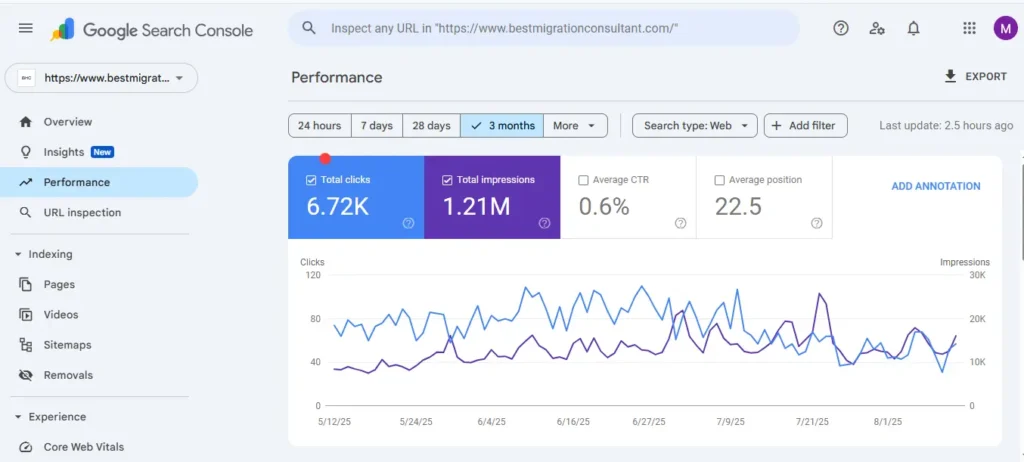
Free and non-negotiable. Google Search Console shows you exactly which links Google has discovered and is crediting to your site. The difference between links appearing in Ahrefs and links appearing in Google Search Console is meaningful because GSC shows you what Google has actually processed. Discrepancies between the two often reveal indexing or crawling issues worth investigating.
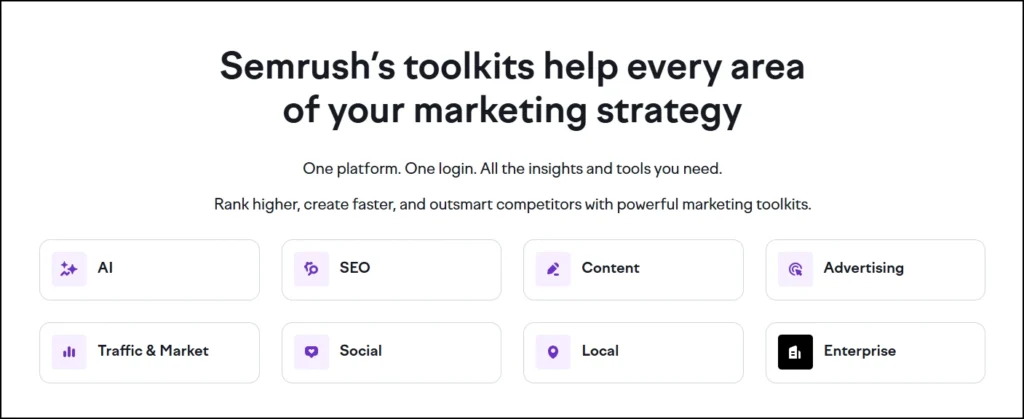
Strong for competitive backlink analysis and the monitor competitor website function. Semrush’s Backlink Gap tool directly compares your link profile against up to five competitors simultaneously and surfaces domains linking to all of them that are not linking to you. For agency campaigns managing multiple clients, Semrush’s project organization features are also significantly better than Ahrefs for reporting purposes.
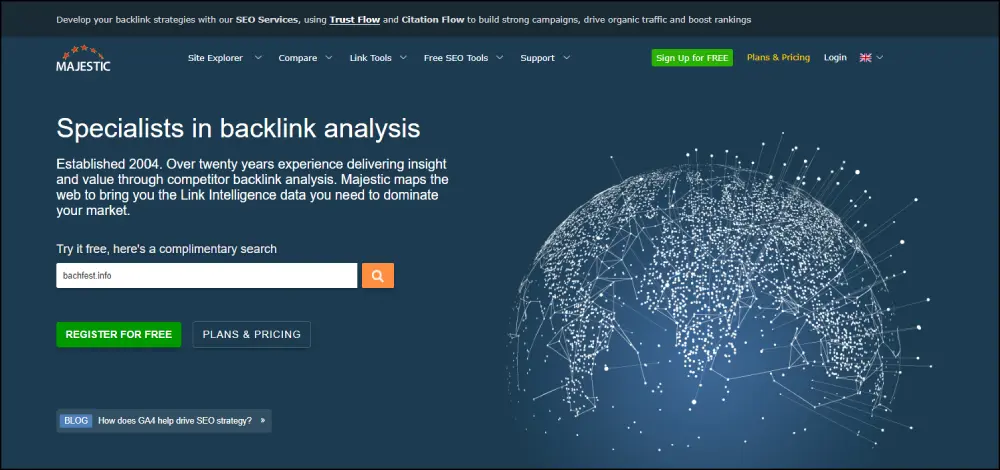
Majestic is the most nuanced tool for evaluating link quality through its Trust Flow and Citation Flow metrics. While DA and DR have their uses, Majestic’s Trust Flow measures how close a site is topically and in quality to a set of seed sites that Google has identified as authoritative. A link from a DR 30 site with a Trust Flow of 25 and a relevant topical trust category is often more valuable than a link from a DR 50 site with a Trust Flow of 10 and no clear topical category.
- Linkody and Monitor Backlinks
Both of these are link building management tools built specifically for the ongoing monitoring phase of linkmanagement. They alert you when acquired links go down, when new toxic links appear in your profile, and when competitor sites acquire new links. For agencies managing multiple client campaigns, these tools automate a significant portion of the monthly monitoring workflow.
- Notion or Airtable
I use Notion for my link acquisition tracker, a living database where every acquired link is recorded with placement date, referring domain, DR/DA, anchor text, target URL, last verified status, and monthly performance notes. This is my link building management command center. No matter how many tools you use for data, you need one system of record for your link database or your campaign will become unmanageable as it scales.
For a thorough look at how to use these tools to audit your existing profile before spending on new links, my backlink audit walkthrough covers the exact process step by step.
How to Monitor Competitor Websites and Steal Their Link Strategy
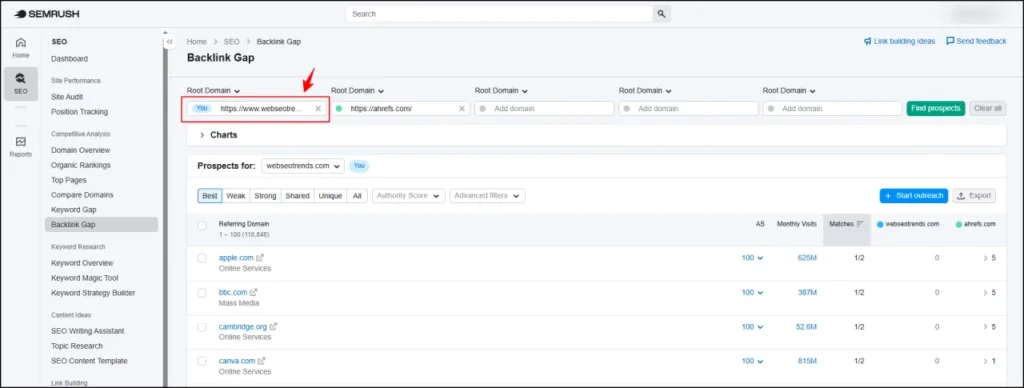
Monitor competitor website backlink activity is not just a defensive practice. It is one of the most reliable ways to find high-quality link acquisition opportunities you would never have identified through outreach alone.
Here is the competitive intelligence process I run for every new campaign:
First, I identify the three to five pages ranking above my target page for my primary keyword. I then pull each of their backlink profiles in Ahrefs and look at the most recently acquired linking domains sorted by DR. When a competitor acquires a link from a site with real traffic in a relevant niche, that site has already demonstrated its willingness to link externally on relevant topics. It is a warm prospect for me.
Second, I use the Ahrefs Link Intersect function or Semrush’s Backlink Gap to find domains that are linking to two or more of my competitors but not to me. These are the highest-value outreach and link buying prospects because the site owner’s pattern of behavior already shows alignment with my niche.
Third, I monitor for newly acquired competitor links on a weekly basis. When a competitor acquires a link from a high-authority domain, I have a narrow window of opportunity to reach out to the same publication before my window closes. Many publications have editorial quotas for placements in any given niche.
Fourth, I look specifically for niche edits opportunities in competitor link profiles. If a competitor has a link embedded in a high-traffic article, I look at whether I can get a second link in the same article pointing to a complementary page on my site, or whether I can get a link in a related article on the same domain.
This process, done consistently across all active campaigns, has produced some of our best performing placements at Webseotrends. The combination of competitive intelligence with direct outreach is what I describe in detail in my link sculpting guide, which covers how to control where link equity flows through your entire site architecture.
Niche Edits: The Fastest Way to Buy Contextual Links
Niche edits deserve their own section because they are genuinely the most efficient form of backlink purchase available in 2026 for campaigns that need to move quickly.
A niche edit places your link into content that already exists, is already indexed, and is often already ranking for relevant keywords. Unlike a new guest post that requires Google to crawl, index, and evaluate new content before passing link equity, a niche edit placement benefits from the established history of the host page immediately. In competitive campaigns where time matters, this can mean the difference between seeing ranking movement in 4 weeks versus 12 weeks.
The mechanics of a quality niche edit work like this: a site in your niche has an article that has been live for 12 months or longer. It has organic traffic. It covers a topic directly relevant to your target page. The site owner or a marketplace broker inserts a contextual reference to your content with your chosen anchor text into a paragraph where the reference adds genuine value to the reader. The link is dofollow and permanently embedded.
When I buy contextual backlinks via niche edits, the vetting criteria I apply are stricter than for any other link type precisely because niche edits live on pages that Google has already evaluated. A bad niche edit on a penalized page is harder to disavow cleanly than a standalone guest post because the referring page has existing equity signals, both positive and negative, already baked in.
The checklist I use: the host page must have Ahrefs-verified organic traffic from real search queries. The article must have a Trust Flow above 10 in a relevant topical category. The placement paragraph must make genuine sense for a natural reader, not just for a search engine crawl. The site must not have a pattern of excessive outbound links in similar articles, which signals a link farm operation.
Platforms I have used and vetted for buy contextual links via niche edits include FatJoe, Rhino Rank, and INSERT.LINK for marketplace-based placements, and direct outreach for premium sites where I want full editorial control. See my detailed review and platform comparison in the best places to buy backlinks guide for full vetting notes on each service.
Guest Post Backlinks: Building Authority the Right Way
Guest post backlinks have been declared dead at least a dozen times in the past ten years and they continue to be one of the most reliable link types for building both rankings and brand authority simultaneously.
The distinction that matters in 2026 is between genuine editorial guest posts and what Google actually means when it references paid link schemes in its guidelines. A guest post where you write original, valuable content that a real publication’s editorial team reviews, edits, and decides to publish is an editorial placement, even if you paid a service to manage the outreach and content creation. What Google penalizes is the pattern of low-quality, irrelevant, mass-produced content placed on sites that exist solely to sell links with no genuine audience.
When I say I buy backlinks service capabilities for guest posts, I mean managed outreach services that find topically relevant placements with real editorial standards, write or commission original content, and handle the entire placement process. The best services in this space function as editorial content agencies, not link factories.
For the sponsored guest post marketplace side of things, platforms like fatjoe and OutreachZ operate publisher networks where you can specify your niche, target DR range, and content requirements. The link is disclosed properly as a paid placement where required, and the content must meet the host site’s actual editorial standards. This is the model that survives algorithm updates.
What to look for when evaluating a guest post backlinks provider: genuine organic traffic on the host domain verified through Ahrefs or Semrush, a real published article history with editorial voice that is not obviously templated, content that includes original research, named authors, or genuine subject matter expertise, and a clear disclosure policy for sponsored contributions where applicable.
For my full list of free and paid guest post opportunities sorted by niche and authority, see my guest posting sites guide.
EDU Backlinks and GOV Backlinks: Are They Worth It?
Buy edu backlinks and buy gov backlinks are among the most misunderstood topics in the entire backlinks management space. Let me give you the honest picture.
The reason EDU and GOV domain links are considered valuable is rooted in the original trust architecture of the web. Academic and government domains were among the first to be recognized by search engines as inherently trustworthy because of the institutional credibility behind them and the difficulty of manipulating their editorial standards. A link from harvard.edu or a county government resource page carried exceptional trust signals because it was, by its nature, editorially rare.
In 2026, the genuine version of these links still carries strong trust signals. A backlink earned from a university resource page through a legitimate scholarship program, a research collaboration, or an educational content contribution is one of the most valuable link types you can acquire. Similarly, a GOV backlink earned through a genuine supplier listing, a government-affiliated resource page, or a civic data contribution is extremely durable.
The problem is the market for buy edu backlink placements is full of low-quality offerings. Many sellers offering EDU links are placing links on subdomain blogs hosted by universities where students or staff have been given publishing access. These links carry the EDU domain extension but none of the institutional authority that makes the domain type valuable. The subdomain is not endorsed by the institution and Google’s systems are very good at distinguishing these from genuine institutional pages.
My approach to EDU and GOV links is to pursue them through genuine outreach, educational content contributions, and scholarship programs rather than through marketplace backlink buy services. The effort is higher but the quality is dramatically better and the links are essentially immune to future algorithm updates because they are genuinely earned.
How to Buy Backlinks for SEO Without Getting Penalized
![How to Buy Quality Backlinks Cheap Without Risking Your Site [2025 Guide]](https://webseotrends.com/wp-content/uploads/2025/08/How-to-Buy-Quality-Backlinks-Cheap-Without-Risking-Your-Site-2025-Guide-1024x584.webp)
Buying backlinks for seo safely is about pattern management as much as individual link quality. Google’s penalty algorithms look for patterns, not individual transactions. Here is how to buy consistently while maintaining a penalty-immune profile:
Maintain natural anchor text distribution.
When you buy seo backlinks, the temptation is always to use exact-match keywords as the anchor text because it feels like that is what will move rankings. In practice, an anchor text profile dominated by exact-match keywords is the single most reliable penalty trigger available. A healthy link building company relationship means you are getting a mixture of branded anchors, naked URLs, partial-match anchors, topically related but non-exact anchors, and true generic anchors like “here” or “read more.” I target roughly 40 percent branded, 25 percent topically related non-exact, 20 percent naked URL or generic, and only 15 percent or less on exact-match keywords. This is the anchor distribution I maintain through careful backlinks management and it has never produced a penalty across eight years of client campaigns.
Control your link velocity.
Acquiring 50 links in a single month and then none for the next three months looks as unnatural as acquiring none for a year and then 200 in a month. I target a consistent monthly acquisition rate calibrated to the site’s existing authority, the competitive landscape, and the campaign timeline. For a new site, that might be four to eight links per month. For an established domain in a competitive vertical, it might be 15 to 25. Consistency is what creates a natural-looking growth pattern.
Diversify your referring domain count, not just your link count.
100 links from 10 domains is weaker and riskier than 60 links from 60 domains. Referring domain diversity is one of the strongest authority signals in Google’s current algorithm. Every month I am targeting new domains, not repeat placements on existing ones.
Do not place all purchased links on your commercial pages.
This is a pattern Google specifically looks for. If your only pages with significant backlink growth are your money pages, the acquisition pattern looks manipulative. I distribute link acquisition across blog content, resource pages, and supporting editorial pages, then use link sculpting and internal linking to funnel that authority toward my commercial target pages.
Keep a disavow file updated.
Regardless of how carefully you manage outbound link acquisition, toxic links from scrapers, negative SEO attacks, and low-quality automatic inclusions will appear in your profile over time. Running a quarterly audit using my backlink audit process and uploading a clean disavow file to Google Search Console is part of responsible backlinks management.
For our agency-managed buy backlinks service at Webseotrends, these principles are built into every campaign by default. You can review our approach and get a custom link strategy from our team at our SEO packages page.
Link Building Management Tools: What I Use Daily
Beyond the analysis platforms I covered earlier, here are the specific link building management tools and workflows that run my daily linkmanagement operations:
- Ahrefs Alerts
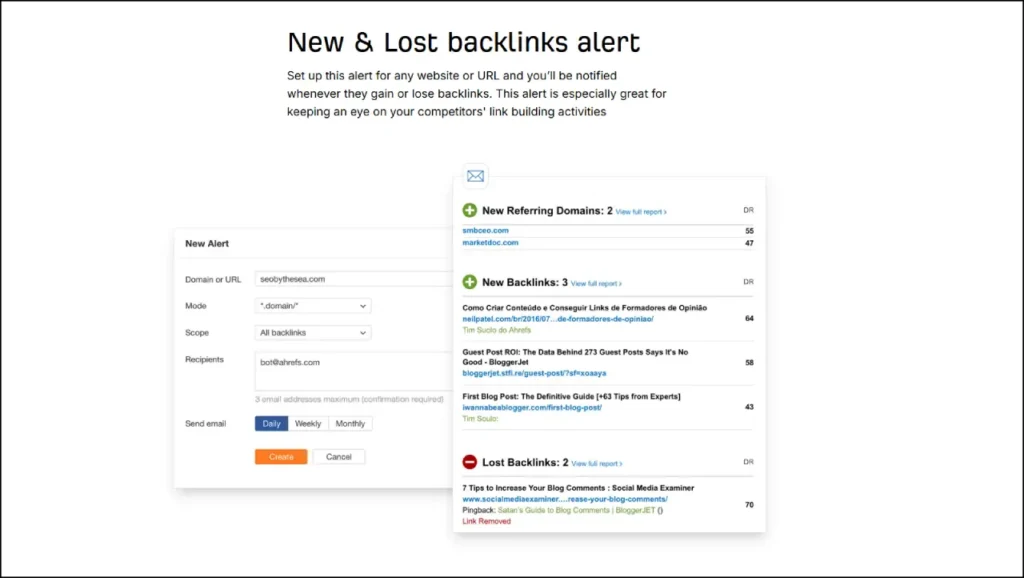
I have Ahrefs email alerts set up for every active campaign to notify me within 24 hours of new lost or gained backlinks. This is the most efficient way to catch link drops before they affect rankings and to spot new linking opportunities or emerging patterns in real time. This is where backlinks watch functionality becomes invaluable for proactive management rather than reactive repair.
- LinkDR and Respona for Outreach
Both tools streamline the prospecting and personalized outreach workflow for acquiring buy outreach links placements at scale. Respona integrates directly with Ahrefs data to build targeted prospecting lists, while LinkDR specializes in finding and qualifying link prospects with contact data attached. These tools reduce the manual research time on outreach campaigns by roughly 60 percent in my experience.
- Google Sheets + Notion Integration
My campaign tracker lives in Notion with a Google Sheets integration for the data-heavy reporting layer. Every link is logged with placement date, referring domain DR/DA, anchor text, target URL, cost, verification status, and last checked date. Monthly I update each link’s live status and flag anything that needs follow-up. This manual layer of link management seo is what prevents the common failure mode of spending money on links and then losing track of whether they are still delivering value.
- Pitchbox for High-Volume Agency Outreach
For clients running high-volume campaigns targeting 15 or more new links per month, Pitchbox is the most scalable outreach platform available. It handles personalization at scale, follow-up sequences, response tracking, and team collaboration on a single campaign. For smaller campaigns, direct Gmail outreach with a well-structured tracking spreadsheet achieves comparable results at no additional cost.
How to Build a Backlink Buying Workflow for Your Agency
If you are running an agency and managing link building company services for multiple clients, the individual link quality decisions matter far less than the system you build around them. Here is the scaled workflow I use for agency clients:
Month 1: Discovery and Strategy
Full audit of every client’s existing backlink profile using the process described in my backlink audit guide. Competitive gap analysis against top three ranking competitors. Anchor text distribution analysis. Monthly acquisition targets set. Budget allocated across link types based on niche competitiveness and campaign timeline.
Month 2 to 4: Acquisition Phase
Consistent execution of the acquisition strategy. A mix of niche edits for quick wins, guest post backlinks for authority building, and outreach-based placements for high-authority targets. Every placement logged in the campaign tracker with full metadata. Monthly verification sweep to confirm all acquired links are live and indexed. Indexing tool submission for any links not yet indexed within 14 days.
Month 5 onwards: Ongoing Monitoring
Monthly link health reports generated from Ahrefs and GSC data. Lost link replacement within the same calendar month. Quarterly disavow file review. Anchor text distribution check and adjustment if any category exceeds its target threshold. Competitive monitoring to flag new link opportunities from updated competitor profiles.
For clients who want buy backlinks for seo as a managed service rather than a DIY campaign, my team at Webseotrends handles every layer of this workflow. The starting point is always a strategy consultation. You can book a free consultation here and we will walk you through exactly what your current profile needs.
Mistakes I Made in Backlinks Management So You Do Not Have To
Eight years of managing link campaigns for real clients and my own sites means a long list of hard lessons. Here are the ones that cost the most:
I Once Bought 40 Links in a Single Month for a New Site
Early in my career I was working on a new affiliate site in a competitive finance niche. I was impatient. I spent the entire three-month link budget in month one, buying 40 links from a mix of marketplaces. The rankings spiked for three weeks and then the site dropped off page two entirely. The velocity was the trigger, not the individual link quality. I have never allowed aggressive velocity buys since then.
I Ignored Anchor Text Until It Was Too Late
On a client site I had managed for 14 months, I let the exact-match anchor text ratio creep above 30 percent because I was always prioritizing the target keyword in anchor text negotiations. The site received a manual action notice. We spent three months cleaning the disavow file and rebuilding with a corrected anchor text distribution. The lesson permanently changed how I negotiate anchor text with every placement.
I Did Not Track Link Attrition
For the first two years of running agency campaigns, I had no systematic way to track whether links acquired in month one were still live in month six. When I finally built a verification workflow, I discovered that approximately 22 percent of links acquired through cheaper marketplace options had been removed within six months of placement without notice. That is effectively a 22 percent reduction in campaign ROI that I had been reporting to clients as delivered value.
I Relied on a Single Link Type for Too Long
For one period I was almost exclusively using niche edits because they were fast and cost-effective. The resulting link profiles looked obviously unnatural to any manual reviewer and probably to Google’s systems as well. A natural backlink profile has diversity of type: editorial links, blog links, directory citations, social signals, forum references, and yes, some guest posts and niche edits. Monoculture link profiles are fragile.
I Underestimated the Value of Internal Link Architecture
I spent money on external link building for a year before I properly optimized the internal link architecture of the sites I was working on. When I finally combined strong external link acquisition with deliberate link sculpting and internal link structure, the ranking movements were dramatically larger than external links alone had produced. The two work together. Never prioritize one at the expense of the other.
Frequently Asked Questions
What is backlinks management?
Backlinks management is the ongoing system of acquiring, monitoring, verifying, auditing, and adjusting your website’s backlink profile to maximize ranking authority while maintaining compliance with search engine guidelines. It is the discipline that ensures your link building investments continue to deliver value over time rather than degrading silently.
Is it safe to buy backlinks online in 2026?
Buying backlinks online is safe when done with quality, relevance, and diversity as the primary criteria. Links that originate from sites with genuine organic traffic, placed in topically relevant content, with natural anchor text, and acquired at a controlled velocity consistently produce positive ranking outcomes without penalty risk. Links bought in bulk from low-quality directories, PBNs, or automated submission services carry high penalty risk regardless of the quantity purchased.
How much should I pay for backlinks?
Backlink prices in 2026 range from $30 to $80 for basic niche edit insertions on DR 20 to 30 sites, $80 to $200 for mid-authority contextual placements, $200 to $500 for high-authority editorial placements, and $500 to $1,500 or more for premium placements on major publications. Anything under $30 per link from a real site is almost certainly a PBN or low-quality automated placement.
What are the best link building management tools?
The best link building management tools in 2026 are Ahrefs for comprehensive profile analysis and competitive intelligence, Semrush for multi-competitor gap analysis and campaign reporting, Majestic for Trust Flow quality evaluation, Linkody or Monitor Backlinks for ongoing link health monitoring, and Notion or Airtable for manual campaign tracking databases. Google Search Console is the essential free baseline for all campaigns.
What is the difference between niche edits and guest posts?
A niche edit places your link into an existing, already-indexed article on another site. A guest post backlink involves publishing a new article on another site with your link embedded. Niche edits pass link equity faster because the referring page is already indexed and often already ranking. Guest posts take longer to index but are better for brand building because you control more of the content and context surrounding your link.
How do I monitor competitor backlinks?
To monitor competitor website backlink activity, use Ahrefs’ Site Explorer to pull competitor profiles and sort by recently acquired links. Use the Link Intersect function to identify domains linking to competitors but not to you. Set up Ahrefs or Semrush alerts on competitor domains to receive notifications of new link acquisitions. Review competitor profiles monthly and add high-priority prospects to your outreach list immediately.
What is a backlink buyer’s biggest mistake?
The biggest mistake any backlink buyer makes is over-reliance on exact-match anchor text. Concentrating more than 15 to 20 percent of acquired links on exact-match target keywords is the most reliable way to trigger Google’s anchor text spam filters. Anchor text diversity, weighted heavily toward branded and topically related variations, is what separates penalty-free campaigns from ones that eventually get caught.
How many backlinks do I need to rank?
The number of backlinks needed depends entirely on your niche competitiveness and the authority of your competitors. For low-competition keywords, five to fifteen links from relevant, mid-authority domains can produce page one rankings. For competitive commercial keywords in finance, legal, SaaS, or e-commerce, you may need 50 to 150 referring domains from high-authority sources to compete on page one consistently. Run a backlink audit against top-ranking competitors to establish your specific gap rather than relying on generic link count targets.
Can I buy high quality backlinks cheap?
Buy cheap high pr backlinks or genuinely high-quality links at very low prices are mutually exclusive in 2026. A link from a real site with genuine organic traffic, placed in original relevant content, with a dofollow attribute, costs at minimum $50 to $100 because there is a real cost to the site owner for hosting that placement and to the placement service for outreach and vetting. Prices below this floor almost invariably represent PBN links, automated submissions, or deindexed domains presented with inflated metrics.
Final Thoughts
Backlinks management is not the most exciting part of SEO. It does not have the immediate gratification of publishing a piece of content or the creative satisfaction of keyword research. It is operational. It is systematic. It requires discipline over excitement and patience over speed.
But after eight years, I can tell you with complete confidence that the sites I have managed with rigorous link management seo systems consistently outrank sites I have seen with better content, better technical SEO, and larger budgets but no real backlink management process. Links are the most powerful ranking signal in Google’s algorithm and they compound over time when managed correctly.
Whether you want to buy high quality backlinks for your own site, purchase backlinks for a client campaign, or build the link building management system that makes your agency competitive, the principles in this guide are the ones I actually use every day at Webseotrends.
If you want our team to manage your backlink strategy end to end, from audit through acquisition through ongoing monitoring, get in touch for a free consultation. If you want to do it yourself with professional-grade tools and guidance, start with my backlink audit guide, then read the best places to buy backlinks, and combine both with the link sculpting framework to build a profile that compounds ranking authority year after year.
The links you build today, managed correctly, will still be working for you in five years. That is what makes backlinks management one of the highest-return investments in the entire digital marketing stack.
Related Reading from Webseotrends:
- How to Do a Complete Backlink Audit (Step-by-Step)
- Best Places to Buy Backlinks in 2026 — 17 Platforms Tested
- Link Sculpting: Control Your PageRank Flow for Maximum SEO Impact
- Why Backlinks Still Matter in 2026 and How to Earn Quality Ones
- 301 Redirect Backlinks: Preserve Link Equity and Avoid Penalties
- Best Link Indexing Tools to Index Backlinks Fast
- 51+ Free Guest Posting Sites to Build Authority in 2026
- Webseotrends $99 Premium Backlink Service — DA/DR 20+ Dofollow Links
- How to start a blog?
- Top-digital-marketing-agency, USA and India