

Quick Answer: Effective link building tactics in 2026 combine white hat methods like guest posting, digital PR, broken link building, and the skyscraper technique with content-driven outreach. The right strategy depends on your niche, budget, and goals — but every high-performing approach centers on earning links through genuine value, not shortcuts. This guide covers every proven method, ranked by impact and implementation difficulty.
Key Takeaways:
- Guest posting on niche-relevant, high-authority sites remains one of the fastest ways to build dofollow backlinks at scale.
- Broken link building and resource page outreach have some of the highest acceptance rates of any outreach-based tactic.
- The skyscraper technique works best when paired with specific outreach to sites already linking to weaker versions of your content.
- Digital PR and data-driven content earn links passively — often from publications you’d never think to approach directly.
- Competitor backlink research reveals the fastest path to link parity, especially in competitive verticals like B2B and eCommerce.
Here’s a hard truth most SEO guides won’t say upfront: most of the backlinks you’ll ever build won’t move the needle. It’s not that link building doesn’t work — it absolutely does. It’s that the vast majority of “link building advice” out there still treats every backlink as equal, ignores search intent, and gives you a list of tactics without telling you which ones are actually worth your time in 2026.
If you’re running off page SEO strategies for a B2B company, your approach should look nothing like an eCommerce brand’s. If you’re local, the tactics differ again. And if you’re building links for an enterprise site with existing domain authority, you’re playing a completely different game than a new domain trying to get its first 50 referring domains.
This guide cuts through that. You’ll get a clear breakdown of every proven link building tactic, how to execute each one, and — critically — which situations each one is best suited for. Let’s get into it.
📋 Want a shortcut? Download our free Link Building Outreach Template Pack to skip the cold-start on email outreach.
What Makes a Link Building Tactic “Right” for Your Site?
Before running through individual tactics, it’s worth spending a minute on how to evaluate them. Not every method fits every site. The “right” link building strategies for your situation depend on four factors:
1. Your current domain authority (DA). Sites with a DA under 20 benefit most from volume — getting lots of links from decent-quality sources. Sites above DA 50 need fewer but higher-authority links to see ranking movement.
2. Your niche’s link landscape. Some industries (health, finance, law) have tight editorial standards and very few sites willing to link freely. Others (tech, marketing, design) are more open. Knowing your landscape prevents wasted outreach effort.
3. Your content assets. The best link building tactics today are content-driven. If you don’t have linkable content yet — original data, tools, comprehensive guides — some tactics simply won’t work for you until you do.
4. Your team’s bandwidth. Broken link building requires time. Digital PR requires relationships. Guest posting requires writing. Be realistic about what you can actually execute consistently, because consistency beats intensity every time in link building.
With that framing in place, let’s walk through every major tactic.
1. Guest Posting: Still Effective, But the Rules Have Changed
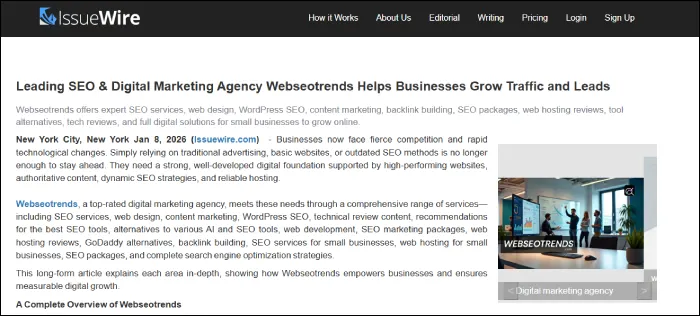
Guest posting has been the backbone of white hat link building for over a decade, and it’s not going anywhere — but the way you do it has to evolve.
The old playbook was simple: find any blog in your industry, pitch an article, get a link in the author bio. That still works in some cases, but Google has gotten significantly better at identifying and devaluing links from low-quality guest post farms — sites that exist primarily to sell sponsored content.
What Good Guest Posting Looks Like Now
The guest posts that move rankings are on sites that:
- Publish editorially curated content (not just paid placements)
- Have real traffic — not just a high domain authority score
- Are genuinely relevant to your topic, not just adjacent to your industry
- Place your link contextually in the body of the article, not only in the bio
A useful check: before pitching, look at the site’s other guest posts. Do they have comments? Do they get shared? Does the content actually serve readers, or does it read like SEO content written by committee? Sites where readers are actually engaged are the ones worth targeting.
How to Find Guest Post Opportunities
Use search operators to surface relevant blogs:
your keyword + "write for us"your keyword + "guest post guidelines"your keyword + "contribute an article"
But don’t stop there. Look at who’s linking to your competitors using a tool like Ahrefs or Semrush. If a site linked to a competitor via a guest post, there’s a decent chance they’ll consider one from you too — especially if you can pitch a better angle.
The Guest Posting Pitch That Gets Responses
Editors receive dozens of pitches weekly. The ones that get through are short, specific, and demonstrate that the writer has actually read the blog. Here’s what works:
- Reference a specific recent article on their site and how your pitch relates
- Pitch 2–3 topic ideas (not just one), each with a one-sentence angle
- Show evidence you can write — a sample article, a published piece, a portfolio link
- Keep the entire email under 150 words
💡 Pro tip: Pitch topics that fill a genuine gap on their site. Use their internal search bar to find what they haven’t covered, then pitch that.
2. Broken Link Building: High Acceptance Rates, Low Competition
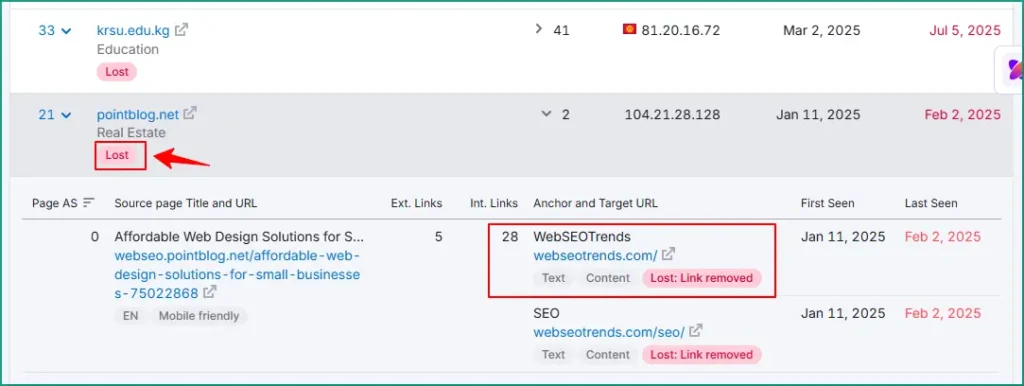
This is one of the most underused link building techniques in most SEOs’ toolkits, mostly because it takes a bit more setup work than a standard outreach pitch. But the acceptance rate is dramatically higher than cold guest post pitches — because you’re doing the webmaster a favor, not just asking for one.
How Broken Link Building Works
The concept is simple: find a page that has a broken outbound link (one that 404s), and offer your relevant content as a replacement. You’re helping them fix a dead link while earning a backlink.
Step-by-step process:
- Find resource pages or hub pages in your niche (search:
keyword + "helpful resources"orkeyword + "useful links") - Run those pages through a tool like Check My Links (a free Chrome extension) or Screaming Frog to find dead outbound links
- Check what the broken link was pointing to using the Wayback Machine at web.archive.org — this tells you what kind of content the site valued
- Either find existing content on your site that matches, or create a replacement piece
- Email the webmaster with a short note — let them know about the broken link, tell them what it pointed to, and offer your page as an alternative
The outreach email doesn’t need to be elaborate. Something like: “Hi [name], I noticed a broken link on your [page title] page — the link to [description] is returning a 404. I have an updated resource on this topic that might work as a replacement: [your URL]. Hope it helps.”
That’s it. No hard sell. No lengthy pitch. You’re being useful.
Where to Find Broken Links at Scale
Beyond manual discovery, you can pull entire link profiles from competitor pages and check them for broken links using Ahrefs’ “Broken Backlinks” report. This tells you which pages linking to your competitors have since died — meaning other sites might have linked to that dead page too, and they’re all candidates for outreach.
3. The Skyscraper Technique: When It Works and When It Doesn’t
Brian Dean of Backlinko popularized the skyscraper technique, and it’s since become one of the most referenced — and most misapplied — link building tactics in SEO.
The method: find a piece of content that has earned lots of backlinks, create something significantly better, then reach out to the sites linking to the original and suggest they update their link to yours.
When the Skyscraper Technique Actually Works
It works well when:
- The original content is genuinely outdated — old statistics, deprecated tools, broken screenshots
- You can make a meaningfully better version — not just longer, but more accurate, more visual, more comprehensive, or more original
- The topic attracts organic outreach opportunities (i.e., people are actively searching for and sharing this type of content)
It doesn’t work well when:
- You create a “better” version that’s just a longer version — length alone doesn’t earn links
- The original piece is recent and already comprehensive
- Your outreach list is too small (you need at least 30–50 prospects to get 3–5 links)
The biggest mistake people make is skipping the “better” part and going straight to outreach with a piece that’s marginally different from what already exists. Webmasters have seen this pitch hundreds of times. If your content doesn’t demonstrably serve readers better, the email won’t land.
4. Resource Page Link Building: The Quiet Workhorse
Resource pages — curated lists of useful links on a specific topic — are link goldmines that most sites leave untapped. These pages exist in almost every niche, and their entire purpose is to link out to high-quality resources. All you have to do is get your content in front of the person who manages them.
Search for resource pages using queries like:
your topic + "resources"your topic + "useful links"your topic + "further reading"intitle:resources your topic
Once you find them, check that the page is actively maintained (not last updated in 2014), has real traffic, and actually links to content similar to what you’d be pitching.
Your outreach email for resource pages should be even shorter than a guest post pitch. Three or four sentences: tell them what you have, why it fits their page, and include the link. That’s the whole pitch. Resource page curators don’t need to be sold — they just need to know you exist.
5. Digital PR: The Highest-Ceiling Link Building Tactic
If guest posting is reliable, digital PR is transformational. A single successful digital PR campaign can earn 50–300 backlinks from publications like Forbes, Business Insider, TechCrunch, and their regional equivalents. That’s a year’s worth of guest posting done in a few weeks.
But it’s also the hardest tactic to execute consistently — it requires a combination of original data, compelling angles, and media relationships that most in-house SEO teams don’t have.
What Digital PR Actually Looks Like
The core asset of any digital PR campaign is something journalists want to write about. That means:
- Original research or surveys — “We surveyed 1,000 remote workers and found that 73% report higher productivity at home, but only 41% feel adequately supported by their employer.” That’s a story.
- Proprietary data analysis — Pulling trends from publicly available datasets and adding original analysis that no one has published before.
- Tools or calculators — Free interactive tools that solve a real problem in your niche (a mortgage calculator, a calorie tracker, a salary comparison tool). These earn passive links from anyone who writes about the topic.
- Newsjacking — Commenting on breaking news in your industry with speed and a unique expert angle. This is reactive rather than planned, but the links can be extraordinary.
💡 CTA: Not sure what a digital PR campaign would look like for your industry? Book a free 30-minute strategy call to explore what angles might work for your site.
6. Competitor Backlink Research: The Map to Your Fastest Wins
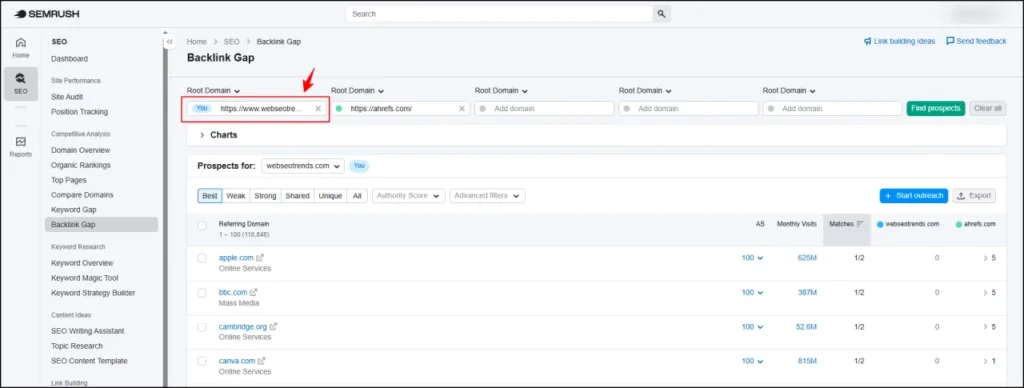
Every competitor’s backlink profile is a blueprint for your own backlink strategy. The sites linking to them are already proven to link to content in your niche — which means they’re warm prospects for your outreach.
How to Run Competitor Backlink Research Effectively
- Pull the top 5 ranking pages for your target keywords
- Run each through Ahrefs or Semrush to export their referring domains
- Filter for DR 30+ sites that link contextually (not just mentions in comment sections or directories)
- Look for patterns: Are they getting links from media coverage? From guest posts? From resource pages? From data studies? The pattern tells you which tactic is working in your niche
- Identify sites that link to two or more competitors — these are your highest-priority prospects because they clearly link to multiple sources in the space
The goal isn’t to copy your competitors — it’s to understand the link ecosystem you’re operating in and prioritize the outreach channels most likely to work.
7. Niche Edits (Contextual Link Insertions)
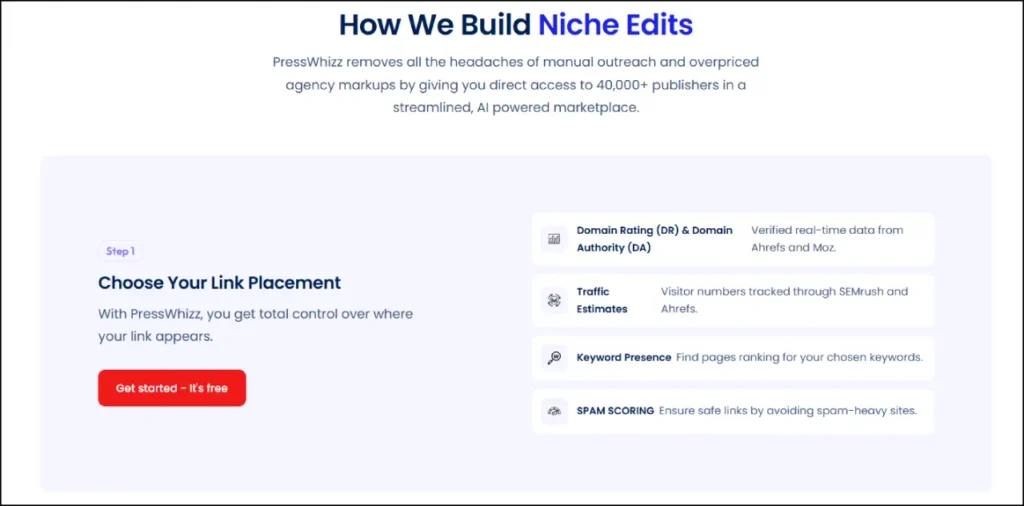
A niche edit — sometimes called a link insertion or contextual backlink — is when you get a link added to an existing, already-indexed piece of content on another site, rather than creating a new guest post from scratch.
The appeal: existing articles already have traffic and authority. A link embedded in a 3-year-old article that ranks on page one for its keyword is often more valuable than a link in a brand new guest post.
The challenge: this tactic sits in a grey area. Paying for niche edits violates Google’s guidelines. But earning them — by offering genuinely useful content that improves the article, or by building relationships with site owners — is legitimate.
The cleaner version: reach out to site owners whose existing content could benefit from a link to your resource. Frame it as an editorial suggestion: “Your article on [topic] is great — you might find our [resource] useful to link to in the section about [subtopic]. It covers [specific detail] that your readers often ask about.”
8. B2B Link Building: What Changes When You’re Targeting Business Audiences

B2B link building strategy operates differently from consumer-facing SEO for one key reason: the link opportunities are concentrated in a smaller, harder-to-reach ecosystem of industry publications, association sites, and professional communities.
High-Value B2B Link Sources
- Industry associations and trade bodies — These often have resource directories or “recommended vendor” sections. A single link from an association site with real membership can be worth dozens of directory links.
- Partner and vendor cross-linking — If you have genuine business partnerships, co-authored content or mutual resource mentions are natural and editorially legitimate.
- Conference and event sites — Speaking at, sponsoring, or even attending industry events often comes with a link from the event’s website. These links are typically from very authoritative, editorially controlled domains.
- B2B media publications — Outlets like Inc., Harvard Business Review, Search Engine Journal, and industry-specific trade publications carry enormous authority and editorial standards. Guest columns, expert commentary, and contributed data studies are your entry points.
9. Local SEO Link Building: Building Authority in Your Geographic Market
For businesses competing in local search, local seo link building requires a slightly different playbook. Google’s local ranking algorithm treats geographic relevance as a major factor, and local links — even from lower-DA sites — can outperform national links for local search visibility.
Proven Local Link Building Tactics
Local business directories: List your business on Google Business Profile, Bing Places, Yelp, the local Chamber of Commerce directory, and any industry-specific local directories. These are foundational.
Local press coverage: Pitch stories to your local newspaper, TV stations, and city/neighborhood blogs. A new hire, a community initiative, a local event you’re sponsoring — these are all story angles that local journalists genuinely want.
Local sponsorships: Sponsor a local sports team, school event, charity run, or community organization. Most recipients will link back to your website from their sponsors page, and these links are typically from real, locally-trusted domains.
Local partnerships: Build relationships with complementary local businesses (not direct competitors) and look for natural opportunities for mutual content mentions or resource page links.
10. eCommerce Link Building: Tactics Built for Product-First Sites
Ecommerce link building strategies face a unique challenge: product pages are hard to earn editorial links to. Nobody naturally links to a product listing page the same way they link to a guide or a research study. That means your link building strategy needs to work through your content ecosystem, not your product pages directly.
eCommerce-Specific Link Building Approaches
Linkable content hubs: Build a blog or resource center that covers topics your target customers search for before they’re ready to buy. A camping gear store creates guides on wilderness navigation. A software company creates templates and tutorials. These pages earn links; the links build domain authority; the domain authority flows to your product pages.
Product PR: Get your products reviewed by journalists and bloggers in your space. Offer free samples, demo access, or early access to new products in exchange for honest coverage. A single link from a high-traffic review site can send thousands of qualified visitors.
Manufacturer and supplier links: If you sell branded products, check whether the manufacturer lists authorized retailers on their website. If they do, contact them and ask to be listed. These links are easy to earn and often overlooked.
Affiliate and comparison sites: While affiliate links are typically nofollowed, having your product listed on high-authority comparison sites (like PCMag, Wirecutter, or niche equivalents) is an indirect but powerful signal to Google that your brand is trusted.
11. AI-Powered Link Building: What’s Changed in 2025–2026
AI powered link building isn’t a replacement for strategy — it’s an accelerant. The tactics themselves haven’t changed, but AI tools have dramatically reduced the time cost of the most tedious parts.
Where AI is genuinely useful in link building right now:
- Prospect research: AI tools can scan thousands of websites and score them for topical relevance, traffic estimates, and editorial standards faster than any human team.
- Outreach personalization: AI can draft personalized email variations at scale — analyzing a target site’s recent content and weaving relevant references into outreach emails automatically.
- Content creation for linkable assets: AI-assisted writing speeds up the creation of data-driven articles, comparison posts, and template resources that attract organic links.
- Broken link discovery: AI-powered crawlers can identify broken link opportunities across a much larger set of pages than manual checking allows.
What AI can’t do: build relationships, make editorial judgment calls, or create the kind of original human insight that earns links from top-tier publications. Those still require people.
Link Building Best Practices: What Separates the Tactics That Stick
No matter which link building best practices you focus on, a few principles apply across the board:
| Best Practice | Why It Matters |
|---|---|
| Prioritize topical relevance over DA alone | A DA 30 link from a directly relevant site often outperforms a DA 60 link from a tangential one |
| Vary your anchor text naturally | Over-optimized anchor text (all exact-match keywords) triggers Google’s spam filters |
| Diversify your link sources | Links from 50 different domains beat 50 links from 5 domains |
| Focus on editorial links over self-created ones | Forum profiles, blog comments, and directory submissions have near-zero impact in 2026 |
| Build a content moat first | The best link building campaigns are supported by content worth linking to |
| Track your referring domains, not just link count | Referring domain growth is the metric that actually correlates with ranking improvements |
| Never buy links outright | Paid link schemes still result in manual penalties, regardless of how sophisticated the seller claims to be |
How to Execute a Link Building Strategy: A 90-Day Framework
Ready to actually execute link building strategy? Here’s a practical 90-day framework to go from zero to a sustainable link acquisition system.
Days 1–30: Foundation
- Week 1: Run a full backlink audit of your site using Ahrefs or Semrush. Identify your current referring domains, anchor text distribution, and any toxic links worth disavowing.
- Week 2: Analyze the top 5 competitors’ backlink profiles. Export referring domains and categorize by link type (guest posts, resource pages, media coverage, directories).
- Week 3: Identify your 3 strongest existing content assets for link building outreach. If you don’t have any, prioritize creating one cornerstone piece this month.
- Week 4: Build your first outreach prospect list — aim for 100 prospects across broken link opportunities and resource pages.
Days 31–60: First Campaigns
- Launch your broken link building outreach (batches of 20–30 emails per week)
- Submit resource page requests to 30–50 relevant pages
- Pitch 4–6 guest posts on vetted, niche-relevant sites
- Begin building a digital PR content asset (original data or research)
Days 61–90: Scale and Iterate
- Analyze what’s working from the first 60 days — which tactic has the highest response rate?
- Double down on the top-performing tactic
- Publish and distribute your digital PR asset
- Begin systematic competitor link gap analysis and add those prospects to your outreach queue
🚀 Ready to start? Get our free 90-Day Link Building Planner spreadsheet — it includes outreach tracking, prospect scoring, and a campaign calendar built for small teams.
Frequently Asked Questions
What is the most effective link building tactic in 2026?
There’s no single “most effective” tactic — it depends on your site’s authority, niche, and resources. That said, for sites with existing content assets, broken link building and resource page outreach consistently deliver some of the highest acceptance rates. For sites willing to invest in content, digital PR offers the highest ceiling in terms of link quality and quantity from a single campaign.
How many backlinks do I need to rank on page one?
This depends entirely on your niche and the competition for specific keywords. A helpful benchmark: use Ahrefs’ Keyword Explorer to see the average number of referring domains pointing to pages currently ranking for your target keyword. That’s your target — not a generic number. In low-competition niches, you might rank with 10–20 referring domains. In high-competition verticals, you might need 200+.
Is guest posting still a good link building technique?
Yes — but only when done correctly. Guest posts on genuine editorial sites with real audiences are still among the most reliable ways to build high quality backlinks. What doesn’t work is publishing generic content on link farms or pay-to-post sites that have no real traffic. Google’s quality raters look for editorial intent, and so should you.
What’s the difference between white hat and black hat link building?
White hat SEO strategies earn links through genuine value — content, outreach, relationships, and digital PR. Black hat methods try to manipulate Google’s algorithm through link schemes, private blog networks (PBNs), or paid links designed to pass PageRank. The risk with black hat tactics: a manual action or algorithmic penalty can wipe out years of ranking gains. The risk with white hat: it’s slower. Most sites are better off with slow and sustainable.
How long does link building take to show results?
Typically, you’ll start seeing ranking movement from new backlinks within 4–12 weeks, though this varies significantly based on your site’s age, current authority, and the competitiveness of your target keywords. Links from high-authority domains tend to be indexed and reflected faster than links from newer or lower-authority sites. Patience matters here — link building is a compounding investment, not an instant return.
What is topical authority and how does link building support it?
Topical authority SEO refers to Google’s assessment of how comprehensively a site covers a given subject. Link building supports topical authority when links come from sites within or adjacent to your niche — they signal to Google that your site is recognized as a credible source within that topic cluster. Generic links from unrelated domains do less for topical authority than fewer, more targeted links from closely related sources.
Can internal links replace external backlinks?
No, but they’re not alternatives — they’re complementary. Internal links help Google crawl and understand the relationship between your pages, and they distribute PageRank across your site. External backlinks bring new authority into your domain from outside. You need both: a strong internal linking structure to maximize the value of the backlinks you earn, and a consistent external link building effort to keep growing your overall domain authority.
Conclusion: Building Links That Build a Business
The sites that dominate organic search in 2026 aren’t the ones that found a link building shortcut — they’re the ones that built systems. Consistent outreach, content worth linking to, genuine relationships with publishers in their space, and the discipline to track what’s working and double down on it.
Link building isn’t glamorous. It takes time, and the results aren’t always immediate. But compounded over 12, 24, 36 months, a disciplined best link building strategy is one of the highest-ROI investments a website can make — because the authority you build doesn’t evaporate when you stop paying for ads.
Start with what you can actually execute this week. Pick one tactic from this guide — broken link building if you have limited content, guest posting if you can write, digital PR if you have data to share — and run one focused campaign before adding another layer.
If you want experienced support building a link acquisition system tailored to your niche, explore our SEO and link building services. We’ve helped B2B, eCommerce, and local businesses build sustainable backlink profiles that compound over time.
