I once watched a client blow $1,400 on a rented email list expecting a pipeline full of warm leads.
The result? A 0.6% open rate, three spam complaints, and an angry reply from someone who had no idea why they were getting emails from us.
That experience taught me everything I now know about email list rental– what it actually is, what it quietly costs you beyond the invoice, when it might genuinely make sense, and what smarter options exist in 2026 when you need to reach new audiences fast.
This guide covers everything. Whether you are actively considering renting an email list, researching email list rental companies, looking up email rental list providers, or just trying to understand whether rented email lists are even worth thinking about — you will have a complete, honest picture by the end.
What Is Email List Rental?
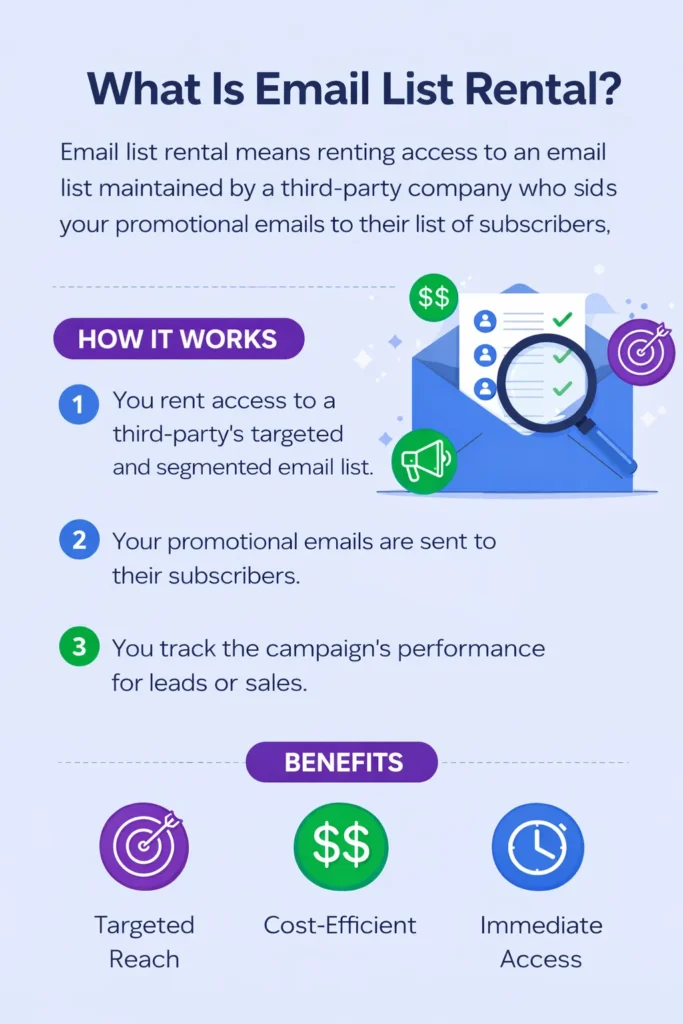
Email list rental is a marketing arrangement where you pay a third-party company to send your email campaign to a list of contacts they own. You do not receive the email addresses themselves. You do not gain ownership of the data. The list owner — sometimes called an email list broker — sends the campaign on your behalf and shares aggregate performance metrics like open rates and click-throughs.
Think of it like renting billboard space. You pay for the exposure. You never own the wall.
This is different from buying a list (where you receive the raw data and upload it to your own email service provider) or leasing a list (a temporary data access arrangement that is rare and even riskier legally). In 2026, most reputable email list rental companies structure their services as rentals specifically to reduce their own regulatory liability — which tells you something about where the risk sits.
Email list rental is used in specific circumstances:
- One-time product launch announcements
- Event promotions targeting a defined professional audience
- Market testing before building your own audience
- Short-term B2B outreach to a new industry vertical
Outside of these use cases, it is a difficult tactic to justify. But let us walk through the full picture before reaching that conclusion.
How Does Email List Rental Work?
The process is relatively straightforward, though the details matter enormously:
Step 1 — Find a provider or broker.
Email list rental services fall into three main categories: media companies monetising their newsletters (trade publications, industry newsletters, niche blogs), event organisers renting attendee lists, and dedicated email list marketplaces that act as intermediaries between list owners and advertisers.
Step 2 — Define your targeting criteria.
Most providers allow segmentation by industry, company size, job title, geographic region, or consumer demographic. The more granular the targeting, the higher the cost. A broad list of 50,000 B2B contacts costs significantly less than a tightly segmented list of 8,000 decision-makers in a specific vertical.
Step 3 — Agree on volume and send terms.
Most email list rental agreements — whether you rent email lists through a broker or rent email list access through a media company — are structured as a fixed number of sends — often a single send, sometimes two or three within a short window. You typically cannot reuse the list, follow up independently, or contact recipients outside the agreed arrangement.
Step 4 — Submit your campaign for approval.
The list owner reviews your creative — subject line, email body, landing page — to ensure it meets their standards and does not damage their relationship with their audience. This is one reason you never receive the raw addresses: the list owner is protecting their asset.
Step 5 — The provider sends and reports back.
You receive metrics on opens, clicks, and sometimes conversions. You never see who opened or clicked. You cannot segment the responsive contacts for follow-up. The data stays with the list owner.
Email List Rental vs. Email List Purchase vs. Email List Lease
These three terms get conflated constantly. They are meaningfully different:
| Arrangement | What You Get | Data Ownership | Risk Level |
|---|---|---|---|
| Email list rental | Provider sends on your behalf | None — you never see the addresses | Medium — inherits sender reputation risks |
| Email list lease | Temporary access to data under strict conditions | Temporary only | High — rare, legally complex |
| Email list purchase | Raw data uploaded to your ESP | Full ownership | Very high — purchased data often violates GDPR, CAN-SPAM |
In 2026, outright purchase of third-party email data has become increasingly uncommon among legitimate email list rental companies, precisely because data protection regulations have made it extremely difficult to demonstrate that purchased contacts provided valid consent. Most reputable providers have shifted entirely to the rental model — which still carries risk but limits their own legal exposure.
The Real Advantages of Renting an Email List
I am not going to pretend there is no case for email list rentals. There is, in specific situations. Here is an honest look at the benefits:
1. Speed When Time Is Genuinely Short
Building your own email list takes months of consistent work — content, lead magnets, landing pages, opt-in optimisation, nurturing sequences. Most businesses cannot afford to wait that long when they have a product launch in three weeks or an event to fill in 30 days. Renting an email list compresses that timeline to days. You pay for access, the provider sends, and your message reaches a real inbox the same week you signed the contract. For time-sensitive campaigns where the window is fixed, that speed advantage is real.
2. A Shortcut for Brands With No Existing Audience
A startup with no email list and no time to build one has a genuine problem. You cannot grow through email marketing if you have nobody to email.
Email list rental services offer a way to reach a relevant audience before the organic infrastructure is in place — which is a legitimate use case, especially for B2B companies running event-driven campaigns or product announcements before their own list is large enough to matter.
3. Testing a New Market Before Committing to It
If you are considering entering a new vertical or targeting a new audience segment, running a small rented email list campaign first can tell you whether the message resonates before you invest months of content effort. A response rate of even 2–3% from a relevant segment is meaningful validation data. It is cheaper to test with a rental than to build out a full content programme for a market that turns out not to care about what you offer.
4. Access to Segments You Cannot Build Quickly
Some audiences take years to aggregate. A specialist list broker covering a tight professional niche — say, procurement managers in pharmaceutical manufacturing, or independent financial advisers in a specific region — may have spent a decade building that audience. Email list rental companies that own genuinely specialised lists can give you access to segments that would take you far longer to build organically, assuming you could build them at all.
The Honest Drawbacks — Why Most Experts Do Not Recommend It
The reasons to be cautious about email list rental are more numerous and more serious than the advantages.
1. Deliverability Risk
When you use an email list rental service, you are sending to an audience you have never warmed up. These recipients do not know you, did not ask to hear from you, and are not primed to engage with your message. The result is typically low open rates (often 1–5%) and elevated bounce and complaint rates.
More critically, if you are using your own domain for the campaign (some arrangements allow this), high complaint rates will damage your sender reputation — the score that inbox providers use to decide whether your emails reach the inbox or the spam folder. That damage does not stay isolated to the rental campaign. It follows your domain into every subsequent email you send, including to your hard-earned organic list.
2. Legal and Compliance Risk
This is the category most articles about email list rental understate. The legal exposure is real.
- GDPR (EU): Under GDPR, consent must be explicit, informed, freely given, and obtained for a specific purpose. Generic consent to “partner communications” or “third-party marketing” collected years ago almost never meets this standard. If you send to EU-based contacts from a rented list, you may be violating GDPR regardless of what the list owner claims about consent.
- CAN-SPAM (USA): CAN-SPAM has a lower consent threshold than GDPR but still requires a clear opt-out mechanism, accurate header information, and non-deceptive subject lines. Violations carry fines up to $51,744 per email.
- CASL (Canada): Canada’s Anti-Spam Legislation requires express consent for most commercial email. CASL is one of the strictest frameworks globally. The fines can reach CAD $10 million per violation for businesses.
The bottom line: Even if your email list rental company asserts their lists are compliant, the legal responsibility for the campaign you send belongs to you as the sender, not to the list broker. Always verify consent documentation before sending to any rented list.
3. No Ownership, No Remarketing, No Relationship
One of the most underappreciated costs of renting email lists is what you give up at the end of the campaign. The responsive contacts — the people who opened, clicked, and showed genuine interest — stay with the list owner. You cannot follow up with them. You cannot add them to a nurture sequence. You cannot retarget them. You cannot build on the initial engagement at all.
Every campaign you run to a rented list starts from zero. There is no compounding. There is no asset being built. This is fundamentally different from every other form of digital marketing investment — even paid advertising generates data and pixel audiences you can retarget. A rental email list campaign generates a report and nothing else.
4. Quality is Unpredictable and Often Disappointing
The fundamental quality problem with most rented email lists is that list owners are incentivised to maximise the size of their list, not its quality. An older, less engaged list still commands a rental fee. The only true measure of list quality — real engagement with relevant, recent content — is almost impossible to verify before you rent.
In practice, industry benchmarks suggest that fewer than 20% of commercially available email lists (B2B and B2C combined) are genuinely worth renting for most use cases. The rest are either outdated, over-rented to multiple advertisers simultaneously, composed of contacts with unclear consent, or simply not relevant enough to your offer to produce meaningful results.
5. Reputation Risk Beyond Deliverability
If your brand is publicly associated with purchasing or renting contact lists — through a complaint, a social media post, or a GDPR data subject request that exposes the list source — the reputational consequence can significantly outlast the campaign. Sophisticated buyers and B2B decision-makers are increasingly aware of list rental practices and view unsolicited emails from brands as a negative signal about how that brand operates.
How Much Does Email List Rental Cost?
Email list rental pricing varies widely depending on the provider, the quality of the list, the depth of segmentation, and the geographic market. Here is a realistic breakdown:
Standard Pricing Models
CPM (Cost per Thousand Emails) is the most common pricing model. Rates typically range from $100 to $500 per thousand sends, depending on:
- List quality and recency
- Targeting specificity (a broad consumer list costs less than a tightly segmented B2B list)
- Geographic market (US lists typically cost more than global lists)
- Historical engagement rates of the list
Flat fee per campaign is used by some newsletter publishers and niche media companies. A single send to their audience of, say, 25,000 subscribers might cost $1,500–$5,000 as a flat rate.
Minimum spend thresholds are common among dedicated email list marketplaces, often requiring $250–$500 minimum monthly spend just to access their platform.
Additional Costs to Budget For
Beyond the base rental fee, expect potential add-ons:
| Cost Item | Typical Range |
|---|---|
| List segmentation fee | $50–$200 additional |
| Data cleansing / verification | $50–$150 |
| Creative review fee | $0–$100 |
| Dedicated sending service | $100–$300 |
The Hidden Costs Nobody Mentions
The financial cost of a rental email list campaign is the smaller part of the total cost equation. The hidden costs that rarely appear in the invoice include:
Deliverability remediation. If the campaign damages your sender reputation, the cost of repairing it — through email warm-up tools, reduced sending volume, and re-engagement campaigns — can significantly exceed the original rental fee.
Compliance auditing. If a GDPR-related complaint surfaces from a rented list campaign, the legal cost of responding and demonstrating compliance can be substantial for a small business.
Opportunity cost. Every dollar and hour spent on a rented list campaign is a dollar and hour not spent building a high-quality owned audience that compounds in value over time.
Top Email List Rental Companies and Marketplaces in 2026
If you have evaluated the risks and determined that email list rental is appropriate for your specific situation, here are the main types of providers to consider:
Specialist B2B Email List Marketplaces
These platforms aggregate lists from multiple sources and allow advertisers to define targeting criteria and purchase sends.
| Platform | Best For | Database Size | Key Features | Pricing Model | Starting Price (Updated) | Data Accuracy / Refresh | Notes |
|---|---|---|---|---|---|---|---|
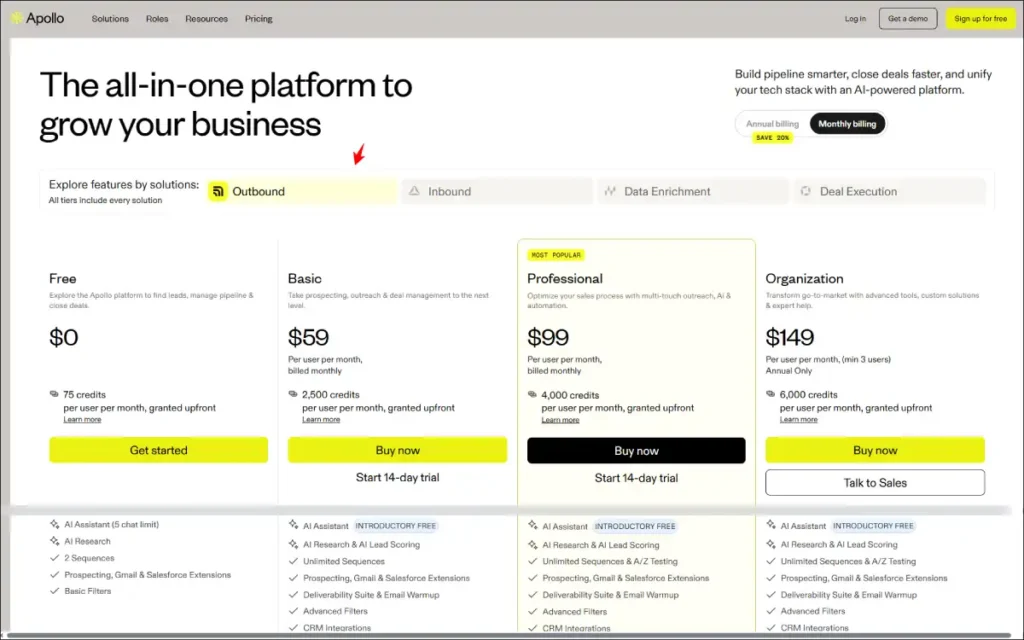
| Apollo.io | SMBs & startups | 200M+ contacts | Email finder, sequencing, CRM integrations | Subscription + credits | Free → ~$49/user/mo | ~65–70%, refresh ~4–6 weeks | Best all-in-one affordable tool |
| ZoomInfo | Enterprise teams | 235M+ contacts | Intent data, AI insights, org charts | Annual contract | ~$15K+/year | ~85–90%, refresh ~4–6 weeks | Premium but expensive |
| Cognism | EU & compliance-focused | 100M+ contacts | GDPR-compliant, phone-verified data | Annual contract | ~$16K–22K+/year | ~95%+ (high-quality data) | Best for EMEA markets |
| UpLead | SMB verified leads | 160M–200M+ contacts | Real-time email verification | Subscription + credits | ~$99/month | Real-time verification | High accuracy, lower scale |
| Lead411 | Intent-based outreach | 450M+ contacts | Buyer intent, sales triggers | Subscription | ~$99/month | High accuracy, frequent updates | Good ZoomInfo alternative |
| Lusha | Freelancers & small teams | ~100M–135M contacts | Chrome extension, enrichment | Freemium + credits | Free → ~$29–59/user/mo | ~85% accuracy | Easy but limited credits |
| LakeB2B | Industry-specific data | 1B+ contacts (claimed) | Segmented niche lists | Custom pricing | Custom | Not publicly disclosed | Best for niche targeting |
| InfoClutch | Custom B2B lists | 200M+ contacts | Tele-verified data | Custom pricing | Custom | Not publicly disclosed | High manual verification |
| CampaignLake | Global campaigns | 700M+ contacts | Intent + technographic data | Custom pricing | Custom | Not publicly disclosed | Large global coverage |
What to verify before using any marketplace: How was the list built? When was it last verified? What does “opt-in” actually mean in their consent language? What is the average open rate on recent campaigns to this segment?
Industry Newsletter Publishers
Trade publications and niche newsletter operators often offer email list rental as a revenue stream. Because their audiences subscribed specifically to content in your niche, these can be significantly higher-quality than generic marketplaces.
Look for:
- Trade association newsletters in your vertical
- B2B media publications targeting your industry
- Event organisers in your professional community
The consent basis here is usually cleaner, the audience is genuinely relevant, and the list owner has a strong incentive to protect their relationship with their subscribers — which means they are selective about the campaigns they accept.
Managed Email Service Brokers
Companies like ListGiant, PostcardMania (for direct mail/email combos), and Response Media act as traditional list brokers — matching advertisers with list owners and managing the campaign execution.
What to Ask Every Provider Before You Rent
Before signing any agreement with an email list rental company, ask these specific questions:
- When was this list last verified for deliverability?
- What was the consent mechanism used to build this list, and when was consent collected?
- What is the average open rate on recent campaigns to this segment?
- How many other advertisers have sent to this segment in the past 90 days?
- Can I see proof of GDPR / CAN-SPAM compliance documentation?
- Do I retain any data from the campaign, or does all recipient data remain with you?
- What happens if complaint rates exceed a certain threshold?
If a provider cannot or will not answer these questions clearly, that is your answer.
Is It Legal to Rent Email Lists? The 2026 Compliance Overview
The short answer is: it depends on where your recipients are located and what consent they gave.
CAN-SPAM (United States)
CAN-SPAM does not require prior consent for commercial email, but it does require:
- A clear and honest From name and subject line
- A valid physical postal address
- A clear opt-out mechanism that is honoured within 10 business days
- No deceptive routing information
Under CAN-SPAM, renting a list is technically legal as long as the above requirements are met. However, ESP terms of service (Mailchimp, HubSpot, Klaviyo, etc.) are typically stricter than CAN-SPAM and often prohibit sending to purchased or rented lists. This means even a CAN-SPAM-compliant rental campaign may violate your sending platform’s terms.
GDPR (European Union and UK)
GDPR requires consent to be:
- Explicit and specific to the sender and purpose
- Freely given without coercion
- Easy to withdraw
- Documented with a clear audit trail
Generic consent to “receive offers from third-party partners” collected at sign-up almost never satisfies GDPR’s requirements for sending your specific campaign. If any of the rented contacts are in the EU or UK, you face significant compliance exposure.
The Information Commissioner’s Office (ICO) in the UK has issued guidance specifically stating that buying or renting email lists and sending to them without adequate consent is likely to violate GDPR.
CASL (Canada)
Canada’s CASL is the strictest of the major frameworks. It requires express consent (not implied) for most commercial messages, with consent records that include the date, method of collection, and the specific consent provided. List rental in Canada is extremely difficult to do compliantly.
Practical guidance: If your campaign targets US audiences only, CAN-SPAM compliance is achievable with a legitimate list broker. If any portion of your audience is in the EU, UK, or Canada, the compliance complexity is significantly higher and the risk is material.
Better Alternatives to Email List Rental and Rental Email Lists
If you need to reach new audiences without the risks of rented email lists, these alternatives consistently deliver better returns:
1. Build Your Own Opt-In List Through Content
The most durable email list is one where every subscriber actively chose to hear from you. Lead magnets — free guides, templates, tools, calculators, or webinar access — trade genuine value for explicit permission. The engagement rates from an opted-in list are typically 5–10x higher than from rented lists, and the contacts are reusable, remarkatable, and compound in value over time.
For a detailed guide on how to build a high-quality subscriber list from scratch, our guide to how to start a blog covers content strategy that generates organic email signups at scale.
2. Kit (Formerly ConvertKit) — How to Build an Owned Email List and Earn From Recommendations
- Best for: Bloggers, newsletter creators, course sellers, podcasters, and anyone who wants to grow a permission-based email list through cross-promotion — and earn passive income by recommending other newsletters to their audience.
- Pricing: Free up to 10,000 subscribers | Creator from $39/month | Creator Pro from $79/month
- Official page: kit.com/features/paid-recommendations
Here is something most articles about email list rental miss entirely: you do not have to rent someone else’s list to reach a new audience. And if you already have a newsletter, you can actually get paid every time someone from your list subscribes to another creator’s newsletter — turning your audience into a recurring revenue stream.
That is exactly what Kit’s Paid Recommendations feature does. Kit — formerly ConvertKit, rebranded in October 2024 — built a two-sided marketplace around newsletter recommendations. One side is for creators who want to grow their list by paying to be recommended in other newsletters. The other side is for publishers who want to earn money by recommending newsletters their subscribers will genuinely enjoy. Both sides use Kit’s integration with SparkLoop, the leading newsletter recommendations platform, to handle matching, tracking, and payments.
Over 100 high-quality newsletters are already using Paid Recommendations to grow their lists and earn from their audiences, including 1440, Girlboss, Punchbowl, Front Office Sports, and Demand Curve.
For Advertisers: How to Grow Your Email List Using Kit Paid Recommendations
If you want to reach a new, engaged audience without cold-blasting a rented email list, Kit’s Paid Recommendations is worth understanding. Instead of paying $100–$500 per thousand sends to a list that has never heard of you, you pay per subscriber who actively chose to join your newsletter after a trusted creator recommended it.
Here is how it works in practice. You sign up at kit.com, join the Creator Network, and connect your SparkLoop account — approval typically takes 24 hours. From there, you set how much you are willing to pay per verified subscriber, and you choose the type of audience you want to reach by filtering on location, demographics, or engagement scores. You only ever pay for subscribers who meet your criteria and who are actively opening emails. Kit describes this as paying for “real fans” — not cold contacts.
The network reaches beyond Kit users too. Because Kit has partnered with SparkLoop — the platform it acquired — you can advertise to creators on other email platforms as well, which significantly expands the pool of newsletters recommending your publication.
What makes this meaningfully different from email list rental is ownership. Every subscriber who joins your list through a paid recommendation is yours permanently. You can segment them, follow up with them, send automated sequences, and build on the relationship indefinitely — none of which is possible with a rented list where the data stays with the provider.
For Publishers: How to Earn Money From Your Email List Using Kit
If you already have an email list — even a modest one — Kit’s Paid Recommendations turns it into a passive income source. When you set up Recommendations in your sign-up flow, new subscribers see a selection of other newsletters they can join alongside yours. Every time someone signs up to one of those paid recommendations, you get paid a commission.
The setup takes about three steps. First, you join the Creator Network and choose where recommendations appear — typically on your sign-up confirmation page or in your welcome email. Second, you browse paying creators by topic or audience type and select the ones whose content genuinely matches what your subscribers care about. Third, you track earnings through your dashboard and get paid every time someone from your audience subscribes to a recommended newsletter.
This is the more ethical, sustainable version of what email list rental companies do. Instead of selling cold access to your audience, you are recommending newsletters you have actually vetted — and getting paid per person who actively opts in. Your audience’s trust stays intact. Your inbox reputation is not at risk. And the income compounds as your list grows.
Kit Pricing Summary
| Plan | Monthly Price | Subscribers | Key Features |
|---|---|---|---|
| Newsletter | Free | Up to 10,000 | Unlimited emails, landing pages, forms, 1 automation |
| Creator | From $39/mo | 1,000+ | Creator Network, paid recommendations, visual automations |
| Creator Pro | From $79/mo | 1,000+ | SparkLoop referrals, subscriber scoring, Facebook Audiences |
Kit is designed for content creators — bloggers, podcasters, course builders, authors, and newsletter operators. It is not built for e-commerce transactional email (abandoned cart, post-purchase triggers), so if that is your primary need, Klaviyo or Omnisend are better fits. But for anyone building an audience-first business, it is one of the most powerful and compliance-safe alternatives to renting email lists.
3. Beehiiv — How to Rent Your Email Audience to Brands (and How Brands Can Reach Newsletter Readers)
- Best for: Newsletter publishers who want to monetise their audience through ads and paid recommendations, and brands that want to reach engaged, opted-in newsletter readers at scale.
- Pricing: Free plan available | Scale from $39/month | Max from $99/month
- Official page: beehiiv.com/ad-network
Most articles about email list rental focus purely on the buyer’s side — the brand paying to reach an audience. Beehiiv is interesting because it sits on both sides of that transaction at once. Publishers use it to monetise their newsletter audience by letting brands advertise inside their emails. Brands use it to reach those newsletter audiences without ever sending to a cold, unengaged rented list.
The platform was built by former members of the Morning Brew team, and the numbers behind it are significant. Beehiiv creators have collectively earned over $37 million through the Ad Network so far. Publishers on the platform sent 28 billion emails in 2025, reaching over 255 million unique readers, with average open rates above 41%. Advertisers including Brooklinen, BetterHelp, Hims, Naked Wines, Masterworks, and Babbel have all run campaigns through the network.
There are two distinct ways to use Beehiiv depending on whether you own a newsletter or you are a brand trying to reach new audiences.
For Publishers: How to Monetise Your Email List Through Beehiiv’s Ad Network
If you run a newsletter with at least 1,000 active subscribers and you are on a paid Beehiiv plan, you qualify to join the Ad Network. Once approved, you start receiving inbound ad offers from brands matched to your audience’s interests and demographics. You review each offer, accept or decline on your own terms, and insert the sponsored placement into your newsletter. Beehiiv handles all reporting automatically, tracking clicks and opens, and pays out on the 20th of each month for the prior month’s earnings.
The payout model is either CPM (you earn per thousand unique opens) or CPC (you earn per verified click on the sponsored link). Both models are performance-based, which means your earnings grow as your engagement grows — not just as your subscriber count increases. You can run Ad Network placements alongside your own direct sponsorship deals, since the network is non-exclusive. Up to one primary ad with a brand logo and two secondary ads can appear in each newsletter.
What makes this different from traditional email list rental is the consent structure. Your subscribers signed up specifically for your newsletter. They trust your editorial voice. When you feature a sponsored placement, it appears inside content they actively chose to receive — which is why open rates and click rates in newsletter sponsorships consistently outperform cold email blasts to rented lists by a wide margin.
The Geekout newsletter publisher Matt Navarra described Beehiiv Boosts as “free money” and earned $25,000 from paid referrals. Another creator documented earning more than $12,000 from the Beehiiv Partner Program and Ad Network within a year while sending newsletters to a relatively small, highly engaged list.
For Brands: How to Advertise Through Beehiiv’s Ad Network
If you are a brand that wants to reach newsletter audiences without renting a cold email list, the Beehiiv Ad Network offers a structured, transparent alternative. You submit your campaign through Beehiiv’s advertiser platform, define your targeting criteria by vertical and audience type, and Beehiiv’s matching algorithm places your ads in newsletters whose subscribers align with your target customer profile.
The minimum advertiser spend is $10,000 per campaign, which makes this most appropriate for established brands and growth-stage companies with real marketing budgets. On average, advertisers spend around $50,000 per month on the network. In return, you get real-time reporting on impressions, clicks, and conversions, and your brand appears inside content that readers actively sought out — not inside a cold blast they never asked for.
Brands that have run through the Beehiiv Ad Network include Notion, Google, Netflix, HubSpot, Deel, and Roku. The platform pays out more than $1 million per month to publishers across the network, which signals genuine scale and active participation from newsletter operators with real, engaged audiences.
Beehiiv Boosts: Pay Per Verified Subscriber Instead of Per Thousand Cold Sends
Beehiiv Boosts is the feature that comes closest to replacing the logic of traditional email list rental — but with a fundamentally better model. Instead of paying $100–$500 per thousand cold sends to an unverified list, you pay per subscriber who actively opted in to your newsletter after seeing it recommended inside another Beehiiv publication.
The average cost is $1.63 per verified subscriber. The minimum deposit to get started is $50. You only pay for subscribers that Beehiiv has confirmed as real, active, and engaged — a verification process that typically takes 10 to 17 days. If a subscriber does not pass verification, you are not charged. The average open rate for Boost-acquired subscribers is above 40% historically, which is dramatically higher than the 1–5% open rates typical of traditional rented email lists.
The cost comparison against conventional list rental makes this clear:
| Method | Cost per 1,000 contacts | You own the data? | Follow-up possible? | Typical open rate |
|---|---|---|---|---|
| Traditional email list rental | $100–$500 | No | No | 1–5% |
| Beehiiv Boosts | ~$1,630 per 1,000 verified subs | Yes — permanently | Yes — unlimited | 40%+ |
Boosts cost more per contact upfront. But the subscribers you acquire are yours permanently, they open your emails at rates many times higher than rented list contacts, and you can follow up with them indefinitely — the long-term ROI is not comparable.
Beehiiv Recommendations: Free Cross-Promotion for Smaller Publishers
For newsletter operators who are not yet ready to invest in paid subscriber acquisition, Beehiiv also offers a free Recommendations feature. You recommend other newsletters in your sign-up flow, and those creators recommend you back. New subscribers see both recommendations at the moment of highest engagement — right after they decide to subscribe. There is no cost per subscriber and no minimum budget. It is a straightforward way to start growing through mutual promotion before you invest in Boosts or direct advertising.
Beehiiv Pricing Summary
| Plan | Monthly Price | Key Features |
|---|---|---|
| Free | $0 | Up to 2,500 subscribers, basic newsletter tools |
| Scale | From $39/mo | Boosts, Ad Network, automations, custom website |
| Max | From $99/mo | Full features, advanced analytics, team tools |
Beehiiv works best for newsletter-first publishers and brands that want to advertise inside trusted, opted-in publications. It is not built for pure e-commerce transactional email (abandoned cart, post-purchase automations), so if that is your primary focus, Klaviyo is the more appropriate tool.
4. Use a B2B Prospecting Tool
For B2B use cases where you need to reach specific job titles at specific companies, modern prospecting platforms give you direct access to business email addresses without the risks of rented lists. Tools like Apollo.io, Hunter.io, and LinkedIn Sales Navigator allow you to:
- Build targeted prospect lists based on precise criteria
- Verify email addresses before sending
- Send from your own domain (with proper warm-up)
- Follow up with responsive contacts
- Own the data permanently
The key legal difference: you are not using someone else’s consent as the basis for your outreach. Under CAN-SPAM, direct cold email to business prospects is typically permissible as long as you include the required opt-out mechanism. You maintain full control and full accountability.
5. Paid Newsletter Sponsorships
Instead of renting a newsletter publisher’s list, consider sponsoring their newsletter as an advertiser. This approach lets you reach a highly engaged, opted-in audience without the deliverability risks that come with list rental, because the publisher sends to their subscribers as native content — not as a third-party blast. Response rates from well-matched newsletter sponsorships typically exceed those of list rental campaigns, and there is no risk to your sender reputation.
6. SEO-Driven Organic Email Capture
Creating content that ranks organically for the questions your target audience is searching for produces a steady stream of high-intent visitors. When those visitors convert to email subscribers through well-designed capture forms, you build an audience that came to you specifically because of relevant interest — dramatically outperforming rented lists on every engagement metric.
For more on this approach, our guide to affordable SEO tools covers the tools that make organic audience building accessible regardless of budget. Our AI SEO tools guide covers AI-powered platforms that can accelerate content creation and organic traffic growth simultaneously.
7. Co-Registration and Lead Generation Partners
Co-registration involves partnering with complementary businesses where your signup form or offer appears alongside theirs during their own registration process. The visitor explicitly opts in to your list as part of the process — giving you a valid consent basis. This is meaningfully different from list rental because the recipient actively chose to hear from you, not just from the partner’s brand.
Email List Rental vs. Building Your Own List — Complete Comparison
| Factor | Email List Rental | Building Your Own List |
|---|---|---|
| Speed to reach | Days | Months to years |
| Data ownership | None | Full |
| Follow-up capability | None | Unlimited |
| Deliverability risk | High — inherits provider reputation | Low — you control sender reputation |
| Compliance risk | Medium to High | Low (with proper opt-in practices) |
| Engagement rates | Typically 1–5% open rate | Typically 15–30%+ open rate |
| Cost per send | $100–$500 per 1,000 | Near zero after list is built |
| Long-term ROI | Low — no compounding | High — list grows and engages over time |
| Segmentation quality | Depends entirely on provider | Complete control |
| Legal audit trail | Held by third party | Held by you |
The comparison makes clear why most email marketing professionals recommend building your own list as the primary strategy — with rental reserved for specific, time-sensitive situations where the speed advantage outweighs the risks.
When Email List Rental Actually Makes Sense in 2026
Despite the risks, there are legitimate use cases for email list rental. Here is an honest list of when it can be a reasonable tactical choice:
Take event promotion as a concrete example. If you are hosting a conference, webinar, or industry event, renting from a trade publication or event organiser whose audience matches your target attendee profile is a reasonable way to drive registrations quickly. The consent basis is typically cleaner than a generic list marketplace, the audience is genuinely relevant, and the one-off nature of the campaign limits your long-term exposure to deliverability and reputation risk.
Market testing with a tight budget ceiling is another situation where rental can make sense. A single, carefully targeted campaign to a small segment — a $300 to $500 investment — can generate enough open rate and click data to tell you whether a new audience segment is worth committing to. That is a lower-stakes way to validate a market than building infrastructure for a segment you are not sure about yet.
A specialist B2B announcement is a third legitimate use case. When a niche trade publication has a well-maintained, genuinely engaged subscriber base in your exact vertical, the quality risk is significantly lower than with a generic consumer list marketplace. If the publisher has fresh data, transparent engagement metrics, and a real editorial relationship with their audience, the campaign can perform meaningfully better than industry averages suggest.
The fourth scenario is filling a short-term pipeline gap while your organic list-building efforts are still early. A startup that needs near-term revenue pipeline but has not yet built an owned audience may find one carefully selected rental campaign useful as a bridge tactic — not as a repeating strategy.
How to Evaluate an Email List Rental Company Before You Spend
If you proceed with renting an email list, use this checklist to evaluate providers:
Start with data quality. Ask when the list was last verified against real email validity tools, what the hard bounce rate on recent campaigns looks like (anything above 2% is a warning sign), and how the list was originally built and over what time period. Recency matters — a list built in 2020 and never refreshed is very different from one that is actively maintained.
Then ask about consent and compliance. Ask the provider to share documentation of the consent mechanism used to build the list. Make sure that consent is specific enough to cover your campaign type and the geographic locations of the recipients. If any EU, UK, or Canadian contacts are included, ask whether the provider has a formal data processing agreement (DPA) available — you will need this for GDPR compliance.
Ask about performance transparency next. Find out what the average open and click rates have been on recent campaigns sent to this specific segment. Ask how many other advertisers have sent to this segment in the past 30 days — over-rented segments consistently underperform because recipients are burned out on promotional emails from brands they do not recognise. A provider who shares complete delivery reports rather than just aggregate summaries is a more trustworthy partner.
Finally, go through the commercial terms carefully. Ask whether you can have your creative reviewed and test-delivered to a seed list before the full campaign sends. Ask what the provider’s policy is if complaint rates spike above a threshold that damages your sender reputation. And find out whether there is any refund or credit mechanism if the list significantly underperforms against the engagement metrics the provider advertised.
Frequently Asked Questions — Email List Rental
What is email list rental?
Email list rental is a marketing arrangement where you pay a third-party company to send your email campaign to a list of contacts they own. You do not receive the raw email addresses — the provider sends the campaign on your behalf and shares metrics. You never own the data and cannot reuse it outside the agreed terms.
Is renting an email list legal?
It depends on the location of your recipients and the consent basis the list was built on. In the US, renting email lists is generally permissible under CAN-SPAM if proper opt-out mechanisms are included. In the EU and UK under GDPR, list rental is significantly riskier because consent must be explicit and specific to your brand and purpose. Most generic consent language used to build commercial lists does not meet GDPR requirements.
How much does email list rental cost?
Email list rental pricing typically ranges from $100 to $500 per thousand emails sent (CPM), with minimum spend thresholds of $250–$500 common on dedicated platforms. Niche B2B lists with tight segmentation cost more. Newsletter sponsorships and specialist media rentals may be priced as flat fees of $1,500–$5,000 per send to their full audience.
What is the difference between renting and buying an email list?
When you rent an email list, the provider sends the campaign on your behalf — you never see the addresses and cannot reuse them. When you buy an email list, you receive the raw data and upload it to your own sending platform. Buying carries significantly higher legal and deliverability risk in 2026 because purchased data rarely has valid consent documentation and typically violates the terms of major email service providers.
What are the risks of renting an email list?
The main risks are: deliverability damage from high complaint rates (since recipients did not opt in to your brand), legal exposure under GDPR and CASL if recipients are in regulated markets, low ROI from disengaged contacts who do not know your brand, and no data ownership — meaning responsive contacts cannot be followed up or remarketed.
What is a good open rate for a rented email list campaign?
Most email list rental campaigns achieve open rates between 1% and 8% — significantly below the 15–35% open rates typical of permission-based lists where subscribers actively opted in to hear from the sender. If a provider claims open rates significantly above 8% for list rental campaigns, verify the methodology — some providers count bot opens that inflate reported metrics.
Are rental email lists and rented email lists worth it?
For most businesses pursuing long-term growth, no — renting email lists delivers low engagement, no data ownership, material legal risk in regulated markets, and zero compounding value. For specific short-term use cases (event promotion, market testing, pipeline gap filling) with carefully vetted providers, a targeted rental campaign can produce useful results. The key is treating it as a tactical tool, never a strategy.
What are the best alternatives to email list rental?
The best alternatives are: Kit (formerly ConvertKit) for building a permission-based owned list through content, lead magnets, and the Creator Network cross-promotion system — free up to 10,000 subscribers at kit.com. Beehiiv Boosts for paying per verified, opted-in subscriber rather than per thousand cold sends — average cost is $1.63 per active subscriber at beehiiv.com. B2B prospecting tools like Apollo.io or Hunter.io for finding verified business contacts with proper consent. Newsletter sponsorships — advertising inside established newsletters as a sponsor rather than renting a cold list. And co-registration partnerships where visitors explicitly opt in to your list during a partner’s sign-up flow.
How do I find email list rental companies?
Search for specialist list brokers, B2B data platforms, or trade publication advertising departments. Key names in the email list rental space include Data Axle, InfoUSA, Exact Data, ListGiant, and Response Media. For B2B niche audiences, your industry’s trade associations and leading publications often have email list rental services for their subscriber base.
Can I use my own ESP to send to a rented list?
Usually not. Major email service providers including Mailchimp, Klaviyo, HubSpot, and ActiveCampaign prohibit sending to purchased or rented lists in their terms of service. This means even if a rented list campaign is technically legal under CAN-SPAM, using it through your primary ESP can result in account suspension. Legitimate email list rental companies send the campaign themselves from their own infrastructure.
Final Verdict — Should You Rent an Email List?
If you are under time pressure, have a specific audience in mind, and have access to a high-quality niche publisher with transparent engagement data and clean consent documentation — a targeted email list rental can produce useful short-term results for a specific campaign.
For everything else: no.
The combination of low engagement rates, no data ownership, real legal exposure in GDPR/CASL markets, and zero compounding value makes rented email lists a difficult investment to justify when the alternatives — particularly building your own opt-in list through content and SEO — deliver better results on every dimension that matters long-term.
The businesses winning at email marketing in 2026 are the ones who invested in building their own audiences. Platforms like Kit make that free for the first 10,000 subscribers, with cross-promotion tools that accelerate growth without paying for cold reach. Beehiiv Boosts gives you the one legitimate way to pay for new subscribers — because you pay per verified, opted-in person who chose to join your list, not per thousand cold sends to an audience that never heard of you.
That is the asset worth building. Not a rented list you use once and hand back.
Related guides from Webseotrends: