

B2B SaaS companies have transformed how businesses operate, from managing customer relationships to optimizing IT systems. Giants like Notion, HubSpot, and Hostinger have changed industries through their SaaS B2B solutions. These B2B software platforms serve companies of all sizes and handle everything from human resources to creative workflows.
We’ve compiled this list of B2B companies to help you find the right solution for your business needs. Whether you’re searching for the best B2B SaaS companies or learning about B2B SaaS AI companies, this piece covers the top B2B SaaS companies making waves in 2026.
SemRush
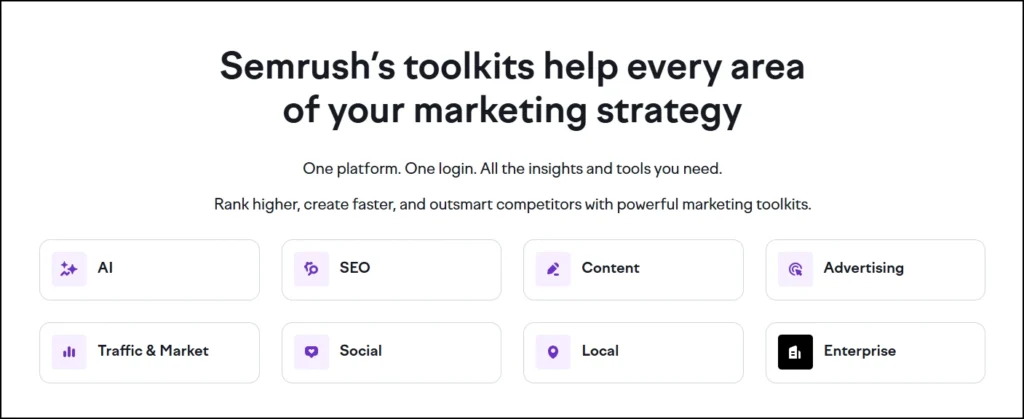
SemRush stands out among B2B SaaS companies for its powerful digital marketing and SEO capabilities. The platform was founded in 2008 and serves over 10 million marketing professionals globally. This makes it one of the top B2B SaaS companies in the marketing technology space. About 35% of Fortune 500 companies use SemRush as their primary marketing tool.
The platform’s newest offering, Semrush One, combines traditional SEO tools with AI visibility tracking. This B2B software starts at $199.00/month for the Starter plan and allows businesses to monitor brand performance across ChatGPT, Google AI Mode, Perplexity, and Gemini. To cite an instance, the AI analysis tracks how brands appear in AI-generated answers and provides insights that weren’t available through traditional SEO alone.
SemRush provides access to one of the largest marketing databases available. The platform has 27 billion keywords, 43 trillion backlinks, and 808 million domain profiles across 142 geo databases. These numbers matter for B2B SaaS company operations because they enable detailed competitive research and market analysis.
Pricing flexibility separates SemRush from other saas b2b companies. The Classic SEO toolkit starts at $139.95/month for the Pro plan. The Guru plan costs $249.95/month and the Business plan runs $499.95/month. Annual subscriptions receive a 17% discount and reduce the Pro plan to $117.33/month when billed yearly.
New users can test the platform through a 14-day free trial on Semrush One Starter and Pro+ plans. This trial period grants full access to features without limitations, though credit card details are required upfront.
The platform covers competitive intelligence, keyword research, backlink analysis, site auditing, and content optimization. JavaScript rendering, historical data tracking, and API access become available at higher tiers. These capabilities make SemRush a practical choice among best B2B SaaS companies for businesses serious about digital visibility.
Hostinger
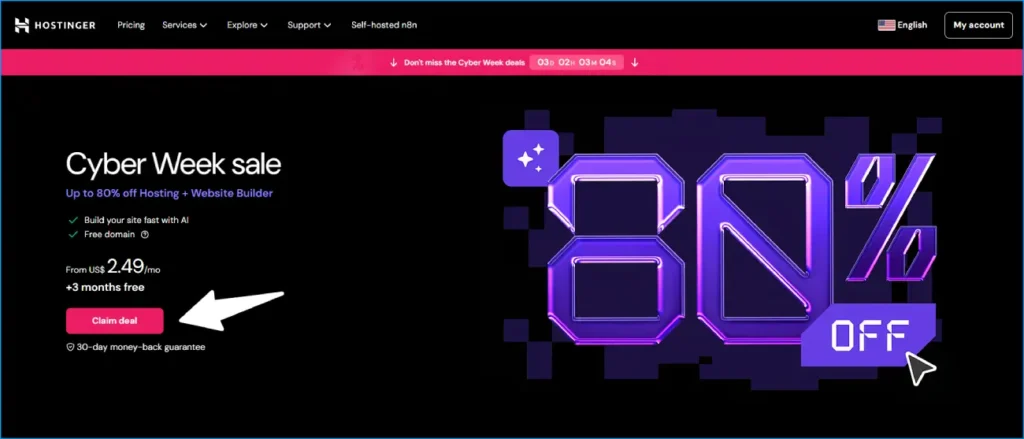
Web hosting infrastructure powers every online business operation. Hostinger has positioned itself among B2B SaaS companies serving this fundamental need. The B2B software provider handles website hosting and cloud infrastructure solutions. It serves over 4 million clients in 150+ countries with 20 years of operational experience.
Hostinger’s B2B SaaS company model spans multiple hosting tiers. Shared web hosting starts at USD 1.99/month. Cloud hosting begins at USD 6.99/month. Agencies managing multiple client sites can access specialized plans starting at USD 23.00/month. These plans support up to 300 websites on a single account with full site isolation and collaborator access sharing.
Performance metrics separate Hostinger from traditional hosting providers. The platform uses LiteSpeed web servers delivering response times between 450ms and 625ms, backed by a 99.9% uptime guarantee. Cloud hosting provides 20X more resources compared to standard web hosting. This makes it suitable for high-traffic operations and eCommerce platforms.
The AI website builder represents Hostinger’s entry into intelligent site creation. This tool generates complete websites from business descriptions and optimizes SEO elements. To cite an instance, the AI can generate product descriptions from images and predict user behavior patterns.
Global infrastructure spans 12 data center locations in North America, South America, Europe, and Asia. This distribution allows businesses to position their sites closest to target audiences while maintaining redundancy.
Agency-specific features address B2B software needs to serve professionals managing client portfolios. The hPanel control panel makes shared access possible per site. It offers one-click website cloning, daily automatic backups, and staging environments to test risk-free. Support responds in under 30 seconds for priority customers. Standard support answers within 2 minutes.
All plans include a 30-day money-back guarantee and free SSL certificates. Annual subscriptions receive a free domain for the first year.
Webflow
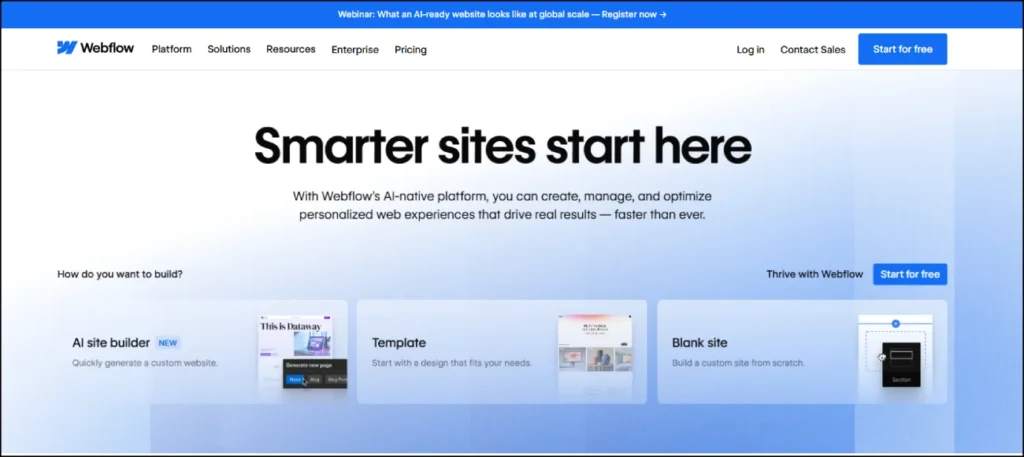
Visual content management separates Webflow from traditional B2B software platforms. Founded in 2013, this B2B SaaS company serves over 300,000 professional designers at companies that include Pinterest, IDEO, and Salesforce. Conventional content management systems separate design from content. Webflow combines both on a single visual canvas.
The platform operates as a hybrid CMS. Teams can build layouts with real content rather than placeholders and edit on the design canvas with changes rendered up-to-the-minute. Full design control remains intact without developer dependency. To name just one example, marketers can update site content through edit mode while designers work on new page layouts at the same time.
Enterprise collaboration features address B2B SaaS company needs for teams working at scale. Page branching allows isolated design experiments without affecting the main site. Staging subdomains enable testing before publishing, and conflict resolution tools prevent work overlap. Design approvals give senior designers visibility and control over changes before they go live.
The CMS handles extensive content operations. Collections support hundreds of thousands of items on enterprise plans. Bulk CSV imports enable rapid content migration, and dynamic templates apply consistent structure across all entries. Reference fields link content across Collections, while conditional visibility controls determine what appears to different audiences.
Integration capabilities extend beyond simple connections. MACH-certified headless APIs enable programmatic content delivery across multiple channels. The App Marketplace has native integrations with HubSpot and Adobe Express, plus Figma-to-Webflow design imports.
Pricing starts with a free Starter plan. The CMS plan suits blogs and SEO-driven content, while the Business tier serves marketing sites with higher traffic. Enterprise plans provide custom limits, boosted security, and dedicated support. Hosting runs on Fastly CDN with automatic scaling, SSL standards, and DDoS protection.
Datadog
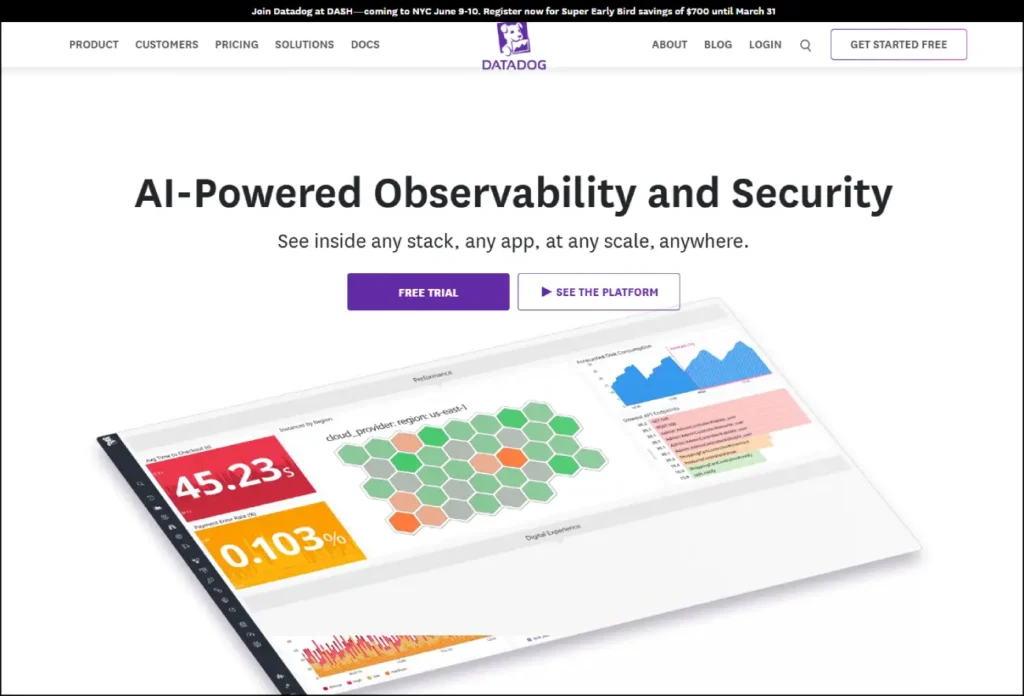
Cloud infrastructure monitoring just needs live visibility across complex distributed systems. Datadog addresses this need as a B2B SaaS company that delivers observability, security monitoring and analytics services to enterprises and development teams. Major retailers including Whole Foods and Wayfair rely on Datadog to monitor their business-critical operations.
The platform’s infrastructure monitoring collects metrics from hosts and containers at 15-second granularity. Turn-key integrations with more than 500 technologies ensure complete environment coverage. These span cloud providers, automation tools, databases and server components. To cite an instance, tag-based search and analytics allow teams to slice metrics and create fine-grained alerts focused on specific infrastructure subsets.
Application Performance Monitoring represents another core capability. AI-powered, code-level distributed tracing connects browser and mobile applications to backend services and databases. Teams can associate traces with logs, infrastructure metrics, database queries and network calls in a single view. Root causes get identified faster than isolated monitoring tools with this unified approach.
Watchdog AI detects performance anomalies by scanning billions of data points from applications and infrastructure. The machine learning engine separates vital signals from noise and reduces latencies and errors without manual threshold configuration. Gartner recognized Datadog as a Leader in the 2025 Magic Quadrant for Observability Platforms.
The platform serves IT departments, software engineering teams, DevOps and cloud infrastructure teams in organizations from startups to large enterprises. This B2B software makes shared work possible across organizational silos within a unified observability platform and eliminates the need to switch between separate monitoring tools.
Zendesk
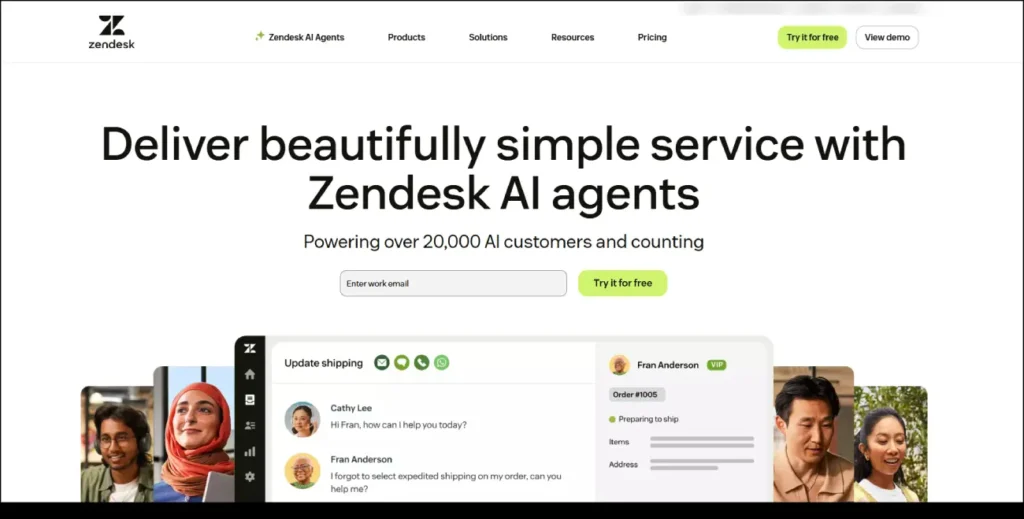
Customer service relationships are the foundations of B2B operations, and Zendesk has built its reputation as a B2B SaaS company addressing these complex interactions. The platform integrates customer information from social media, text, email, live chat and phone calls into a unified system. This eliminates the fragmentation that hampers support teams. This cloud-based CRM allows teams to communicate with customers from any location, a capability that distinguishes it among B2B software providers.
B2B SaaS companies face different support demands than B2C operations. Zendesk addresses this by enabling organizations to escalate tickets based on complexity, support service-level agreements and deliver location-specific support. The platform’s ticket fields capture data agents need right away. This reduces back-and-forth requests that slow resolution. Business rules notify customers about operating hours and send reminders when additional information is needed.
Performance improvements speak to operational efficiency. Organizations implementing Zendesk’s automation features report a 42% reduction in time to first response and a 27% decrease in handle time. These gains stem from sophisticated routing algorithms and AI-powered response suggestions. The Forrester study revealed a 301% ROI with payback in less than six months. This makes it a financially viable choice among top B2B SaaS companies.
The integration ecosystem extends functionality across business systems. With over 1,000 available applications, the platform connects with major CRM systems like Salesforce and collaboration tools like Microsoft Teams and Slack. Pricing begins at USD 55.00 per agent per month, reflecting its enterprise focus. For teams requiring advanced capabilities, the Advanced AI add-on costs an additional USD 50.00 per agent per month. It provides intelligent triage and sentiment analysis.
HubSpot
Unified business operations across marketing, sales, and service define HubSpot’s position among B2B SaaS companies. This B2B software serves over 288,000 customers in more than 135 countries and provides an AI-powered platform that centralizes customer data and automates revenue-generating activities. Customers report acquiring 129% more leads, closing 36% more deals, and seeing a 37% improvement in ticket closure rates after just one year. These numbers matter most.
The free CRM serves as the foundation for this B2B SaaS company model. HubSpot’s free tier operates without expiration dates, unlike limited trials. It provides contact management, deal pipelines, reporting dashboards, and access to Breeze Assistant. Teams can visualize sales cycles, track activities, and generate insights without original investment. To cite an instance, see how this works without upfront costs.
Pricing scales across four tiers to accommodate growth. The Starter plan begins at USD 15.00 per month per seat, Professional at USD 50.00 per month per seat, and Enterprise at USD 75.00 per month per seat. Keep in mind that these tiers unlock advanced capabilities including AI customer agents, custom objects, and single sign-on functionality.
Integration flexibility connects HubSpot with over 2,000 business applications through the HubSpot Marketplace. This connectivity addresses the scattered tool problem typical in B2B software environments. Gartner recognized HubSpot as a leader in B2B Marketing Automation Platforms for the fourth consecutive year, proving it right among top B2B SaaS companies.
Slack
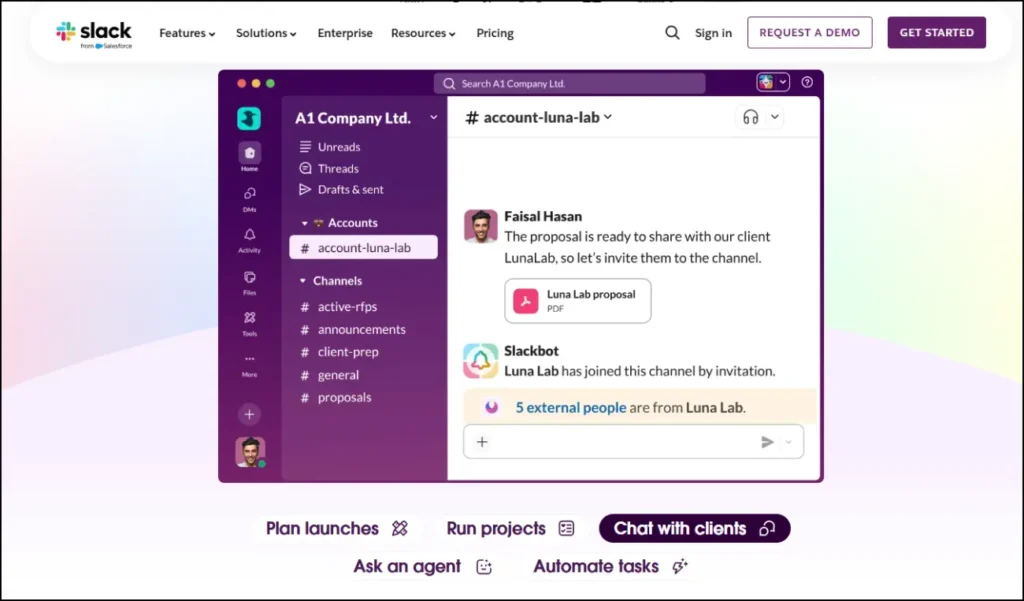
Team collaboration software reaches beyond simple messaging. Slack operates as a B2B SaaS company that delivers an AI-powered work operating system. Over 200,000 paid organizations use Slack, including 77% of Fortune 100 companies. This B2B software connects people, applications and AI agents within a unified conversational interface.
Integration capabilities distinguish Slack among saas b2b companies. The platform offers over 2,600 apps in the Slack Marketplace. These include project management tools like Asana and Notion, CRM platforms such as Salesforce and HubSpot, and developer tools like GitHub. Teams use an average of 43 apps within Slack, with more than 550,000 custom integrations deployed daily.
Slack Connect transforms external collaboration by moving conversations out of email threads. This feature enables work with vendors and partners within Slack channels. Organizations report 2X faster turnaround on creative reviews, 50% reduction in weekly meetings with contractors, and 4X faster deal cycles when working with clients.
AI capabilities extend beyond simple automation. Slackbot adapts to team style and context, while integrated agents like ChatGPT, Claude and Agentforce surface relevant information instantly. The Workflow Builder creates app automations without coding.
Pricing begins with a free tier, followed by Pro at USD 7.25 per user per month, Business+ at USD 12.50 per user per month, and custom Enterprise Grid plans. Slack AI costs an additional USD 10.00 per user per month.
Shopify
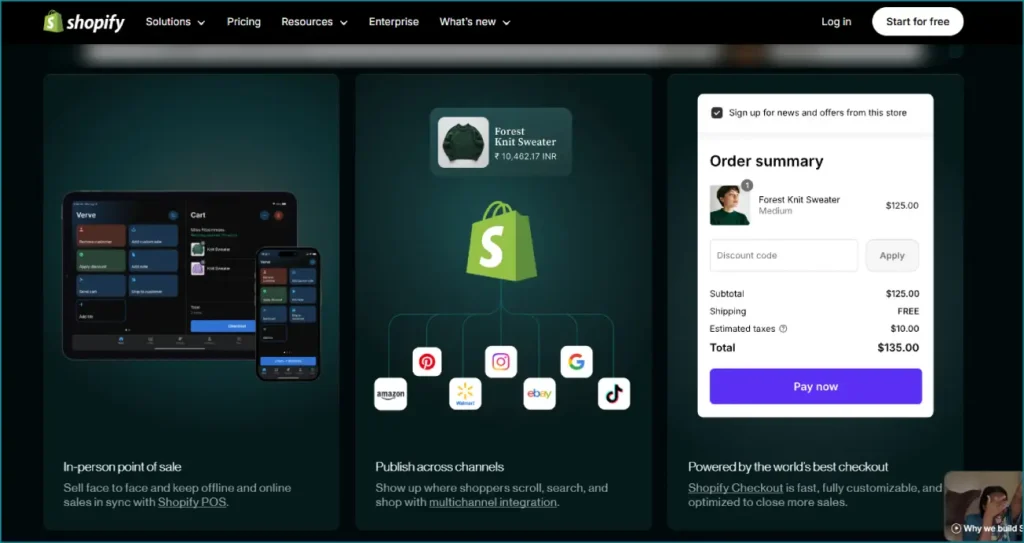
Ecommerce operations gain new efficiency when wholesale and retail channels merge under one roof. Shopify operates as a B2B SaaS company that enables brands to manage both customer types from a single admin. Brands keep shared products, inventory and customer data while offering custom catalogs, pricing and checkout flows for each buyer segment. 117 of the Top 2,000 online retailers in North America run on this platform, and Shopify powers 10-11% of all ecommerce websites around the globe.
The B2B software has native wholesale capabilities without requiring plugins. Customer-specific catalogs, tiered pricing, bulk ordering, negotiated payment terms and account-level permissions come standard. Deep system-level integrations connect directly with ERPs and CRMs like NetSuite, Acumatica, Brightpearl and Salesforce. This reduces middleware dependency. Security standards include SOC 2 Type II, ISO 27001 and PCI DSS Level 1 certifications.
Performance metrics verify Shopify’s position among top B2B SaaS companies. The platform processed USD 11.50 billion in GMV during Black Friday Cyber Monday 2024 while handling 284 million edge requests per minute. B2B GMV increased 101%. To cite an instance, skincare brand Dermalogica saw repeat B2B orders jump 300%. Reorder time dropped from 46.9 to 10.7 days and conversion rates climbed from 74% to 91%. Forrester named Shopify a Leader in its 2024 Commerce Solutions for B2B report. Shopify Plus pricing starts at USD 2,300.00 monthly on three-year terms.
Workday
Enterprise resource planning forced businesses to work around rigid systems rather than the other way around. Workday flips this model as a B2B SaaS company delivering cloud-native ERP that unifies finance and HR on a single adaptable platform. Legacy ERP systems built on siloed databases contrast with Workday’s approach. Workday operates as a true multi-tenant SaaS solution with continuous updates powered by a single data core.
Gartner recognizes Workday’s leadership position. The platform earned Leader status in the 2025 Magic Quadrant for Cloud ERP Finance, Cloud ERP for Service-Centric Enterprises, and Cloud HCM Suites for enterprises with 1,000+ employees. This B2B software embeds AI into business processes, automating repetitive work and surfacing insights in immediate workflow.
Financial management delivers measurable outcomes. Organizations report 70% reduction in time to close and 50% reduction in external audit requests. The platform supports operations in over 130 countries with standard configurations for 55+ countries.
The unified data core eliminates reconciliation friction. Workday uses machine learning to capture transactions and recommend accounting treatment. The global financial framework allows businesses to handle M&A, pivot organizational structures, and add new requirements within minutes versus weeks.
HR operations see similar efficiency gains. Customers report 39% increase in HR efficiency and 66% faster company integration or divestment.
ClickUp
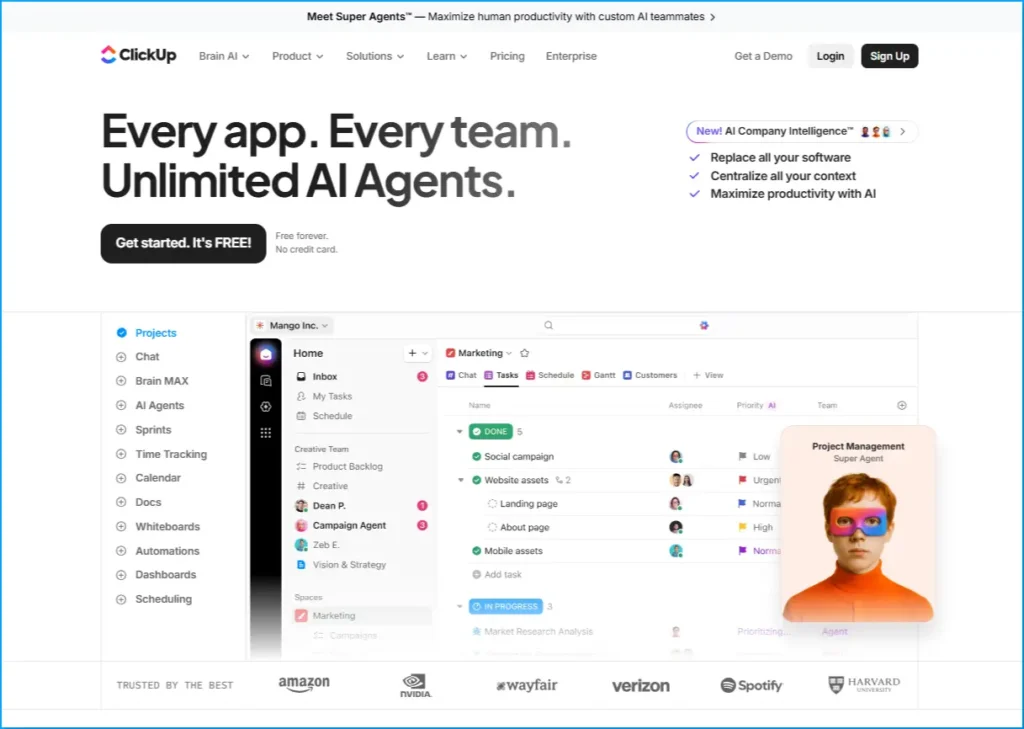
Project management sprawl costs businesses time and context when teams juggle separate apps for tasks, documents, and communication. ClickUp unites these functions as a B2B SaaS company offering an all-in-one platform that combines project management, documentation, chat, and AI automation in a single workspace. This B2B software serves over 10 million teams and eliminates the need to switch between disconnected tools.
Collaboration detection shows when teammates view tasks at the same time or edit descriptions as changes happen. ClickUp Chat integrates instant messaging with tasks and documents while retaining context that gets lost in standalone communication apps. Whiteboards connect to tasks to brainstorm visually and convert ideas into useful work.
ClickUp Brain adds AI throughout the project lifecycle. It generates plans and captures meeting notes while handling status updates. The platform provides over 1,000 integration options with tools like Google Drive, Microsoft Teams, and Slack. Automation workflows trigger status changes and assignments with no manual work required.
Organizations using ClickUp report 384% ROI with payback under six months. Teams save 92,400 hours each year by reducing manual work. Pricing starts with a Free Forever plan, Unlimited at USD 7.00 per month per user, and Business at USD 12.00 per month per user. ClickUp Brain adds USD 7.00 monthly per user to any paid plan. The platform holds G2 ratings of 4.7/5 from 9,900+ reviews.
monday.com
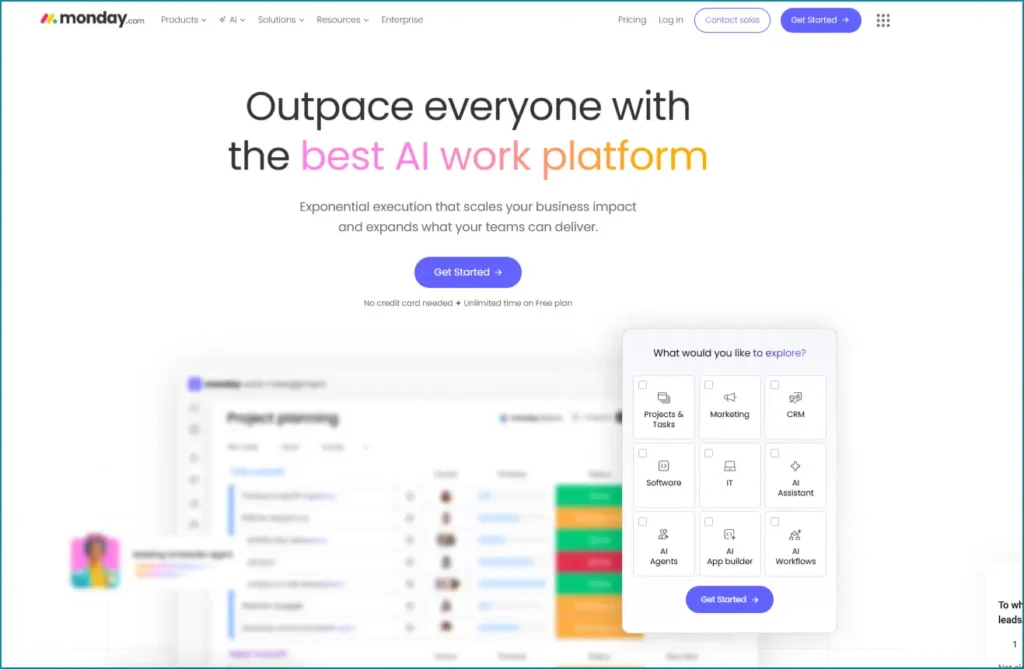
Work management at enterprise scale just needs more than task tracking. monday.com stands as the only B2B SaaS company recognized as a Leader in three Gartner Magic Quadrant reports for 2025: Collaborative Work Management, Adaptive Project Management & Reporting, and Marketing Work Management Platforms. This triple recognition separates it among top B2B SaaS companies that serve Fortune 500 enterprises.
The platform delivers measurable business effect. Forrester’s Total Economic Impact study documents 346% ROI over three years with payback in under four months[451]. Organizations gained USD 121,000 in productivity value and saved USD 123,000 in reduced administration time[451]. Motorola’s implementation resulted in 50% reduction in meetings and emails while saving USD 250,000 each year.
Enterprise adoption reflects real-life validation. The platform serves over 200 use cases in 190 industries. Customers experience 517% account growth year-over-year and use 73 cross-department workspaces actively[451]. This B2B software supports both tactical execution and strategic portfolio management.
Pricing starts at EUR 9 per seat monthly on the Basic plan, EUR 12 for Standard, and EUR 19 for Pro. Enterprise plans include advanced AI capabilities, portfolio management, and resource planning tools.
Workato
Business process automation across disconnected systems creates the operational backbone modern enterprises require. Workato functions as a B2B SaaS company that specializes in iPaaS (Integration Platform as a Service) and connects 14,000+ apps, SaaS platforms, on-prem systems, data sources, and AI models through one Enterprise MCP-enabled platform. Executives from TIBCO and Oracle Fusion Middleware founded this B2B software with a vision to build cloud-based automation that revolutionizes business processes end-to-end.
The low-code/no-code platform makes it possible for business and IT teams to build integrations at five times the speed of typical integration platforms. Workato calls their workflows “recipes” and offers over 1,000 pre-built integrations that are accessible to more people for rapid deployment. The platform delivers role-based access control, audit trails, and compliance certifications including SOC2, HIPAA and ISO.
AI capabilities distinguish Workato among top B2B SaaS companies. AIRO generates complete recipes and connectors from requirements while Acumen monitors and troubleshoots using workspace intelligence. To cite an instance, one organization experienced a 700% increase in AI usage after implementing Enterprise MCP servers that connected Claude to Salesforce, Jira, Gmail, and Gong.
Pricing follows a task-based consumption model and ranges from USD 15,000 to USD 50,000+ annually depending on automation volume. Gartner recognized Workato as a Leader seven times and positioned it furthest in vision twice.
GitLab
Software development lifecycles fragment into disconnected tools for planning, coding, testing, security and deployment. GitLab unifies these stages as a B2B SaaS company delivering an intelligent orchestration platform where teams and AI agents work together in a single application. This B2B software integrates all phases of DevSecOps into one platform with a unified data store and eliminates the toolchain sprawl that plagues development operations.
The git-based repository allows rapid branching and concurrent development without interference. Merge requests track code changes with required approvals. Access controls and security guardrails provide granular permission management. Compliance pipelines enforce regulatory controls and custom policy frameworks without manual intervention.
AI capabilities accelerate development cycles. Code suggestions handle repetitive coding tasks and code explanation clarifies complex logic in natural language. Test generation catches bugs early through automated test creation. Security scans including SAST and secret detection protect code before deployment.
CI/CD automation runs from code commit to production without interruption. The platform provides 400 compute minutes on free plans and scales to 50,000 minutes on premium tiers. Storage starts at 10 GiB and extends to 500 GiB on paid plans. Organizations using GitLab report moving from monthly deliveries to multiple daily releases. This positions it among top B2B SaaS companies serving enterprises in financial services, telecommunications and the public sector.
Notion
Scattered company information creates operational friction. Teams hunt through emails, drives and disconnected apps for answers. Notion addresses this as a B2B SaaS company that centralizes knowledge, documentation and workflows into one AI-powered workspace. This B2B software deploys AI agents that capture knowledge and answer questions while pushing projects forward around the clock. 98% of the Forbes Cloud 100 trust the platform.
The platform functions as a knowledge management system where explicit documentation and tacit team insights merge. Traditional tools separate information storage from daily work. Notion connects company wikis, meeting notes, project databases and process documentation within unified teamspaces. Multiple users can edit pages at the same time without content locks, and changes appear across all viewers right away.
Customization separates Notion among top B2B SaaS companies. Organizations create databases with custom properties and multiple layout views (table, board, calendar, timeline). Synced blocks update across pages on their own. Integration capabilities extend through AI connectors that reach into Slack, Gmail and other business tools.
Enterprise security meets strict compliance standards. These include SOC 2 Type 2, ISO certifications (27001, 27701, 27017, 27018), GDPR, CCPA and HIPAA. The platform enforces zero data retention with LLM providers and prevents customer data from training AI models.
Pricing starts with a free plan and scales through Plus for students and educators. Business costs USD 20.00 per user each month, with custom Enterprise tiers available.
ServiceNow
Enterprise workflows spanning IT, HR, security, and operations create management complexity that single-purpose tools cannot address. ServiceNow operates as a B2B SaaS company unifying these functions through its AI-powered platform, serving 85% of Fortune 500 companies. This B2B software combines workflow automation, IT service management, and business process orchestration into one cloud-based system.
The platform delivers quantifiable operational improvements. Organizations that implement ServiceNow report 30% reduction in approval procedure lead times and 1 million hours automated annually. High-priority incidents see 92% improvement in mean time to resolution. The workflow automation capabilities eliminate manual data retyping and reduce costs through reusable components. They provide end-to-end visibility across enterprise processes.
ServiceNow’s ITSM solution uses AI agents and cloud technology to automate core IT processes on a unified platform. The system integrates with both legacy and modern solutions through IntegrationHub, REST, SOAP, and email connections. Flow Designer enables no-code workflow creation, while RPA Hub handles robotic process automation for repetitive tasks.
The platform addresses business domains including IT services, workplace services, customer services, HR services, and security compliance. Low-code to no-code implementation options allow business and management teams to maintain technical oversight without deep coding knowledge. This positions ServiceNow among top B2B SaaS companies serving enterprise transformation needs.
Stripe
Payment infrastructure determines how B2B SaaS companies move money across their operations. Stripe transforms this function as a B2B software provider delivering detailed financial infrastructure that powers first transactions and billionth-scale operations. The platform processed USD 1.40 trillion in payments volume during 2024 and supports 135+ currencies and payment methods around the world.
Enterprise adoption confirms Stripe’s position among top B2B SaaS companies. Half of Fortune 100 companies use Stripe to expand internationally and reimagine customer experiences. The platform manages 200 million+ active subscriptions on Stripe Billing and maintains 99.999% historical uptime. The infrastructure handles 500 million+ API requests daily, processes 10,000+ API requests per second, and manages 150,000+ transactions per minute.
The API-first design addresses B2B software requirements through customization. Organizations build payment solutions tailored to specific business needs. They accept multiple payment methods including cards, digital wallets and bank transfers. Automated invoicing handles recurring bills for long-term contracts. Radar uses machine learning to detect fraud without manual oversight.
Financial Accounts (formerly Treasury) enables platforms to embed money management services within their products. Built through partnerships with Fifth Third Bank, this capability powers solutions like Shopify Balance and provides merchants integrated financial services with commerce operations.
Gusto
Payroll complexity multiplies when small businesses juggle tax calculations and compliance requirements in disconnected systems. Gusto eliminates this fragmentation as a B2B SaaS company combining payroll processing, HR management, and benefits administration into one platform serving over 400,000 businesses. This B2B software earned G2’s #1 ranking for benefits administration in Summer 2024 and recognition as the best overall HR software of 2025.
Gusto’s position among top B2B SaaS companies is confirmed by the time it saves. Organizations switching to this platform save an average of 152 hours annually on tax and compliance work, plus 4 hours monthly on payroll processing alone. 9 out of 10 customers would recommend Gusto[692], reflecting satisfaction with automated payroll runs, tax filing, and compliance alerts.
Benefits administration comes included with all plans without extra charges. The platform offers 3,500+ benefit options spanning 9,000+ health insurance plans from 30+ carriers, plus 401(k) retirement accounts powered by Guideline. Licensed advisors provide compliance support and help craft benefit packages.
Pricing starts at USD 49.00 monthly base cost plus USD 6.00 per user, totaling USD 55.00 for single-employee setups. The platform handles international contractor payments in 120+ countries while the AI assistant Gus answers HR questions and pulls reports.
Navan
Corporate travel programs struggle with fragmented booking systems, disconnected expense tracking and limited policy enforcement. Navan changes this as a B2B SaaS company that delivers an AI-powered platform. The platform unifies travel booking and expense management for frequent business travelers. Ariel Cohen and Ilan Twig started the company in 2015 as TripActions. They rebranded it to Navan in February 2023 and chose a palindrome name rooted in “avant” to signify moving forward.
Navan’s financial performance positions it among top B2B SaaS companies in the travel sector. The platform reported USD 613.00M in LTM revenue and USD 7.60B in LTM gross booking volume for the twelve months ended July 31, 2025. The company went public on October 30, 2025 and trades on Nasdaq under ticker NAVN. Revenues grew 30% year over year.
This B2B software powers travel programs at more than 10,000 companies. Canva, HelloFresh, DoorDash, Duolingo and Steelcase use the platform. Customer satisfaction metrics verify adoption with 96% CSAT and 43 NPS scores. VEG achieved 13% savings on flights alone using Navan, to name just one example. The platform ranked No. 1 overall and No. 1 in customer satisfaction in travel and expense categories in G2’s 2025 Winter rankings.
Comparison Table: 21 Best B2B SaaS Companies in 2026
Complete Feature & Pricing Comparison
| Company | Main Category | Key Metrics | Starting Price | Key Features | Industry Recognition |
| SemRush | Digital Marketing & SEO | 10M+ marketing professionals; 35% of Fortune 500 use it | $139.95/month (Pro plan); $199/month (Semrush One Starter) | 27B keywords, 43T backlinks, 808M domain profiles in 142 geo databases; AI visibility tracking | Not mentioned |
| Hostinger | Web Hosting & Cloud Infrastructure | 4M+ clients in 150+ countries; 20 years operational experience | $1.99/month (Shared hosting); $6.99/month (Cloud hosting); $23/month (Agency plans) | LiteSpeed servers (450-625ms response time); 99.9% uptime; AI website builder; 12 global data centers | Not mentioned |
| Webflow | Visual CMS & Web Design | 300,000+ professional designers; Used by Pinterest, IDEO, Salesforce | Free Starter plan available; Paid plans vary by tier | Visual canvas editing; Page branching; Collections support hundreds of thousands of items; Fastly CDN hosting | MACH-certified headless APIs |
| Datadog | Cloud Monitoring & Observability | Used by Whole Foods, Wayfair; Monitors billions of data points | Not mentioned | 500+ technology integrations; 15-second metric granularity; Watchdog AI for anomaly detection | Gartner Leader in 2025 Magic Quadrant for Observability Platforms |
| Zendesk | Customer Service & CRM | Not mentioned | $55/month per agent; $50/month per agent (Advanced AI add-on) | 1,000+ app integrations; 42% reduction in time to first response; 27% decrease in handle time | 301% ROI with payback in <6 months (Forrester study) |
| HubSpot | CRM & Marketing Automation | 288,000+ customers in 135+ countries | Free CRM (no expiration); Starter at $15/month per seat; Professional at $50/month per seat | 2,000+ app integrations; 129% more leads, 36% more deals closed (after 1 year) | Gartner Leader in B2B Marketing Automation Platforms (4 consecutive years) |
| Slack | Team Collaboration & Communication | 200,000+ paid organizations; 77% of Fortune 100 companies | Free tier available; Pro at $7.25/user/month; Business+ at $12.50/user/month | 2,600+ apps in Marketplace; Teams use average of 43 apps; 550,000+ custom integrations deployed daily | Not mentioned |
| Shopify | Ecommerce Platform (B2B & B2C) | 117 of Top 2,000 North American retailers; 10-11% of global ecommerce websites | Shopify Plus: $2,300/month (3-year terms) | Native B2B wholesale capabilities; Processed $11.5B GMV during BFCM 2024; 101% B2B GMV increase | Forrester Leader in 2024 Commerce Solutions for B2B |
| Workday | Enterprise ERP (Finance & HR) | Not mentioned | Not mentioned | 70% reduction in time to close; 50% reduction in external audit requests; Supports 130+ countries | Gartner Leader in 2025 Magic Quadrant for Cloud ERP Finance, Cloud ERP for Service-Centric Enterprises, and Cloud HCM Suites |
| ClickUp | Project Management & Collaboration | 10M+ teams | Free Forever plan; Unlimited at $7/month per user; Business at $12/month per user | 1,000+ integrations; ClickUp Brain AI; Live collaboration; Saves 92,400 hours each year | 384% ROI with payback <6 months; G2 rating 4.7/5 from 9,900+ reviews |
| monday.com | Work Management Platform | Fortune 500 enterprises; 200+ use cases in 190 industries | €9/seat/month (Basic); €12/month (Standard); €19/month (Pro) | 517% account growth YoY; 73 cross-department workspaces used; 50% reduction in meetings (Motorola case) | Gartner Leader in 3 Magic Quadrant reports (2025): Collaborative Work Management, Adaptive Project Management, Marketing Work Management; 346% ROI (Forrester) |
| Workato | iPaaS & Workflow Automation | Not mentioned | $15,000-$50,000+ each year (task-based) | 14,000+ app connections; 1,000+ pre-built integrations; 5X faster integration speed; AIRO AI generates recipes | Gartner Leader 7 times; Positioned furthest in vision twice |
| GitLab | DevSecOps Platform | Not mentioned | Free plan with 400 compute minutes; Premium tier with 50,000 minutes | Git-based repository; CI/CD automation; AI code suggestions; SAST and secret detection; 10 GiB to 500 GiB storage | Organizations moved from monthly to multiple daily releases |
| Notion | Knowledge Management & Collaboration | Trusted by 98% of Forbes Cloud 100 | Free plan available; Business at $20/user/month; Custom Enterprise tiers | AI agents; Live collaboration; Custom databases; Synced blocks; Zero data retention with LLM providers | SOC 2 Type 2, ISO certifications (27001, 27701, 27017, 27018), GDPR, CCPA, HIPAA compliant |
| ServiceNow | Enterprise Workflow Automation | 85% of Fortune 500 companies | Not mentioned | 30% reduction in approval lead times; 1M hours automated each year; 92% improvement in MTTR for high-priority incidents | Not mentioned |
| Stripe | Payment Infrastructure | Processed $1.4T in payments (2024); 200M+ active subscriptions | Not mentioned | 135+ currencies; 500M+ API requests daily; 10,000+ API requests/second; 99.999% uptime; Radar fraud detection | Used by half of Fortune 100 companies |
| Gusto | Payroll & HR Management | 400,000+ businesses | $49/month base + $6/user (total $55 for 1 employee) | 3,500+ benefit options; 9,000+ health insurance plans; Saves 152 hours each year on tax/compliance; 401(k) powered by Guideline | G2 #1 for benefits administration (Summer 2024); Best overall HR software 2025 |
| Navan | Corporate Travel & Expense Management | 10,000+ companies including Canva, HelloFresh, DoorDash, Duolingo | Not mentioned | $613M LTM revenue; $7.6B LTM gross booking volume; 96% CSAT; 43 NPS score; 13% savings on flights (VEG case study) | G2 #1 overall and #1 in customer satisfaction for travel & expense (2025 Winter); Public on Nasdaq (NAVN) since Oct 2025 |
Key Insights from Mani Pathak’s Analysis
This complete comparison shows that the best B2B SaaS companies in 2026 share several common characteristics:
- Proven ROI: Companies like monday.com (346% ROI), ClickUp (384% ROI), and Zendesk (301% ROI) demonstrate measurable business value
- Enterprise Adoption: Slack (77% of Fortune 100), ServiceNow (85% of Fortune 500), and Stripe (50% of Fortune 100) show strong enterprise trust
- Industry Recognition: Multiple Gartner Leader positions for Workday, HubSpot, monday.com, and Datadog confirm market leadership
- Flexible Pricing: Most B2B software providers offer free tiers or trials, with pricing from $7-$55/user/month for mid-tier plans
Mani Pathak says businesses that evaluate B2B SaaS companies should focus on platforms with proven integration ecosystems and measurable efficiency gains. Industry certifications that match their specific operational needs matter too.
Conclusion
Selecting the right B2B SaaS companies for your business operations requires careful evaluation of proven ROI, integration capabilities, and industry certifications.
The platforms I’ve highlighted demonstrate measurable efficiency gains, from Zendesk’s 42% faster response times to ClickUp’s 384% ROI.
You need B2B software for marketing automation, payment infrastructure, or workflow management, and these top B2B SaaS companies offer expandable solutions with enterprise-grade security.
My recommendation? Start with free trials, test integrations with your existing tech stack, and prioritize platforms showing strong adoption among companies like yours. The best B2B SaaS companies ended up lining up with your operational needs and growth trajectory.