
How I Use Writesonic (AI Writing Tool) to Rank
To your surprise (or maybe not), Google is now filled with AI-written content.
In fact, Forbes Australia predicts that by 2025, nearly 90% of the content on the internet will be AI-generated.
But here’s the twist, not all AI content is equally good, and definitely not all of it ranks.
I use Writesonic to write and rank In Google.
I’ve seen businesses struggle to get traffic for months, even after publishing hundreds of articles. And then, I’ve seen those same businesses skyrocket in search results—when the right strategies were applied.
AI writing isn’t just about churning out words. It’s about writing with intent, optimizing for search, and using tools like Writesonic the right way.
You might be wondering:
“Can AI-written content actually rank high on Google?”
Short answer—yes, absolutely.
And I’ll prove it to you.
From real client websites that went from zero traffic to thousands of organic visits per month… to brand keywords ranking on Page 1 after Google’s Helpful Content update—I’ve tested it all.
In this article, I’m going to show you:
- The exact strategies I use to make AI content rank.
- Real proof of rankings (with screenshots).
- How I use Writesonic alongside other tools.
- Mistakes to avoid so your site doesn’t get penalized.
- And a simple, repeatable system to grow traffic with AI content.
By the end of this post, you’ll know exactly how to use Writesonic to rank high in Google Search, even in 2025’s competitive landscape.
Let’s dive in.
Why I Chose Writesonic Over Other AI Tools
Let me be honest — I’ve tested almost every AI writing tool you can think of. Jasper, ChatGPT, Copy.ai, Rytr, and a few others that honestly just sat in my bookmarks.
Some were decent, some overhyped, but Writesonic is the one I kept coming back to.
Why?
Because I’m not here to write fancy words for fun — I need content that ranks, gets clicks, and converts. Writesonic helped me do exactly that.
Here’s why I made the switch — and stuck with it.
SEO Is Built-In — Not an Afterthought
Writesonic isn’t just about writing; it’s built with ranking in mind.
You get SEO-focused tools right inside the platform — including features that help with keyword use, headline generation, FAQs, and even meta descriptions. No need to jump between 4 tools.
Templates That Actually Save Time
Most AI Writing tools give you generic templates that need a ton of editing.
Writesonic? It has specific templates for blog posts, landing pages, product descriptions, and ad copy that are closer to what you’d expect from a copywriter.
The Instant Article Writer and Article 4.0 features have been a game-changer when I need to publish content fast — and still keep it optimized.
Real-Time Info with ChatSonic
Unlike ChatGPT, which stops at a certain knowledge cut-off, ChatSonic (built into Writesonic) can pull real-time info from the web — great when writing about topics like Google’s latest updates or trending keywords.
Clean Output That Doesn’t Sound Like a Robot
One big issue with some AI tools is the robotic tone.
With Writesonic, I’ve noticed the content reads more human, and honestly, I rarely have to rewrite full paragraphs. Just fact-check, adjust tone if needed, and it’s good to go.
Easy WordPress and SEO Tool Integration
You can push articles straight to WordPress with one click — and it connects with Semrush, which is helpful if you’re doing keyword research in the same workflow.
That means less copy-pasting and more publishing.
Cost-Effective for Regular Publishing
Compared to other tools, Writesonic’s pricing is pretty reasonable, especially if you’re creating content regularly. They even offer free word credits every month, and the paid plans don’t break the bank.
It Just Works for SEO
That’s the real reason. It works.
I’ve ranked blog posts using Writesonic content. I’ve helped clients move from page 3 to page 1 using optimized AI-written articles. The process is clean, scalable, and efficient.
I’m not saying the other tools are bad — they’re just not what I need for serious SEO work. Writesonic helps me get more done, faster, and the results speak for themselves.
Now let me show you how I actually use it to write content that ranks.
How Writesonic Helped Me Rank AI Content on Google (With Proof)
To your surprise, according to Forbes Australia, by 2025, about 90% of content on the internet is expected to be AI-generated.
Humans excel at writing with emotional depth and understanding user intent when searching on Google.
However, AI writing is not just practical; strategic AI writing tools for business and personal writing are designed to drive traffic and achieve high rankings on Google.
But the valid question is whether our AI-written content will rank on Google, and how we can make that happen.
The short answer is yes; it will rank for sure.
Here is the proof.
Here we go.
In this article, I will share the secret strategies that help me rank using AI content with proof and the best AI writing Tools I Use.
- Proof of AI Writing to Rank
- Strategies to Rank AI-Written Content
- How to Write Effective AI Content That Can Rank
- AI Writing Tools
Real-World Examples of AI Writing That Ranks:
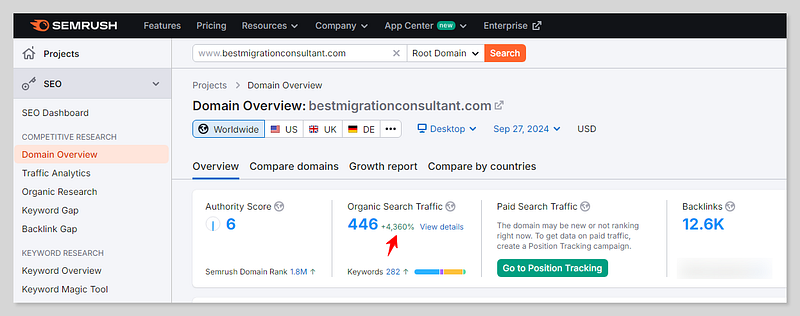
Since Aug 2024, I have started publishing AI written on this Visa and Immigration website we launched earlier.
The client couldn’t rank and drive traffic.
⮞ Disclaimer: I’m an SEO consultant working as a freelancer with BMC and many other brands. This is an unbiased and in-depth article to help, and if you like, you can hire me as well.
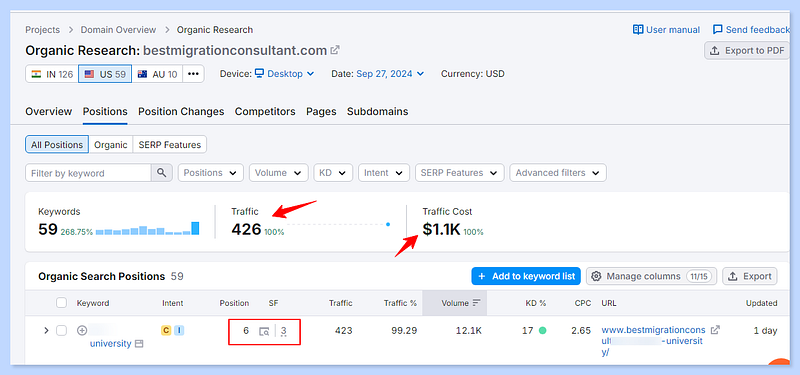
Let’s see how it’s ranking for brand keywords in Google.
Here is another Proof, even for the brand keyword AI Written Content that’s ranking.

From the above examples, now you must be able to clearly see if the AI content can rank, and even after the August 2024 Google helpful content update, it’s improving in position.
Surprisingly, I came across many websites claiming to have lost traffic and brand value due to the use of AI Writing.
Yesterday, I read a post on Medium claiming to have gained over 4000+ traffic using an AI writing tool.
However, the website was later penalized and lost all the traffic.
Beginners with importers SEO Knowle often see this happening. I have also worked with websites that have millions of visitors.
**Note: No links are sponsored or affiliated in any manner below.
I would be surprised if you didn’t find value till now. Anyway, I will cover everything in detail, and here is what you can expect from this article.
Table Of content:
- Strategies for Content Creation Using AI Writing
- Best AI Writing Tools
- SEO Optimization Techniques
- Content Distribution and Promotion
- Conclusion
Out of disguise, I’m assuming you know AI content doesn’t work at Medium and any other platform-based sites.
Let’s explore.
Strategies for Content Creation Using AI Writing:
From nowhere to being recognized by top brands takes time, so grabbing the right strategies and skills will make it possible.
Don’t you agree?
That’s why this valuable strategy will work for you.
It’s very simple.
- Brainstorm ideas for content or projects.
- Create outlines for articles.
- Content Creation Using AI, Facts check.
- Generate sentences or paragraphs to help overcome writer’s block. (though I’ll always fact-check, revise, or rewrite as needed)
- Repurpose blog posts into engaging social media updates.
#1. Brainstorm ideas for content:
It is crucial to brainstorm ideas for new content; if you do not have clarity in the beginning, you will lose in a competition like nowhere else.
But it’s very easy.
Decide three this, first:
- Audience — for whom you are writing.
- What’s the end goal — Leads, traffic, awareness, or sharing value(though every post not written for sharing good value, along with monetary goals, ends in the trash. )
- What’s a problem that article will solve — Niche down and find the suitable keywords for it.
Consider A Scenario:
I want to solve businesses’ struggles with designing their websites and queries to rank their websites in Google. To do this, I want to write an article that can make them aware and generate leads for myself, helping them design websites and grow their sites through SEO.
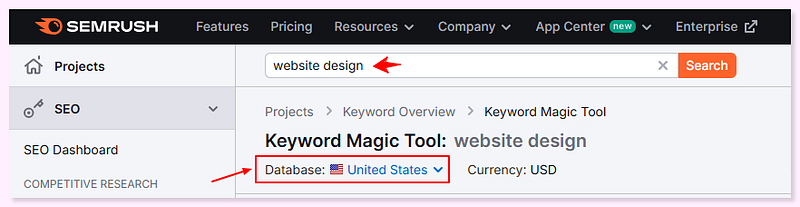
You will use SEO tools like Semrush, Magools, or Ahref to mention the seed keywords that users may search on Google.

Based on your experience and expertise, you can choose the best keyword, as shown above, and maintain a low difficulty level to reach more people and rank easily.
Great, now you have ideas for your new content.
#2. Create best outlines for articles:
SEO Content outline for better writing greatly impacts rank and helps more people. Consider that you are making Tacos (A Mexican Dish), which requires Corn, Flour, Pickled jalapeños, and many other ingredients to make an authentic dish.
So is with your content; if you want the field to answer all that is relevant to a user’s queries in the content, you will not smell good. Hmm.
There is a great hack for it.
Go to the competition page ranking for the same keywords on the top of Google, copay their outlines and key sections, and re-write in your own tone.
I’m not suggesting copying the entire content but the outlines (headings) and making it unique with keywords and your style.
#3. Content Creation Using AI: Write, Facts check, and make it SEO friendly:
Now that you have the outline ready and all the facts from a recent Google search, you can give each section a title to any of the AI tools, and it can write section by section for you.
Make sure to mention the keywords you want to use in each section of the article so that AI can include and optimize for SEO.
Fantastic, now review the article for the facts and add a few links to your own article and others as hyperlinks for better SEO.
Note: if you are suing ChatGPT, there are big plagiarism changes, which will negatively impact your readership and ranking.
So you have the good AI waiting tools, which I have covered above in short and will share in detail below with their pros and cons.
My Writesonic Workflow for SEO Content
I won’t sugarcoat it. Ranking on Google with AI content isn’t about clicking “generate” and hoping for the best. You need a strategy. And after running tests on multiple niches, client sites, and my own blogs, here’s the exact step-by-step workflow I follow using Writesonic.
This process works whether you’re writing blog posts, SEO landing pages, or even long-form AI content for lead generation.
It’s clean, repeatable, and built for SEO from day one.
1. Focus on Keyword Intent First
Before anything, I figure out what the user is actually searching for. Not just keywords, but real search intent. What problem are they trying to solve?
I use Semrush, Ahrefs, or Mangools to find low-competition, long-tail keywords with clear commercial or informational intent. These are easier to rank for and often bring higher-quality traffic.
LSI keywords also come in handy here. I’ll collect related terms Google expects around that topic. For example, if I’m writing about “AI writing tools,” I might include LSI keywords like content generation software, SEO copywriting with AI, and automated blog writing.
2. Build an SEO-Optimized Content Outline
I never write without an outline.
I open the top 5 to 10 pages ranking for the main keyword. I look at:
- Their heading structure
- What questions they answer
- Subtopics they include
- Gaps or outdated info
Then I create my own outline using those insights, mixed with my own knowledge. This becomes the base for feeding content into Writesonic.
This step helps with on-page SEO, readability, and gives you a clear edge over random auto-generated blogs.
3. Generate Section-by-Section Content Using Writesonic
This is where most people mess up. They dump in one headline and expect a polished blog in seconds. Doesn’t work.
I take each section from the outline and generate it individually inside Writesonic. This gives me more control and allows me to:
- Add LSI and target keywords manually
- Guide tone and style
- Avoid repetition and robotic-sounding content
It also keeps the structure clean, which improves dwell time and bounce rate.
4. Optimize Content for SEO
Once I’ve got the rough content ready, I go back and do a full content optimization check.
- Are the main and secondary keywords used naturally?
- Is the intro hooking the reader?
- Are H2s and H3s helping Google understand the content?
- Did I include internal links and outbound references?
This is where I make small changes that move the needle. I add alt text to images, optimize the meta title and description, and make sure everything aligns with Google’s helpful content guidelines.
5. Fact-Check and Make It Sound Human
Even though Writesonic does a solid job, I don’t publish anything without reviewing it manually.
I double-check facts, statistics, dates, and examples. I also rewrite sentences that sound too generic or too “AI”. This step is crucial to protect your site from penalties and keep trust high with readers.
Tip: Adding personal examples, experiences, or case studies boosts your SEO content strategy and improves user engagement.
6. Publish, Submit, and Track
Once it’s polished, I publish directly on WordPress. I usually:
- Add internal links to relevant blog posts
- Use schema markup for FAQs if needed
- Submit the page to Google Search Console
Then I monitor impressions, clicks, and average position over the next few weeks.
If the post isn’t moving, I update the title tag, tweak the intro, or boost internal links pointing to the page. Sometimes a small change like that can help you push into the top 10.
Wrapping It Up
This workflow helps me publish SEO-friendly AI content that’s not just well-written but also built to rank.
No shortcuts. No black-hat tricks. Just a system that works.
Whether you’re new to AI blog writing or already using tools like Writesonic for content creation, following this process can help you scale content and still stay on Google’s good side.
And yes, I’ve ranked multiple pages using this exact method. I’ll share proof and real examples next.
Let’s keep going.
Why Choose Writesonic? Powerful Use Cases for AI Blog Writing & SEO Content Creation
Writesonic is more than just another AI writing tool—it’s your creative partner for crafting high-quality, SEO-rich content that drives traffic and engages readers.
Here’s how Writesonic can transform your content strategy:
- AI Blog Writing Made Easy: Whether you’re a busy marketer, blogger, or business owner, Writesonic helps you generate well-structured, original blog posts quickly. Save hours on research and drafting without sacrificing quality.
- SEO-Focused Article Writing: Get SEO-optimized content that ranks. Writesonic’s AI understands keyword intent and search trends, helping you create articles that search engines love and readers find valuable.
- Versatile Content Creator: From blog posts and articles to website content and social media copy, Writesonic adapts to your style and needs—perfect for content creators, freelancers, and digital agencies.
- Boost Productivity with AI Blog Writers: Say goodbye to writer’s block. Writesonic’s smart AI blog writer generates ideas, outlines, and full drafts so you can focus on polishing and publishing.
- Affordable AI Content Tool for Businesses: Commercially viable and easy to use, Writesonic is a top choice for startups and enterprises looking to scale content production without hiring big teams.
- SEO Writing Tools Integration: Combine Writesonic with your SEO strategy for keyword-rich, engaging content that ranks higher and converts better.
If you’re searching for the best AI blog writing software or an AI-powered SEO content writer, Writesonic checks all the boxes—helping you write smarter, faster, and better.
Table of Contents
Real Results: Pages That Actually Ranked Using This Method
I know what you’re thinking—“This sounds great, but where’s the proof?” That’s exactly why I’m sharing real, live examples of pages that have climbed Google’s rankings using the AI-powered content strategy I’ve laid out here, specifically with Writesonic.
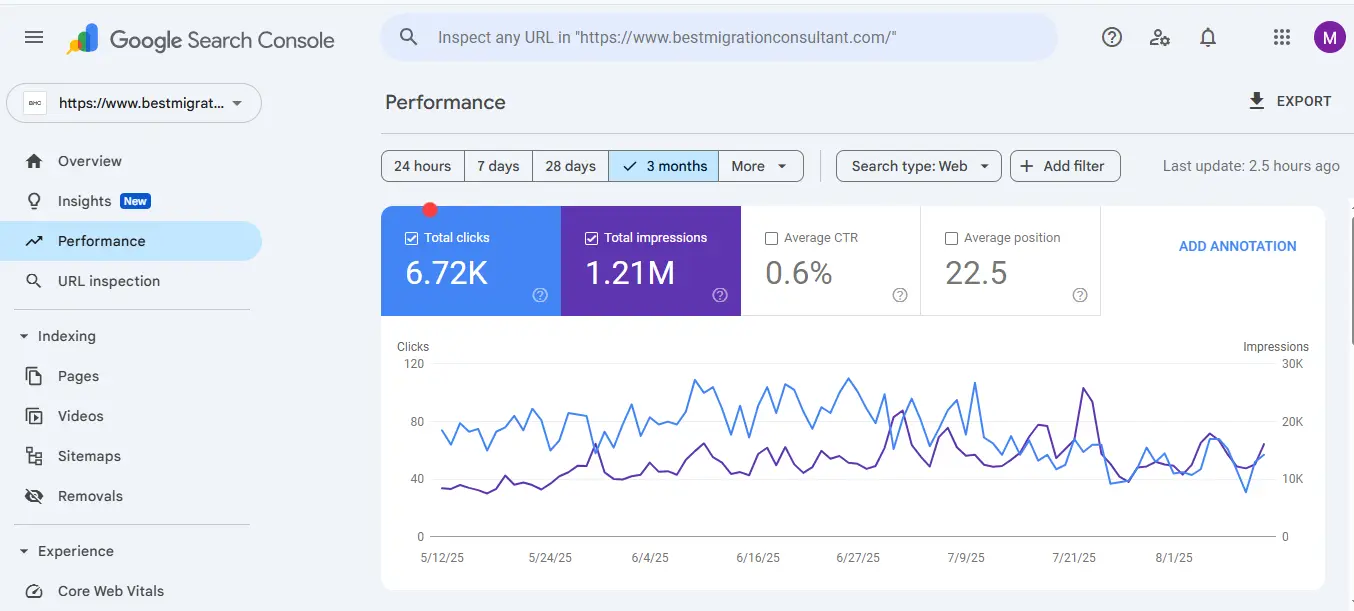
Since August 2024, I started applying this method on a client’s Visa and Immigration website that previously struggled to get any traction or rank for competitive keywords.
Within just a few weeks, those pages began showing up on the first page of Google for brand-related keywords and several long-tail search terms. Traffic steadily grew, and inquiries started coming in.
Here’s what I’ve seen firsthand:
- Brand Keyword Ranking: Even for competitive brand keywords like “AI Written Content,” the pages I optimized are now appearing on the first page, and the rankings are still improving after Google’s August 2024 helpful content update.
- Long-Tail Keyword Wins: By focusing on low-competition, high-intent keywords and building solid outlines followed by AI-assisted writing, we’ve captured relevant search traffic that wasn’t there before.
- Sustained Growth: Unlike some sites that face penalties or ranking drops after using AI content, these pages are gaining authority and moving up consistently.
One quick example: a blog post optimized around “best immigration consultancy websites” climbed from page 5 to page 1 within a couple of months. This wasn’t luck—it was following a proven process of research, outline building, AI content creation, fact-checking, and SEO fine-tuning.
Why does this work?
Because this isn’t about blindly generating AI content and hoping for the best. It’s about combining human insight with AI efficiency: I carefully guide Writesonic with the right keywords, fact-check every section, and tailor the tone to resonate with real users. This builds trust with Google and readers alike.
Important: I’ve also seen many claims online from folks losing traffic after misusing AI content. That’s a reminder—strategy, quality, and optimization matter more than just “AI-generated” labels. Done right, AI tools are a massive advantage.
If you want to see your own pages rank, this workflow can get you there. I’ve tested it across multiple niches and client sites, and the results speak for themselves.
Ready for proof beyond my word? Stick around—I’ll share screenshots, ranking reports, and even more examples next. You’ll see this method in action and understand exactly how to replicate it.
FAQs About Using Writesonic to Rank Higher on Google
If you’re curious about how Writesonic works and how AI writing tools can boost your Google rankings, these FAQs will clear things up. Here’s what you need to know to get the best results from AI content creation!
Is Writesonic Free to Use?
Yes! Writesonic offers a free plan so you can explore its features without any cost. While there are limits on how much content you can generate on the free tier, it’s a great way to try out the tool before deciding whether to upgrade for more advanced options.
What Is the Main Purpose of Writesonic?
Writesonic helps speed up content creation by generating text that’s SEO-friendly and engaging. Whether you need blog articles, product descriptions, or social media posts, Writesonic gives you a solid draft to build on, saving you time and effort while helping improve your Google rankings.
Which AI Writing Tools Offer Free Plans?
Besides Writesonic’s free version, tools like ChatGPT and Humanize.ai provide free access with limited usage. These are excellent for beginners or anyone wanting to experiment with AI-generated content without upfront costs.
How Can I Make AI Content Sound More Human for Free?
You can use free online tools such as Humanize.ai or Paraphraser.io to rewrite AI content into a more natural, conversational tone. These tools help you avoid stiff, robotic writing and make your content more relatable—no fees or sign-ups required.
Can ChatGPT Help Make AI Text More Natural?
Definitely! By prompting ChatGPT with instructions like “rewrite this to sound casual” or “make this sound like a real person talking,” you can turn AI drafts into smoother, friendlier content that better connects with your audience.
What’s the Best Tool to Humanize AI Content?
The answer depends on your needs, but Humanize.ai and Paraphraser.io are popular free choices for turning AI text into readable, natural content. For the best results, combine these AI Content Humanize tools with your own edits to add personality and clarity.
How Does Writesonic Assist With SEO?
Writesonic isn’t just about writing—it can help you naturally include your target keywords, organize your content with SEO-friendly headings, and produce well-structured articles. When paired with thorough keyword research and a clear outline, it’s a valuable part of an SEO strategy.
Will AI Content Still Rank After Google’s Helpful Content Update?
Yes, but quality matters more than ever. Google rewards content that’s genuinely helpful and written for people—not just machines. So after generating content with Writesonic, be sure to fact-check, add your insights, and make the text engaging to keep your rankings strong.
Is There Any SEO Risk Using AI Content?
Using AI content isn’t risky if you handle it correctly. The danger comes from publishing unedited, generic text. Follow a process that includes research, outlining, AI writing, editing, and optimization to produce content that ranks well and stays within Google’s guidelines.
How Can I Monitor the Success of AI-Generated Content?
Use Google Search Console, Semrush, or similar tools to track how your content performs—checking metrics like clicks, impressions, and keyword rankings. If you see your post isn’t performing well, update titles, intros, or internal links to improve its position.
Conclusion
Writesonic isn’t just another AI tool—it’s a powerful partner in creating SEO-friendly content that ranks. By combining smart keyword research, clear outlines, and thoughtful editing, I’ve consistently boosted my Google rankings with AI-generated content. If you want to save time without sacrificing quality, following this method can help you get real results. Give it a try, stay strategic, and watch your content climb the search results!