Backlinks rank among Google’s top 3 factors that determine your website’s position in search results.
A strong backlink profile can send your rankings soaring, while toxic links can make them plummet. The surprising part?
About 69% of SEO specialists never use the Google Disavow Tool to clean up harmful backlinks.
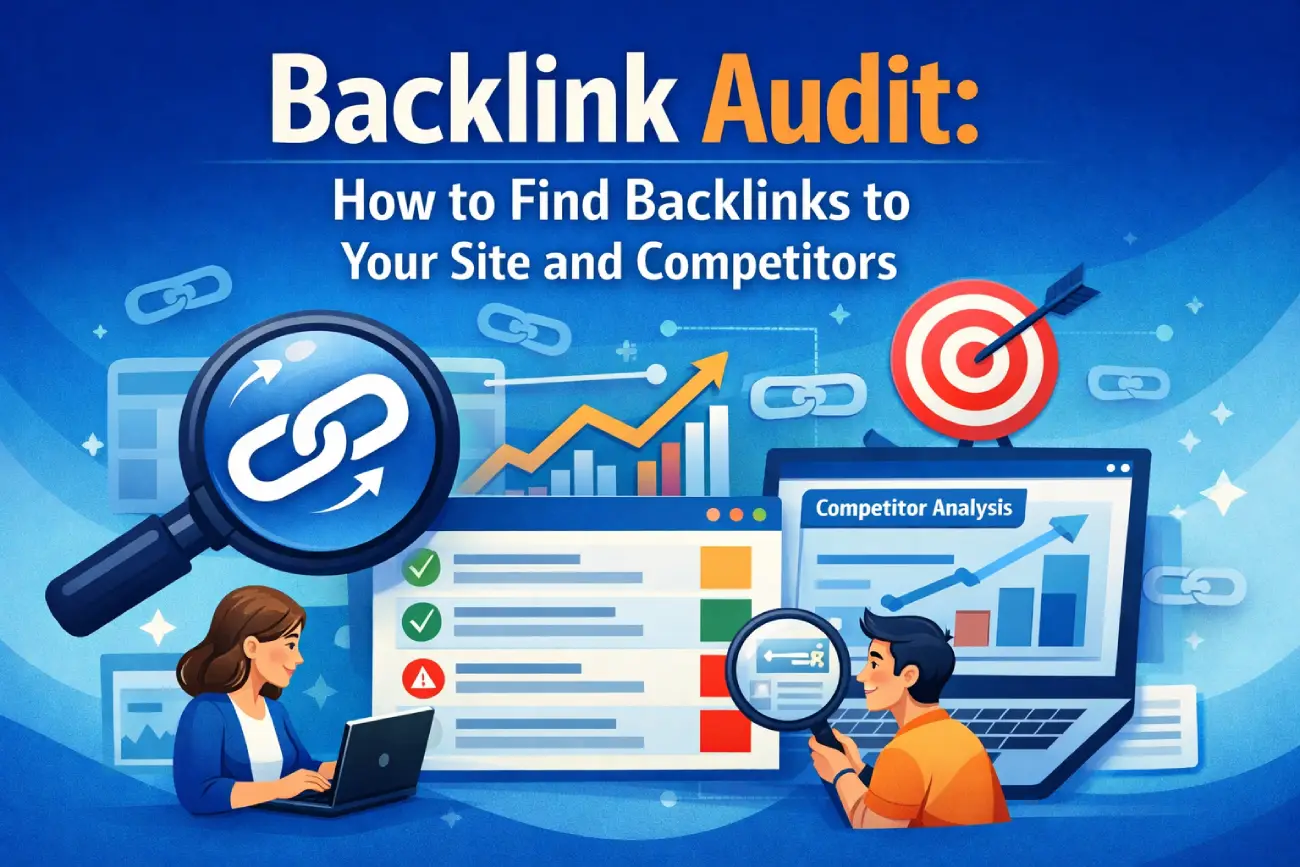
My years in SEO have taught me that a full backlink audit is vital to succeed in the long run. A backlink audit looks at all the links pointing to your website from external sources. This review shows how other websites and search engines view your site.
A well-done backlink audit helps you spot toxic backlinks, find quality link opportunities, and learn about your competitors’ strategies. You can also track which backlinks bring the most value to your site.
My blog post will show you “how to find backlinks to your site“, evaluate your backlink profile, and make use of backlink sites to boost your rankings. You’ll learn to clean up toxic links and find new opportunities through forum backlinks and other sources. This step-by-step guide gives you everything needed to optimize your SEO backlink strategy.
Ready to improve your backlinks websites portfolio?
Let’s get started!
Understanding Your Backlink Profile Before You Audit
Before running a backlink audit, you need to understand what a backlink profile is — because everything you find in the audit will be evaluated against profile-level benchmarks, not just individual link metrics.
What Is a Backlink Profile?
A backlink profile is the complete collection of all external links pointing to your website. It includes every domain, URL, anchor text, link type, and authority signal associated with those inbound links. Think of your backlink profile as your site’s reputation report card in Google’s eyes.
A healthy backlink profile is not just about having many links. It is about having the right links — earned from relevant, authoritative, and trustworthy sources, with a natural mix of anchor texts and link types.
What Makes a Strong Backlink Profile?
When auditing backlinks, evaluate profiles against these five quality indicators:
- Referring domain diversity — links from hundreds of different domains are stronger than hundreds of links from one domain.
- Domain authority spread — a mix of DA 20–80 sites looks natural; links exclusively from low-DA sites signal manipulation.
- Anchor text variety — branded anchors, naked URLs, and topical keywords should all be present; exact-match anchor overuse triggers Penguin.
- Dofollow vs nofollow ratio — a healthy backlink profile has roughly 60–80% dofollow links and 20–40% nofollow links.
- Topical relevance — links from sites in your industry carry more weight and look more natural than off-topic placements.
How a Backlink Audit Reveals Profile Weaknesses
Running a thorough backlink audit maps every link back to these quality indicators and surfaces the gaps. Common backlink profile problems that audits catch include:
- Over-optimised anchor text distribution skewed toward exact-match keywords.
- Spammy referring domains with near-zero organic traffic.
- Sudden link velocity spikes that look unnatural to Google.
- Links from penalised or deindexed domains that now pass negative signals.
- Missing links from competitors’ top referring domains — a gap your audit will make visible.
Once you know what a healthy backlink profile looks like, the audit becomes much more actionable. You are not just collecting data — you are benchmarking your site against a clear standard.
Pro tip: Use Ahrefs’ Referring Domains report filtered by DR 30+ and Dofollow only to get a fast read on the quality core of your backlink profile without wading through noise.
What is a Backlink Audit?
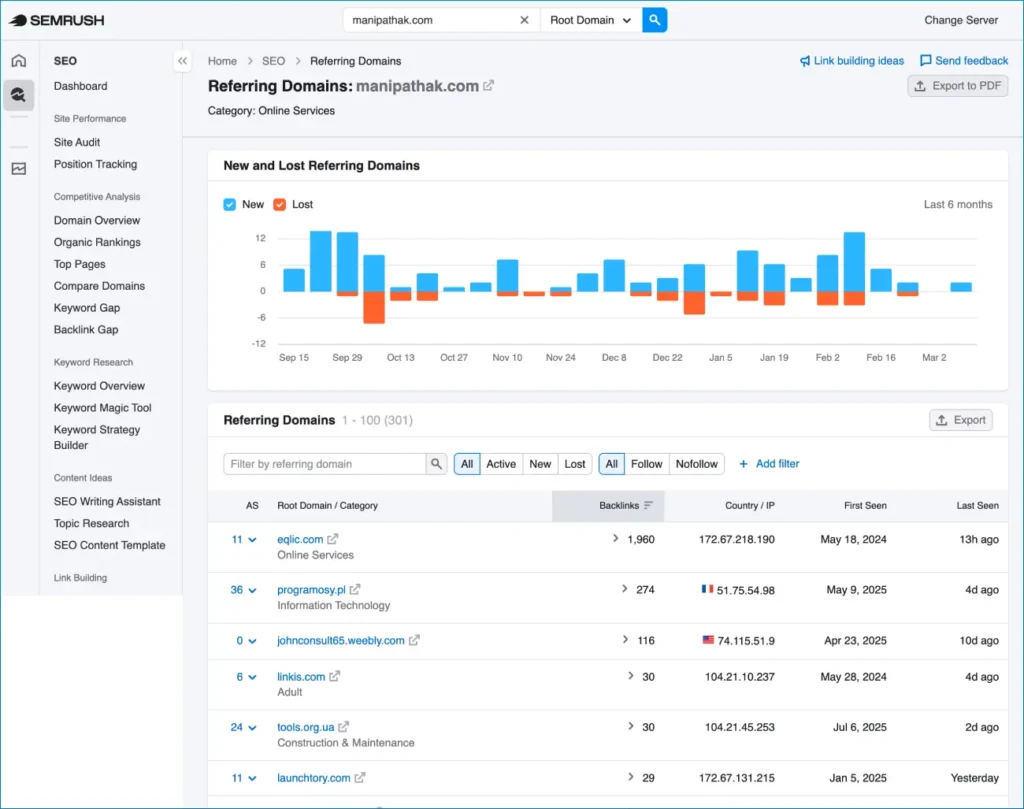
A backlink audit gives you a full picture of all the links pointing to your website from external sources. This review looks at both the quality and quantity of your backlinks and helps you understand your site’s current standing in terms of link equity and authority.
Definition of Backlink Audit
The backlink audit process reviews your backlink profile—all the links and domains that refer to your site. We look at factors like domain authority, traffic, relevance, anchor texts, and whether links are dofollow or nofollow. You’ll learn about how these links affect your overall SEO performance.
Why backlinks are important for SEO
Backlinks work like votes of confidence from other websites and signal trust to search engines. Google’s algorithm uses these links as ranking factors and treats them as endorsements that show a page’s authority and relevance. Pages with more high-quality backlinks rank higher because search engines see them as valuable content worth referencing.
Backlinks are a great way to get better E-E-A-T (Experience, Expertise, Authoritativeness, and Trustworthiness), which shapes how Google rates content. Cornell University’s study of Google’s PageRank algorithm shows that a web page’s value depends in part on the number and quality of backlinks it gets.
How backlink audits support link-building strategy
Regular backlink audits help you improve your link-building campaigns. They spot toxic or spammy backlinks that could hurt your rankings or trigger Google penalties. Finding these harmful links is vital since they can damage your search visibility badly.
Link audits show what works by highlighting content types that attract more backlinks. Looking at your backlink profile and your competitors’ can uncover new opportunities—like finding websites that link to competitors but not to you.
A complete backlink audit helps you make smart decisions and create useful, high-priority recommendations for future campaigns.
Benefits of Performing a Backlink Audit
Regular backlink audits bring several vital benefits that affect your website’s performance in search results. Let me get into the main advantages of this important SEO practice:
Identify toxic or spammy backlinks
Regular backlink audits help you spot harmful links that could trigger penalties or hurt your site’s reputation. Toxic backlinks usually come from:
- Spammy or low-quality websites
- Link farms and private blog networks
- Sites with thin or auto-generated content
- Websites previously penalized by Google
- Unrelated foreign language sites
These harmful links can hurt your rankings by a lot if you don’t deal with them.
About 7% of backlinks disappear each year, which means you could lose thousands of dollars in link value.
Find high-authority backlink sources
A detailed backlink audit shows which types of content pull in quality links. You’ll learn about backlink sites with high domain authority that boost your site’s credibility. Your competitors’ backlink profiles can reveal new opportunities from websites that link to them but not to you.
Improve domain authority and rankings
Full audits show how your backlinks add to your domain authority score. You create a better environment for search engines when you focus on getting high-authority backlinks and remove toxic ones. This targeted approach improves your site’s visibility and builds trust with users, which promotes long-term engagement.
Avoid Google penalties
Google actively penalizes websites that get backlinks from spammy or low-quality sources. Manual actions or algorithmic updates like Penguin can trigger these penalties by finding unnatural linking patterns. Google sent over 9 million webspam notifications to webmasters in just one year.
Quick reactions to toxic links through regular monitoring protect your backlink profile from damage.
Regular backlink audits will keep your link profile healthy and support your SEO efforts effectively.
How to Find Backlinks to Your Website
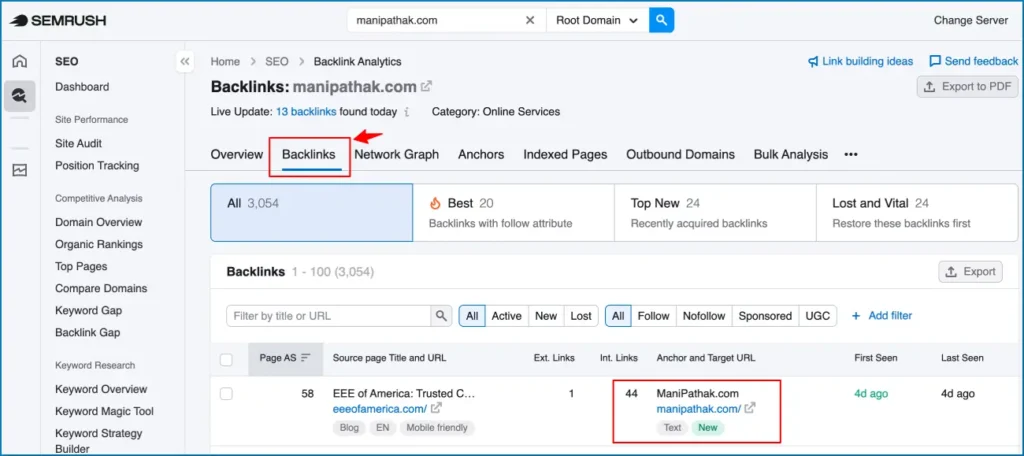
Learning about the backlinks that point to your website is a vital first step to conduct a full backlink audit. Several tools and methods help us find who links to your site. These tools show both the number and quality of these valuable connections.
The best way to get a complete overview of your backlink profile starts with specialized backlink checker tools. Platforms like Ahrefs, SEMrush, and Moz Link Explorer give you a detailed look at your entire backlink ecosystem. You’ll see the total number of backlinks, referring domains, and their quality metrics. These tools let you:
- View all domains linking to your site
- Check domain and page authority scores
- Analyze anchor text distribution
- Filter links by follow/nofollow status
- Export data for deeper analysis
Google Search Console serves as a free alternative that offers valuable backlink data. Here’s how to access it:
- Sign in to your Search Console account
- Go to the ‘Links’ section
- Review the ‘External links’ report showing top linking sites
Your backlink management works better when you know the metrics that matter. Domain authority, referring domains count, and anchor text diversity play a significant role in evaluating your backlinks websites portfolio.
Spreadsheets make deeper analysis possible by exporting your backlink data. Most tools let you download this information as CSV files, which makes organizing and prioritizing your findings easier.
These tools can also reveal your competitors’ backlink sites. This backlink gap analysis shows which domains link to competitors but not to you—creating a map of potential opportunities.
Quality and relevance matter more than quantity when finding your backlinks. A complete audit shows which SEO backlinks add value and which might hurt your site’s reputation.
Regular monitoring of these connections helps you track growth, spot new opportunities, and keep a healthy backlink profile that boosts your SEO strategy.
Step 1: Analyze Your Current Backlink Profile
A proper backlink audit starts with analyzing your current profile. This analysis creates the foundation that guides all your future link audit decisions and strategic improvements.
Use tools like Ahrefs or Semrush
Specialized tools play a vital role to get a complete backlink profile analysis. Ahrefs and Semrush lead the industry with impressive databases. Semrush tracks 43 trillion backlinks from 390 million referring domains, while Ahrefs monitors 35 trillion external backlinks from 213.3 million domains.
These platforms give detailed breakdowns of your backlink landscape. Ahrefs started as a backlink checker and excels at analysis since this was their original focus. Semrush helps you understand how your backlink portfolio evolves over time.
Check total backlinks and referring domains
Your preferred tool should help you track the total number of backlinks and unique referring domains that point to your site. This overview shows your backlink profile’s scope and variety. The tools also let you:
- See every page linking to your target
- Filter results by region, anchor text, and domain scores
- Identify newly gained or recently lost links
Review follow vs nofollow ratio
The distribution between follow and nofollow backlinks needs careful analysis. This ratio varies naturally between websites – Moz’s inbound links show roughly 40% follow to 60% nofollow. No “perfect” ratio exists, but an unusual percentage of either type might signal unnatural link building practices.
Tools like Semrush’s Backlink Analytics break down link attributes, including sponsored and UGC links. The context matters here – different website sections tend to have varying follow/nofollow distributions.
Look for broken or outdated links
Broken or outdated backlinks waste link equity when sites link to non-existent pages or those with errors. Ahrefs and Semrush both provide dedicated tools to find these problems.
Ahrefs has a “Broken Backlinks” section that shows pages with 404 errors still getting links. Semrush’s Backlink Audit tool spots target URL errors that need attention. Fixing these broken links helps preserve valuable backlink equity that would otherwise be lost.
Step 2: Review Anchor Text and Link Relevance
Your backlink audit needs anchor text analysis as a crucial element that reveals what simple link counts cannot. Search engines interpret your content’s relevance and authority based on the words others use to link to your site.
Check for keyword stuffing in anchor text
You should look for signs of over-optimization after putting together your backlink profile. Search engines might penalize your site if the same keywords keep showing up in links that point to your pages. Google’s Penguin update specifically targets these unnatural linking patterns.
Your anchor text review should watch for these warning signs:
- More than 10-15% exact-match anchors
- Specific anchor types that suddenly spike
- Commercial keywords that keep repeating
A site selling running shoes serves as a good example. Search engines see it as manipulation if most backlinks use “best running shoes” as anchor text. Natural backlink profiles usually have a mix: branded anchors (35-40%), partial match keywords (15-20%), generic anchors (10-15%), and exact-match keywords (5-10%).
Identify irrelevant or misleading anchors
Poor SEO backlink quality and user experience suffer from irrelevant anchor text. Links become problematic when their anchors make no sense with your content. A link about “office furniture” that leads to diet pills content creates confusion. Both users and search engines get mixed signals about your page’s purpose.
The context around your links helps spot misleading anchors. Quality anchor text should describe your content clearly and match both pages it connects. Google protects anchor text signals by ignoring links from known spam sites.
Ensure anchor diversity for natural profile
Authentic, organically earned backlinks show up as diverse anchor texts. Natural link profiles never depend too heavily on one format but include various anchor text types.
Brand names dominate naturally acquired links because most sites prefer using your company name. Your site’s authority grows stronger when link equity spreads across pages through balanced distribution, leading to better link audit results.
Your site stays clear of algorithm penalties by keeping this diversity intact. Regular checks of your anchor text distribution should be part of your backlink management routine to maintain balance and authenticity.
Step 3: Disavow Harmful or Low-Quality Links
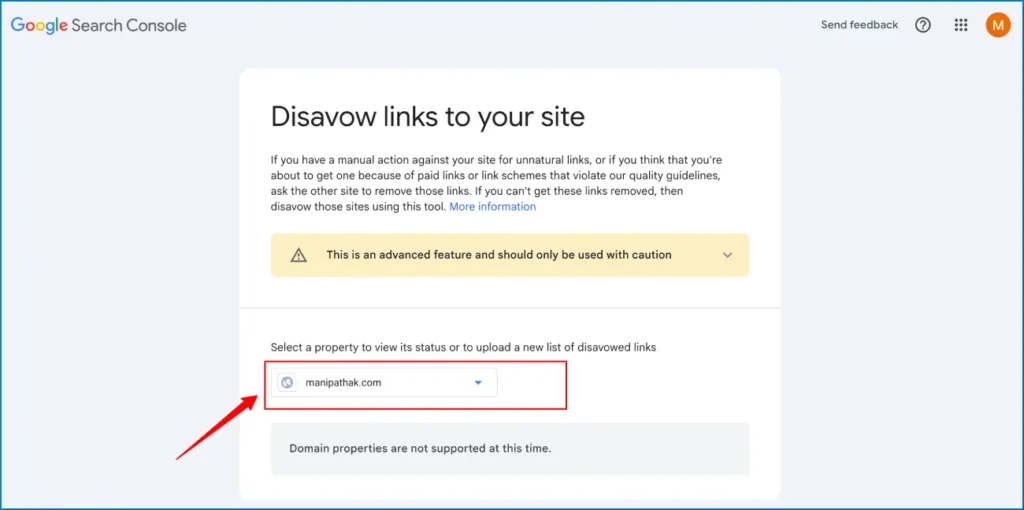
After finding problematic links in your backlink profile, you need to learn a vital step – handling them through disavowal. This process signals Google to ignore specific links while evaluating your site’s rankings.
How to identify toxic backlinks
Your backlinks could become toxic from these problematic sources:
- Private Blog Networks (PBNs) and link farms
- Comment spam networks and unmoderated directories
- Foreign-language sites using commercial anchor text
- Hacked domains and compromised websites
- Sites flagged by security tools or lacking SSL certificates
You should watch for warning signs like over-optimized anchor text, suspicious domain traits (very new sites, missing privacy pages), and poor content quality. A sudden spike in backlinks from domains registered around the same time usually points to coordinated link schemes.
When to use Google’s Disavow Tool
Google recommends using the Disavow Tool carefully.
You should only disavow backlinks in these cases:
- Your site has received a manual action for unnatural links
- Spammy or artificial links point to your site in large numbers
- You bought links or participated in link schemes previously
The manual actions check requires you to sign in to Google Search Console and go to “Security & Manual Actions” > “Manual actions”. Google usually ignores occasional low-quality backlinks instead of penalizing your site for them.
Best practices for disavowing links
The first step is to contact site owners directly to remove harmful links. If removal requests fail, create a disavow file with these guidelines:
- Format your file as a .txt document with UTF-8 or 7-bit ASCII encoding
- List one URL or domain per line
- Use “domain:” prefix to disavow entire domains (recommended for most cases)
- Add comments by starting lines with the # symbol
- Maximum file size: 100,000 lines or 2MB
Submit your file through Google’s Disavow Tool in Search Console. The process takes several weeks for Google to process your disavow file and recrawl the web.
Step 4: Compare Your Backlinks with Competitors
A solid backlink audit starts with competitive analysis. You need to evaluate your link building strategy and see how it matches your competitors after cleaning up your profile.
Use backlink gap tools
Backlink gap tools let you compare your domain with multiple competitors side by side. You can analyze up to four competitors at once with Semrush’s Backlink Gap tool. The analysis sorts potential backlink sites into quality levels:
- Best: High-authority domains linking to competitors but not you
- Weak and strong: Links categorized by quality to help prioritize outreach
- Shared and unique: Domains linking to all competitors or exclusively to one
These tools show important metrics like authority scores and monthly visits for each domain that help you spot valuable opportunities.
Identify domains linking to competitors but not you
Your focus should be on “best” backlinks – high-authority domains that link to multiple competitors but skip you. These sites make excellent targets because they already link to others in your industry.
Link intersect analysis helps you discover websites that link to your competitors’ specific pages. You should track your competitors’ link velocity – their rate of gaining backlinks for specific keywords. This knowledge helps you set achievable goals to match or surpass their growth rate.
Analyze competitor anchor strategies
Your competitors’ anchor text distribution reveals useful patterns in their SEO backlink approach. Look for these trends:
- Types of websites providing links (blogs, news sites, forums)
- Recurring themes in anchor text used
- Branded terms versus generic phrases
This deeper analysis surpasses simple link audit techniques and reveals the strategies behind their rankings. You can adapt or improve these strategies for your site. Understanding these patterns shows which backlink management tactics work best in your industry.
Step 5: Find New Backlink Opportunities
Your next priority after cleaning your backlink profile should be finding new link opportunities as part of a complete backlink audit. These untapped sources can significantly boost your site’s authority.
Look for unlinked brand mentions
References to your brand without hyperlinks are unlinked mentions. You can easily get backlinks from these opportunities with minimal work. Brand Monitoring tools help you track mentions of your brand name, misspellings, product names, and copyrighted images online. Google Alerts or specialized tools will notify you about new mentions and help you find these opportunities.
Use broken link building
The broken link building strategy lets you find dead links on other websites and suggest your content as a replacement. Site owners appreciate this technique because you help them fix errors first. The Check My Links Chrome extension identifies broken links on resource pages that contain many external links. You can then use backlink analysis tools to find other sites that link to the same dead page.
Explore guest posting and forum backlinks
Guest blogging continues to work well for building authority and improving search rankings. You can find relevant sites by searching “write for us” + your niche, analyzing competitor backlinks, or connecting with website owners. Forum backlinks bring targeted traffic by showcasing your content to engaged audiences. Though Google has reduced the SEO value of most forum backlinks, quality contributions help generate referral traffic and build brand awareness.
Step 6: Use Audit Insights to Improve Strategy
My backlink audit has shown several opportunities, and now is the time to make strategic improvements. The patterns I learned will help shape my future link building work.
Create content that attracts backlinks
The secret to creating link-worthy content lies in what already works well. My most-linked pages serve as a blueprint for future wins. The data shows that statistics pages pull in the most backlinks, so I should focus on creating more informed content. Original research, detailed guides, case studies, and infographics naturally draw links because other sites want to reference their unique value. These resources become citation magnets that websites link to without any outreach.
Build relationships with backlink sites
The power of relationship-based link building turns single connections into lasting opportunities. My primary focus should be people who already support my work—colleagues, clients, and peers are the foundations of my online presence. These connections often lead to guest features, resource listings, joint content, and testimonials that create genuine backlinks. People link to my content without prompting when I make collaboration smooth and rewarding.
Track backlink performance over time
Backlink profiles change a lot and this affects organic rankings. Regular monitoring helps me spot sudden changes that could affect SEO results. I use backlink management tools to watch growth patterns, find toxic links, and evaluate my campaign success. Setting specific goals—like getting a set number of high-authority links in three months—gives me clear success metrics.
Best Backlink Audit Tools to Analyze Your Link Profile
The effectiveness of your backlink audit depends heavily on choosing the right backlink analysis tools. These SEO platforms provide deep insights into your backlink profile, helping you discover who links to your website, identify toxic links, and uncover competitor link opportunities—things that are nearly impossible to track manually.
Here are some of the most trusted tools used by SEO professionals:
1. Ahrefs
One of the most popular SEO tools for backlink analysis, Ahrefs is widely regarded for its massive and frequently updated link database. It tracks 35+ trillion backlinks across hundreds of millions of domains and refreshes data every 15–30 minutes. With features like Site Explorer, Link Intersect, and competitor backlink analysis, Ahrefs helps you quickly identify high-value link opportunities. Pricing typically starts around $100+ per month.
2. Semrush
Semrush is a powerful all-in-one SEO platform that also offers robust backlink management and competitor analysis tools. Its Backlink Gap feature allows you to compare your website with up to five competitors to find domains linking to them but not to you—an excellent way to discover new link-building opportunities. Plans generally start around $249 per month for full access.
3. Majestic
Unlike most SEO platforms, Majestic focuses almost entirely on backlink intelligence. It uses unique metrics like Trust Flow and Citation Flow to measure the quality and authority of backlinks. Its Link Context feature shows exactly where a link appears on a page, helping you evaluate its SEO value.
4. Moz Pro
Moz Pro is known for its industry-standard metrics such as Domain Authority (DA) and Page Authority (PA). The platform also provides a Spam Score feature that helps identify potentially harmful or low-quality backlinks that could negatively impact your rankings.
5. SE Ranking
If you’re looking for a more affordable option, SE Ranking offers solid backlink tracking and monitoring features at a lower price point. It’s a popular choice for freelancers and small businesses that want professional backlink insights without the high cost.
6. Ubersuggest
Ubersuggest provides a free version with basic backlink data, making it a good starting point for beginners. While it doesn’t have the same data depth as enterprise tools, it’s useful for quick backlink checks and competitor research.
7. Monitor Backlinks
Monitor Backlinks specializes in tracking your backlinks and keeping an eye on your competitors’ link-building activities. It sends alerts whenever you gain or lose backlinks, helping you maintain a healthy backlink profile.
8. Check My Links
This lightweight Chrome extension is useful for quickly scanning any webpage for broken links, which can reveal potential outreach and link-building opportunities.
Pro Tip
Using multiple backlink tools together often gives the most accurate picture of your backlink profile because each platform has its own link database and crawling system.
How to Find Competitor Backlinks for SEO
Your competitors’ backlinks are a goldmine of strategic opportunities you can use to improve your link building strategy. We used tools like Semrush’s Backlink Analytics to make this process easier. You can see a competitor’s complete backlink profile, including referring domains and total backlinks by entering their domain.
The first step is finding your actual competitors. Organic Research tools help identify domains that rank for your target keywords. Specialized platforms like Ahrefs give detailed information about every page that links to your competitors.
These steps will help optimize your research:
- Check competitors’ backlink quality through domain authority and traffic metrics
- Remove spammy links that have low website traffic (at least 3-5K visitors)
- Look for guest posting opportunities in single links with keyword-rich anchor text
- Study resource pages, review sites, and directory listings where competitors are mentioned
Tools like Moz’s Link Explorer, Ahrefs’ Backlink Checker, and Google Search Console are free options that offer limited but useful data. Running a backlink gap analysis is the most effective way to find websites that link to all your competitors but not to you. These sites represent your best opportunities.
Backlink Gap Analysis: Finding Link Opportunities
A backlink gap analysis helps you find untapped link opportunities. Unlike general competitor research, this strategic process shows which domains link to your competitors but not to your website.
The analysis compares backlink profiles of multiple websites side-by-side and reveals the differences in linking domains. Tools like Moz’s Link Intersect and Semrush’s Backlink Gap tool let you compare up to five domains at once. The goal goes beyond counting links – it helps you find quality opportunities that could boost your rankings.
A successful analysis starts with identifying domain-level competitors who compete across many keywords and page-level competitors who compete for specific topics. When a website links to multiple competitors but skips yours, you’ve found a valuable chance worth pursuing.
The results group potential backlink sites into different quality levels:
- Best: Domains linking to all competitors but not you
- Weak: Domains where competitors have more links than you
- Strong: Domains linking mainly to you
- Shared/Unique: Domains linking to multiple/single sites
These gaps represent websites that already show interest in your industry and might respond well to your outreach. High-authority domains with steady organic traffic produce better results than chasing every possible gap.
This focused method turns competitive analysis into useful link building chances and creates a roadmap to enhance your backlink profile.
Identifying High-Quality vs Toxic Backlinks
Quality backlinks need careful separation from toxic ones to make your link audit successful. This critical difference determines whether your backlink audit will deliver the results you want.
Five traits define high-quality backlinks. We prioritized sites that show strong domain authority, measured by Domain Rating (DR) or Domain Authority (DA). These websites have built search engine trust through their own robust backlink profiles.
Your industry relevance is a vital factor. Links from websites in your field or related areas provide more value than random sources. Contextual links within main content sections prove more beneficial than footer or sidebar placements.
In stark comparison to this, toxic backlinks emerge from questionable sources like link farms, PBNs (Private Blog Network), or websites filled with auto-generated content. Their anchor text often shows excessive exact-match keywords that look unnatural.
Your backlink profile needs regular checks to spot unusual patterns – quick increases from low-quality sites or irrelevant domains could signal harmful backlinks that need disavowal.
Note that natural links should show a balanced mix of branded anchors (35-40%), partial matches (15-20%), generic phrases (10-15%), and exact-match keywords (5-10%). Your backlink audit should investigate any significant shifts from these ratios.
How to Fix or Remove Harmful Backlinks
You need a step-by-step plan to protect your SEO and avoid penalties from harmful backlinks.
Once you find toxic backlinks, reach out to website owners with polite, customized removal requests. Let them know how the link hurts both sites. Keep track of all your communication attempts in a spreadsheet as you go.
The Google Disavow Tool becomes your backup plan if website owners don’t respond or refuse to remove the links. This tool signals Google to skip specific links while evaluating your site. The quickest way to use it is creating a text file (.txt) with URLs or domains you want Google to disavow.
The domain-level disavow works better when you’re dealing with completely spammy sites. Just add “domain:example.com” to your file to block all links from that source. This method will give a complete block of every bad link without listing individual URLs.
Upload your disavow file through Google Search Console and wait – Google needs several weeks to process everything. The tool doesn’t remove backlinks but tells Google to ignore them during site evaluation.
Use disavow as your last option. Google already ignores most low-quality backlinks, so only disavow when you see too many spammy links or face manual action.
Do-Follow vs No-Follow Backlinks: How They Impact Link Quality
The quality of your backlink profile depends on how well you understand dofollow and nofollow backlinks. These two link types work together like yin and yang in SEO, each playing a unique but complementary role.
Dofollow links serve as the default hyperlinks that pass “link juice” or PageRank authority between sites. They work as endorsements and tell search engines: “I trust this page and vouch for its content.” Your site’s authority and rankings can improve through these valuable signals.
Nofollow links use the rel=”nofollow” HTML attribute to tell search engines not to pass authority. Many people undervalue them, but they add by a lot to a natural backlink profile. Your ideal dofollow to nofollow ratio should be around 60-70% dofollow and 30-40% nofollow.
Nofollow links bring value beyond authority passing:
- They drive referral traffic from popular sites
- They help build brand awareness and visibility
- They create a diverse, natural-looking link profile
- They help avoid Google penalties from suspicious profiles
Search engines might flag your site as manipulative if you only have dofollow links. Your backlink audit should focus on both types to create a balanced, effective SEO strategy.
Backlink Audit Checklist
Regular backlink audits need a well-planned approach. Here’s a detailed backlink audit checklist that will help you stay organized and thorough:
- Export complete backlink list from primary tools (Ahrefs, SEMrush, or Majestic)
- Cross-reference with Google Search Console data for validation
- Calculate total backlinks and unique referring domains
- Analyze dofollow vs nofollow ratio (target: 60-80% dofollow)
- Review link type diversity (editorial, guest posts, directories)
- Identify top 20 most valuable referring backlink sites
- Flag toxic links using toxicity scores and manual review
- Look for sudden spikes in link acquisition (potential spam attack)
- Check anchor text distribution for over-optimization (target 35-40% branded)
- Identify broken backlinks and create redirect plan
- Conduct competitor gap analysis for opportunities
- Document findings in a standardized report template
- Create prioritized action plan with owners and timelines
- Prepare disavow file if needed (UTF-8 format, 2MB max)
- Set calendar reminder for next audit cycle
This checklist will give you a solid foundation for your link audit. Regular audits using this approach help maintain a healthy backlink profile and reveal new opportunities to improve your SEO performance.
My Final Thoughts and Next Steps
A robust SEO strategy must include regular backlink audits. In this piece, we’ve shown how a full picture helps you find toxic links, spot new opportunities, and boost your link building efforts. Your backlink management needs to be a top priority to protect your site from penalties and achieve lasting ranking improvements.
Your site’s authority and relevance in search engines’ eyes depend on your backlink profile. Without doubt, quality trumps quantity when it comes to backlinks. A few high-quality links from authoritative, relevant sites deliver more value than hundreds of weak connections.
Your backlink audit should be an ongoing process, not a one-time task. Search engines update their algorithms constantly, and your competitors adapt their strategies. You should review your backlinks quarterly to be proactive about potential issues and leverage new opportunities.
This piece outlines a six-step audit process to review, clean, and enhance your backlink profile. Start by analyzing your current links, check anchor texts, remove harmful links, study competitors, explore new opportunities, and implement strategic changes based on your findings.
Managing forum backlinks, reaching out to backlink sites, or removing toxic links requires consistent monitoring. Better rankings and increased traffic will follow naturally. Backlinks continue to be one of Google’s primary ranking factors, which makes regular audits a smart investment to achieve long-term SEO success.
Backlink Audit FAQs for Better SEO Performance
Q1. What is a backlink audit and why is it important?
A backlink audit is a comprehensive review of all external links pointing to your website. It’s important because it helps identify toxic links that could harm your rankings, uncovers high-quality link opportunities, and provides insights into your competitors’ strategies.
Q2. How often should I conduct a backlink audit?
It’s recommended to conduct a backlink audit quarterly. Regular audits help you stay ahead of potential issues, capitalize on new opportunities, and adapt to changes in search engine algorithms and competitor strategies.
Q3. What tools are best for checking backlinks?
Some of the best tools for checking backlinks include Ahrefs, Semrush, Majestic, and Moz Pro. These platforms offer comprehensive backlink data, competitive analysis features, and metrics to assess link quality.
Q4. How can I identify toxic backlinks?
Toxic backlinks often come from spammy or low-quality websites, link farms, sites with thin content, or those previously penalized by Google. Look for suspicious domain traits, over-optimized anchor text, and sudden increases in backlinks from domains registered around the same time.
Q5. What’s the difference between dofollow and nofollow backlinks?
Dofollow links pass “link juice” or authority from one site to another, potentially improving rankings. Nofollow links contain an HTML attribute that instructs search engines not to pass authority. Both are important for a natural backlink profile, with an ideal ratio of about 60-70% dofollow to 30-40% nofollow.
Q6: What is a backlink profile?
A: A backlink profile is the full set of all inbound links pointing to your website — including the domains, anchor texts, link types (dofollow/nofollow), and authority of each referring site. It represents how authoritative and trustworthy your site appears to search engines.
Q7: How do I check my backlink profile?
A: Use a backlink analysis tool such as Ahrefs, Semrush, or Moz. Enter your domain and navigate to the referring domains or backlink report. Look for DR/DA distribution, anchor text breakdown, and any domains flagged as toxic or spammy.
Q8: What does a toxic backlink profile look like?
A: A toxic backlink profile typically has a high percentage of links from sites with zero organic traffic, a heavily over-optimised anchor text distribution with too many exact-match keywords, links from adult or gambling sites with no topical relevance, and sudden unnatural spikes in link velocity.
Q9: How often should I audit my backlink profile?
A: Audit your backlink profile every 2 to 3 months as a minimum, or immediately after a Google core update causes an unexpected traffic drop. Monthly audits are recommended if you are actively running a link-building campaign.