

Autoblogging: Start, Launch & Automate
Autoblogging helps you save time and can boost your traffic and revenue. Traditional blogging makes you create content constantly. But automated blogging tools can publish content with minimal effort, which helps you build a steady passive income.
The automation of content creation and publishing lets you focus on strategy instead of writing tasks every day. You’ll find hundreds of autoblogging tools out there.
Take Autoblogger for example – their plans start at $49 monthly with 60 credits and go up to $249 monthly with 500 credits. These tools are a great way to scale your content production fast. Most tools work the same way though, even if their prices differ.
My blog post will show you how to set up, launch, and automate your blog to make $1,000+ every month. (Find in next 10 mins.)
We’ll cover everything you need – from picking profitable niches to using the right automation tools that help your blog grow. This guide works whether you’re starting fresh or trying to make your current blog better.
What is Autoblogging?
And How Does It Work? Autoblogging represents a radical alteration from traditional content creation methods. Essentially, autoblogging is a method that automates content creation and publishing without needing constant manual intervention. This modern approach to blogging uses specialized software or plugins that generate and publish content automatically based on preset parameters.
The mechanics behind autoblogging combine several core components. The system relies on three main elements: content sources, automation software, and a publishing platform. You can source content through different methods, each offering unique advantages:
- Content curation – The system selects and publishes relevant content from other websites based on specific topics or keywords automatically
- RSS feed utilization – Content imports and publishes directly from RSS feeds of other blogs or news sources
- AI-generated content – Advanced AI algorithms create original articles based on prompts or keywords
Modern autoblogging platforms have evolved beyond basic content scraping. Tools like Arvow can generate well-laid-out, SEO-optimized content for specific niches automatically. These advanced systems handle tasks like:
- Automated internal and external linking
- Adding copyright-free images and videos
- Creating extensive formatting and tables of contents
- Generating content in over 150 different languages
The technology has come a long way from its early days. We started with simple RSS feed imports and republishing. Now, sophisticated AI technologies ensure consistent, quality content creation that addresses previous concerns about originality and duplicate content.
Setting up an autoblog has become easier than ever. Modern platforms let you set publishing schedules, define your niche, specify business parameters, and establish content categories. You control posting frequency—choosing daily, weekly, or custom schedules to keep your website fresh with new content.
Autoblogging works especially well for niche site owners, affiliate marketers, agencies, and businesses that want to scale content production without hiring writers or spending hours creating blog posts. Knowing how to maintain an active blog with minimal manual work makes this approach attractive for busy digital entrepreneurs.
A properly implemented autoblogging system maintains consistent posting schedules—this matters for audience engagement and search engine visibility.
How to Create an Autoblog from Scratch
Building an autoblog from scratch needs a systematic approach that combines the right tools, platforms, and smart decisions. Let’s explore each step to help you build a successful automated blogging system.
1. Choose a profitable blogging niche
The right niche is a vital part of autoblogging success. Your focus should be on topics with high demand, plenty of fresh content, and strong monetization potential. The most profitable niches for automated blogging include health and wellness, personal finance, technology, travel, and fashion. Food remains a popular choice since people always search for culinary inspiration. Personal finance, beauty, men’s lifestyle, and eco-conscious content are trending topics in 2025.
You should analyze both search volume and competition levels to evaluate potential niches. The sweet spot lies in keywords that get hundreds of daily searches without too much competition. It also helps to check if you can promote related products through affiliate programs like Amazon or eBay.
2. Pick a domain and hosting provider
Strong web hosting creates the foundations of your autoblog. The best providers offer exceptional uptime (99.99%), solid security features, and quick 24/7 support. Your initial costs can be lower since many hosting companies give free domain registration for the first year.
Price matters but shouldn’t be your only factor. Quality hosting deserves a bit more investment to avoid future issues with downtime or poor performance.
3. Install WordPress or another CMS
WordPress emerges as the perfect content management system for autoblogging. Its flexibility, extensive plugin options, and user-friendly design make it stand out. Setup becomes remarkably simple with one-click WordPress installation offered by most reputable hosting companies.
4. Select and configure autoblogging plugins
Your chosen automation plugin is the life-blood of your autoblog. WP RSS Aggregator stands among the most popular and robust options. It lets you import, total, and schedule automatic posts from multiple sources. Feedzy RSS Feeds offers another great option that excels at importing full-text articles even from RSS feeds with just excerpts.
5. Setup: Use AI SEO & Writing Tools to Automate Your Blog
Maximize your autoblogging efficiency by integrating AI-powered SEO & writing tools into your workflow. These tools go far beyond content aggregation—solutions like Jetpack AI Assistant can help you create forms, suggest optimized headlines, and even generate complete article drafts tailored to your niche.
With AI-powered SEO tools, you can automate essential tasks like keyword research, content outlining, and on-page optimization, ensuring your blog posts are search-engine friendly from the start.
The key to long-term success is combining these automated tools with occasional human input. By reviewing and refining AI-generated content, you maintain authenticity, boost readability, and ensure your blog consistently delivers value to your readers.
Top Autoblogging Tools (2025 Edition)
The digital world of content creation changes faster each day, and choosing the right autoblogging tools determines your success. The market in 2025 offers many solutions at different price points with varied capabilities.
Top Autoblogging Tools:
| Tool Name | Key Features | Pricing |
|---|---|---|
| Autoblogging.ai | AI-powered content generation, semantic SEO analysis, bulk post creation, scheduling | Starts at $19/month |
| Arvow Autoblog | Auto-publishing, plagiarism-free content, multi-platform support | Free plan available; Paid plans start at $9/month |
| Writesonic | GPT-4o AI writing, SEO optimization, templates, multilingual support | Free plan; Paid plans from $20/month |
| Copy.ai | Minimal input needed, strong social media copy workflows, free plan with monthly credits | Free plan; Paid plans from $49/month |
| SEOmatic | Bulk SEO content creation, auto meta tags, FAQs, integrates with WordPress, Shopify, Ghost | Custom pricing |
| Outrank | Automated 30-day content plans, custom visuals, automatic publishing | Starts at $49/month |
| SearchAtlas | SEO and content research, backlink analysis, keyword tracking | Starts at $49/month |
| Surfer SEO | AI SEO content optimization, keyword research, content briefs | Starts at $59/month |
| ContentBot.ai | AI writing assistant, blog automation, SEO content generation | Free plan; Paid plans from $29/month |
| Jarvis (Jasper AI) | AI content generation, SEO mode, tone customization, long-form content | Starts at $29/month |
Writesonic is a top AI-powered writing tool known for its intuitive, user-friendly interface. To get started, simply enter your topic, and Writesonic will generate high-quality content quickly. Powered by the latest GPT-4o technology, it offers advanced features accessible to everyone, making it an excellent choice for solopreneurs and freelancers looking to streamline their content creation efficiently.
Enterprise teams find Jasper.ai exceptional with its 50+ templates that work for both long-form and short-form content. This platform creates various content types well, from product descriptions to meta titles, social media posts, and email subject lines.
Copy.ai shines because it needs minimal human input and has a rich library of workflows. The tool focuses on social media copywriting and gives users a free plan with 10 monthly credits.
Autoblogging.ai has become a market leader by using advanced AI algorithms to create unique, relevant content. Users love this platform because it handles everything from content creation to scheduling, making it a top choice for efficient automatic blog writing.
SEOmatic helps marketers who care about search rankings create bulk content quickly. The tool offers automated meta titles, descriptions, and FAQs. It works with more platforms than other tools and connects to WordPress, Webflow, Shopify, and Ghost.
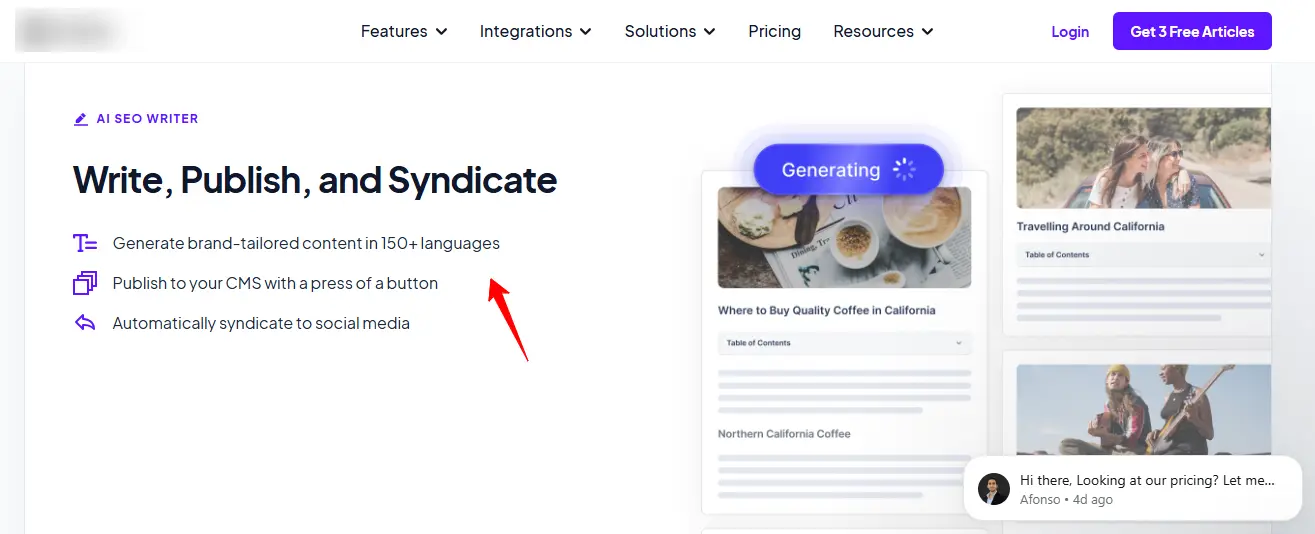
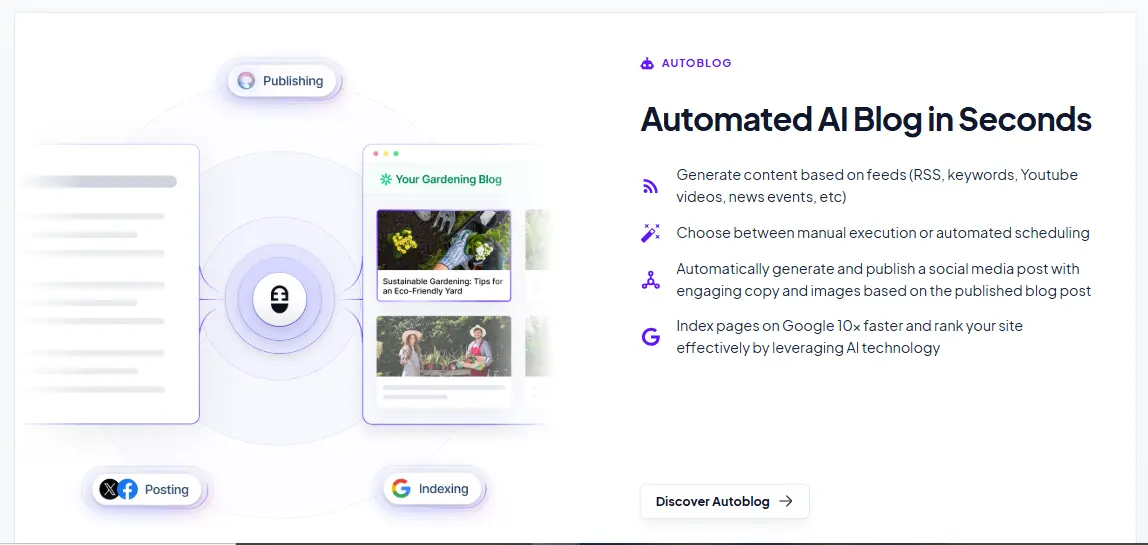
Arvow Autoblog excels at content syndication and SEO optimization. Businesses looking to automate their blog creation and publishing find this tool valuable. Its impressive automation features save time and effort.
Outrank stands out by offering an automatic 30-day content plan that gives users a well-laid-out blogging strategy immediately. The tool creates custom visuals and publishes posts automatically, offering a complete solution to grow organic traffic.
These advanced tools show how far we’ve come from basic content aggregation. Recent data shows 75% of marketers use AI tools, and about 19% of businesses use them specifically to generate content.
Setting Up Content Automation for Blogs Using Writesonic
Writesonic has a complete solution that streamlines your blogging workflow with powerful automation features. You need to follow several practical steps to set up a working autoblogging system.
Step 1: Create Your Writesonic Account
The first step is to visit Writesonic’s website and sign up for an account. You’ll get a simple dashboard with access to more than 100 content templates and features. The free trial gives you 25 credits each month without needing a credit card.
Step 2: Define Your Blog Niche and Content Goals
Your blog needs a clear focus and target audience. The platform works best when you tell it exactly what industry you serve, what you offer, and who you want to reach.
Step 3 – Use Writesonic’s AI Tools for Content Generation
The AI Article Writer is Writesonic’s main tool for automation. Pick “Article Writer” from your dashboard, add your topic, references, and keywords, and click “Generate.” You’ll get SEO-optimized articles that match your brand’s voice within minutes.
Step 4 – Create Topic Clusters for SEO
The AI Topic Clustering tool helps you group related keywords into semantic clusters. It studies your main keyword and creates groups based on context in about 15 seconds. Each cluster shows:
- Pillar content keywords for main pages
- Cluster content keywords for supporting pages
- Volume and difficulty metrics for each keyword
Step 5 – Automate Content Distribution
The “Highlights” feature under Tools creates social media content from your articles. You can schedule these promotional snippets on different platforms easily.
Step 6 – Optimize Content with SEO Features
The built-in SEO Checker and Optimizer help analyze your content’s search performance. Just paste your text into Sonic Editor, pick “SEO Optimizer,” add target keywords, and start the analysis. The “Improve SEO” function optimizes your content automatically.
Step 7 – Monitor Performance and Iterate
Google Search Console integration lets you track how your content performs. You can see live data that shows which automated content works best and adjust your approach based on results.
How to Set Up Content Automation for Blogs Using Autoblogging.ai
Setting up the quickest way to automate content with Autoblogging.ai takes just a few smart steps to change your blogging workflow. This tool creates up to 7 SEO-optimized articles every week without much manual work.
Step 1: Create Your Autoblogging.ai Account
Head over to the Autoblogging.ai website and pick a subscription plan that fits your content needs. You’ll find different tiers like Basic Blogging (one blog per week), Supercharged Blogging (three blogs per week), and Premium Blogging (daily blogs). Once you subscribe, you’ll get an access code right away to use in your dashboard.
Step 2: Install the Autoblogging.ai WordPress Plugin
The platform makes WordPress integration easy with its JSON Authentication Plugin. This plugin lets you post content automatically through bulk generation. You’ll also need the Autoblogging’s Importer Plugin. It uploads AI-generated images to your media library and updates your articles with the right image URLs.
Step 3: Configure Autoblogging.ai Settings
Your dashboard shows a complete left panel with several content creation options. Wizard mode works best for beginners as it walks you through each setting. Pick your language from more than 30 choices and set your ideal article length based on what you want to achieve.
Step 4: Generate and Automate Content
The platform gives you three ways to create content: Wizard, Quick, and Single modes. Need lots of content? The Bulk Generate feature lets you create 10, 20, or even 100 articles. Just upload your topic list. You can plan your entire month’s content calendar in one go by scheduling posts at the best times.
Step 5: Manage Images and Media
Turn on AI Images to add relevant visuals to your articles automatically. Each image comes with SEO-friendly alt text. You can also create infographics, maps, fact charts, and comparison tables to boost reader engagement.
Step 6: Monitor and Optimize Performance
The SERP Analysis feature helps you get into top-ranking blogs on Google for your topic. It formats your articles to match successful content patterns. Keep track of your metrics to see which automated content works best and tweak your approach.
How to Set Up Content Automation for Blogs Using Arvow Autoblog
Arvow Autoblog offers a complete content automation solution that handles content from creation to publishing. Here’s how you can make the most of this powerful tool.
Step 1: Sign Up and Access Arvow Autoblog
The journey starts at Arvow’s website where you’ll create an account. The dashboard houses the AutoBlog feature. You’ll find an accessible interface that makes setup simple, even without technical knowledge.
Step 2: Connect Your Blog or CMS
Arvow blends naturally with WordPress, Shopify, and Webflow. WordPress users should head to “Integrations” and click “New Integration.” Add your integration name, WordPress URL, username, and application password. Your content will flow straight to your site once connected.
Step 3: Choose Your Content Sources and Niches
The AutoBlog tab lets you “Create New AutoBlog” and set your content direction. Pick your niche, language priorities, and add business details that each article will feature.
Step 4: Configure Content Settings
Shape your content by choosing:
- Article size (small, medium, or large)
- Formatting priorities (bold words, tables, quotes)
- Featured and in-article images
- External and internal linking options
Step 5: Automate SEO and Meta Data
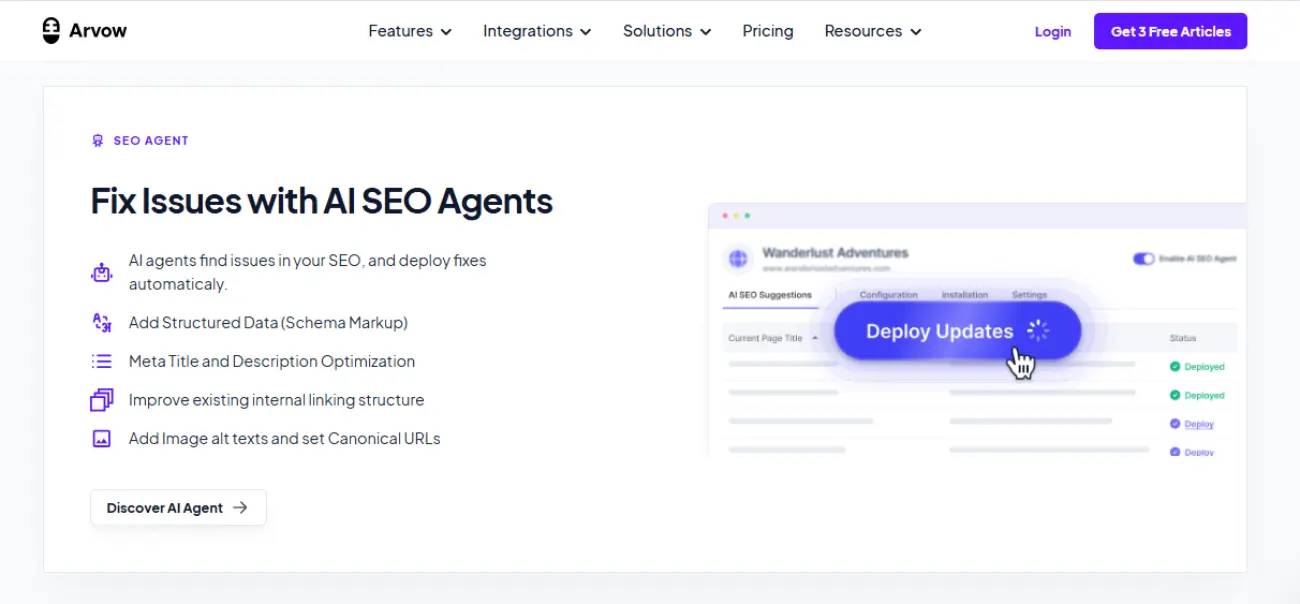
Smart internal and external linking come built-in with Arvow, along with automatic Google indexing. You can adjust tone, target country, and creativity levels to match your brand’s voice.
Step 6: Schedule Publishing and Social Sharing
Choose your article count (up to 300) and set how often you want to publish—daily, weekly, or monthly. Your posts can automatically spread to LinkedIn, Twitter, Facebook, and Pinterest.
Step 7: Monitor Performance and Refine
Keep an eye on performance metrics to spot your best-performing automated content. Use these insights to fine-tune your templates, topics, and keywords for better participation and conversion rates.
This simple setup transforms any website into an automated content powerhouse, freeing up time you’d normally spend creating content.
Monetization Strategies to Make $1,000+/Month
You can transform your autoblog into a money-making powerhouse with the right monetization methods. Most successful autobloggers combine several income sources to earn $1,000 or more each month.
Affiliate marketing with autoblogs
Affiliate marketing remains the best way to monetize your autoblog. You can earn commissions from each sale by adding product links that match your niche, without creating anything yourself. Amazon Associates and other affiliate programs help autobloggers earn $100-500 monthly. The secret is to pick relevant affiliates that fit your content and weave links naturally into your posts.
Display ads and ad networks
Google AdSense gives you the quickest way to monetize by placing targeted ads on your pages automatically. Direct ad sales to businesses in your niche can boost your earnings. Ads placed above the fold or near engaging content boost click rates and revenue substantially.
Selling digital products or services
Your own digital products can bring exceptional profit margins. A business owner reports making over $80,000 from digital products in three years, with launches accounting for only 25%. Educational content and membership subscriptions work great with autoblogs.
Sponsored posts and partnerships
Companies might pay for sponsored content once your autoblog grows. This chance increases as your site’s authority builds. Smart bloggers spread their income across these revenue streams to maintain stable earnings.
SEO and Traffic Generation for Autoblogs
SEO continues to be the foundation of successful autoblogging, even as content creation becomes more automated. Search engines still value quality and relevance above all else. This means you need a strategic approach to optimize your automated content.
Basic SEO for autoblogging sites
Your title tags should start with keywords and stay under 60 characters. The meta descriptions work best between 150-160 characters and should include your main keywords. Schema markup helps search engines understand your autoblog’s content structure better, and FAQ schema proves especially useful.
Using long-tail keywords
Long-tail keywords target specific search queries with lower volumes but less competition. These keywords work great for autoblogs because you can rank faster and get quality traffic. Keywords that are 10-15 words long get 2.18x more clicks than 1-2 word phrases. More than 77.91% of organic conversions come from keywords that have 3+ words.
Promoting content on social media
People spend one-seventh of their waking hours on social media platforms, making them perfect for autoblog promotion. Daily pinning of relevant content on Pinterest gets more and thus encourages more engagement. You can automate your social scheduling with tools like Tailwind or SocialPilot to share your autoblog content at the best times.
Building backlinks and authority
Backlinks serve a different purpose in 2025—they create contextual presence beyond just passing PageRank. Your autoblog needs mentions among trusted brands in relevant discussions. You can connect with journalists through free resources like Featured.com, Help a Reporter Out, and Help a B2B Writer. These connections often lead to valuable backlinks.
Scaling and Managing Your Autoblog Business
Your autoblog’s growth depends on smart planning and systematic management. A smooth-running automated content system lets you expand your online presence the right way.
Tracking performance and analytics
Your autoblog’s metrics need regular monitoring to sustain growth. Google Analytics and Google Search Console help track traffic patterns and spot website issues. The right key performance indicators show if your workflow matches your brand’s needs. Autoblogs need specific metric tracking – traffic volume, engagement rates, conversion rates, and search engine rankings tell you how users respond to automated content.
Outsourcing tasks for efficiency
Growth brings new challenges. You should delegate non-core tasks to stay focused on strategy. Tasks like research, social media management, and SEO optimization work well with outsourcing. Virtual assistants can take over content scheduling and community engagement. This frees you up to chase growth opportunities. Top bloggers use tools like Trello to keep outsourced work organized and boost productivity.
Using multiple autoblogs for income diversification
Different niches protect you from market changes. One smart entrepreneur made over $100,000 from a basic job board with just 1-2 daily posts. Your main niche could spawn smaller “sister sites” to reach new audience segments. This strategy keeps you safe – other income streams stay strong even if one drops off.
Avoiding over-automation pitfalls
The sweet spot lies between automation and human oversight. Nothing should go live without review. Each automated post becomes more authentic with your personal intro or conclusion. A single well-maintained blog beats several neglected ones any day.
How automated blogging differs from traditional blogging
The basic difference in content creation sets automated and traditional blogging apart. Traditional bloggers craft each post manually, which allows them to add personal touches and express creativity. Automated systems generate and publish content with minimal human input.
Automated blogging saves tremendous time. Bloggers can produce articles within minutes instead of spending hours on research, writing, and editing. This lets them concentrate on strategic work like marketing and connecting with their audience rather than daily content creation.
The cost benefits of automated blogging make it attractive. Traditional blogging requires either hiring writers or investing your own time heavily. Automated systems provide a cheaper option. The money spent on automation tools pays off quickly by reducing content creation costs.
These advantages come with clear drawbacks. The quality often drops in automated systems. AI-generated content lacks the depth, originality, and emotional connection that human writers naturally create. Human authors create unique views, build deeper reader connections, and understand subtle contexts that AI cannot grasp.
Consistency stands out as another key difference. Automated blogs keep publishing regularly even during vacations or busy times. Fresh content flows steadily, which helps search engine rankings and keeps readers engaged without constant monitoring.
The connection with readers is different between these approaches. Traditional blogging creates genuine relationships through personal stories, conversations, and quick responses that automation cannot match. Using only automated tools can create a gap between bloggers and their audience.
Many content creators now blend AI efficiency with human creativity. AI helps analyze data, create drafts, and maintain consistency. Human writers add unique insights, polish the tone, and talk directly with readers. This shared framework uses the best of both approaches, helping bloggers create quality content at scale.
Understanding these core differences helps you set realistic goals about what automation can achieve in your content strategy.
Conclusion
Autoblogging marks a powerful move in content creation that can revolutionize your online presence and generate substantial passive income. This piece shows how the right tools—Writesonic, Autoblogging.ai, or Arvow—help you build a profitable blog faster than traditional methods.
Your journey to earning $1,000+ monthly starts with picking a profitable niche and setting up multiple ways to make money. A combination of affiliate marketing, display ads, digital products, and mutually beneficial alliances creates multiple revenue streams for your automated content business.
In spite of that, quality stays crucial even with automation. Search engines reward valuable content, so finding the sweet spot between AI efficiency and human input works best. Successful autobloggers review and improve AI-generated content before publishing. They add personal insights to build authentic connections with readers.
Growing your autoblog business needs careful tracking and smart expansion plans. Up-to-the-minute data analysis reveals what resonates with your audience. Outsourcing routine tasks gives you time to focus on strategy. On top of that, expanding to multiple niches helps stabilize your income through diversification.
Without doubt, autoblogging has grown way beyond its early content-scraping roots. Modern AI-powered tools create original, SEO-optimized content that serves reader needs. The strategies outlined in this piece can turn your autoblog into a reliable income source that runs 24/7—making passive income dreams real.
Master these essential strategies to build a profitable autoblog that generates consistent passive income through smart automation and strategic monetization.
• Choose profitable niches with high demand and low competition – Focus on evergreen topics like health, finance, or technology that offer strong affiliate marketing opportunities and consistent search volume.
• Leverage AI tools like Writesonic, Autoblogging.ai, or Arvow – These platforms can generate 3-7 SEO-optimized articles weekly, handling everything from content creation to automated publishing and social media distribution.
• Implement multiple revenue streams for $1,000+ monthly income – Combine affiliate marketing, display ads, digital products, and sponsored posts to create diversified income that reduces dependency on single sources.
• Balance automation with human oversight for quality control – Review AI-generated content before publishing and add personal touches to maintain authenticity and search engine favor.
• Scale strategically through performance tracking and outsourcing – Use analytics to identify top-performing content, delegate non-core tasks, and consider multiple niche sites for income diversification.
The key to autoblogging success lies in treating it as a business system rather than a set-and-forget solution. While automation handles the heavy lifting of content creation, your strategic decisions about niche selection, tool configuration, and monetization methods determine your ultimate profitability and long-term sustainability.
FAQs About Autoblogging
Q1. What is autoblogging and how does it differ from traditional blogging?
Autoblogging is a method that automates content creation and publishing using specialized software or plugins. Unlike traditional blogging, which requires manual writing and posting, autoblogging can generate and publish content automatically based on predefined parameters, saving time and effort.
Q2. How can I monetize my autoblog to earn $1,000+ per month?
You can monetize your autoblog through multiple strategies including affiliate marketing, display advertising, selling digital products or services, and sponsored partnerships. Combining these revenue streams and optimizing your content for high-value keywords can help you reach the $1,000+ monthly income goal.
Q3. What are some popular autoblogging tools available in 2025?
Some popular autoblogging tools in 2025 include ChatGPT, Jasper.ai, Copy.ai, Autoblogging.ai, SEOmatic, Arvow Autoblog, and Outrank. These tools offer various features for content generation, SEO optimization, and automated publishing to streamline the blogging process.
Q4. How important is SEO for autoblogs?
SEO remains crucial for autoblogs. Implementing basic SEO practices like optimizing title tags and meta descriptions, using long-tail keywords, and building quality backlinks can significantly improve your autoblog’s search engine visibility and organic traffic.
Q5. Can autoblogging completely replace human-written content?
While autoblogging tools have become highly sophisticated, they can’t entirely replace human-written content. Many successful autobloggers use a hybrid approach, combining AI-generated content with human oversight and personal touches to maintain quality, authenticity, and reader engagement.